
Home health
Hospice, Palliative Care, and Home Health: What's the Difference?
Last reviewed July 28, 2026
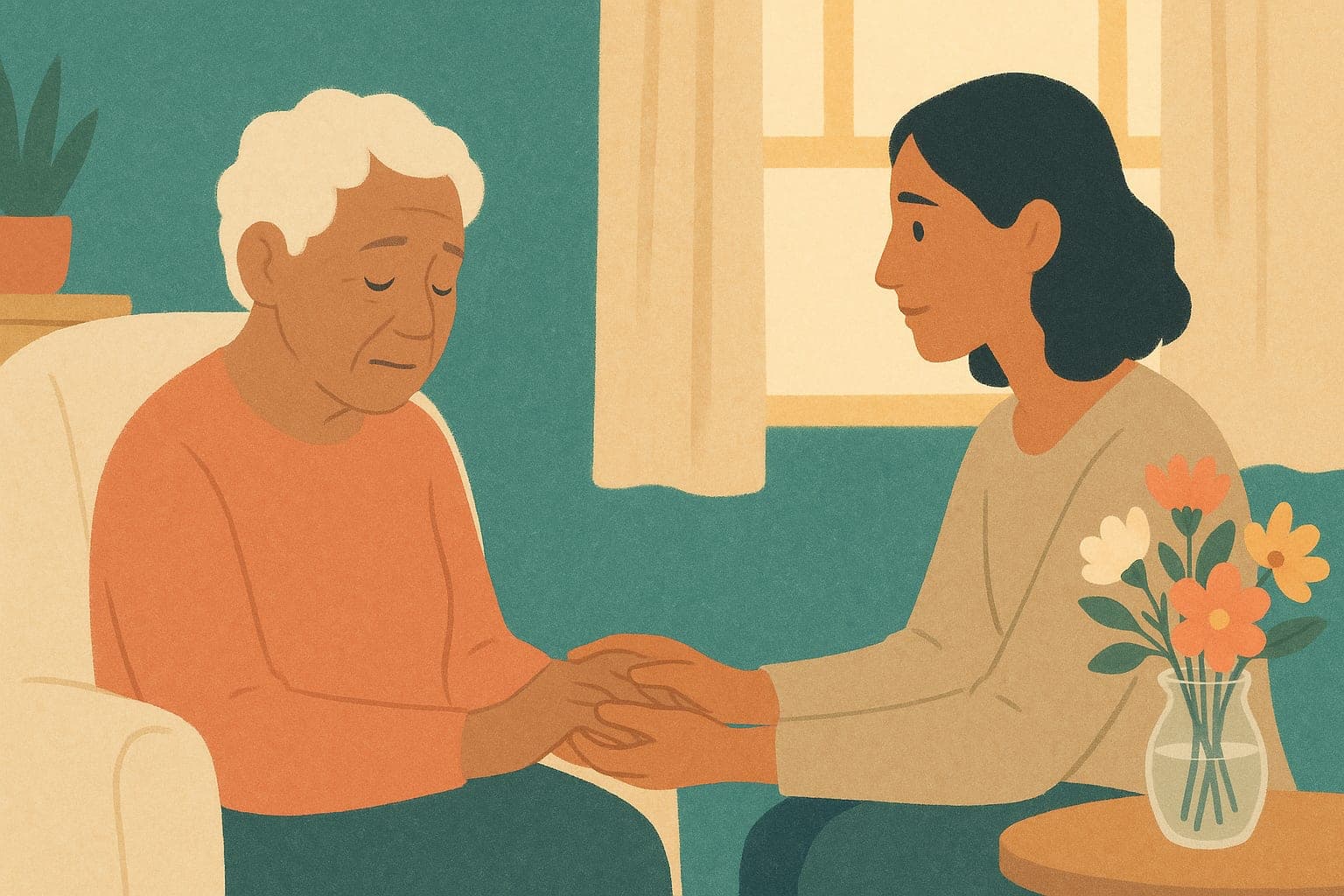
Palliative care is comfort care for a serious illness that can happen alongside treatment at any stage. Hospice is comfort-focused care when curative treatment stops and a doctor expects 6 months or less. Home health is short-term skilled care to help you recover. Medicare hospice usually costs the family nothing.
Key points
- Palliative care is comfort care you can get at any stage of a serious illness, alongside treatment meant to cure or control it, with no life-expectancy limit.
- Hospice is comfort-focused care when curative treatment stops and a doctor expects about 6 months or less; you can stay longer if you still qualify, or leave at any time.
- The Medicare hospice benefit usually costs the family nothing, covering nurses, aides, medicine, equipment, counseling, and grief support, mostly at home.
- Medicare home health is different: it's short-term skilled care to help you recover or stay stable, not end-of-life comfort care.
What is palliative care, and can you get it while still in treatment?
Palliative care (say it: PAL-ee-uh-tiv) is extra support that helps you feel better when you have a serious illness like cancer, heart failure, COPD, kidney disease, or dementia. It focuses on easing pain, shortness of breath, nausea, stress, and other hard symptoms. It also supports your family.
The most important thing to know: palliative care does NOT mean giving up. You can get it at any stage of a serious illness, even right after diagnosis. It happens alongside the treatments meant to cure or control your illness, like chemotherapy, dialysis, or surgery.
A palliative care team often includes a doctor, a nurse, a social worker, and sometimes a chaplain. In California, the Medi-Cal program covers palliative care for eligible members with a serious illness through a state law called SB 1004, and it does not require any specific life expectancy. If you have a Medi-Cal managed care plan, ask your plan whether you qualify.
- It's for comfort at ANY stage of a serious illness.
- You can keep getting treatment aimed at curing or controlling your illness.
- It's not only for the end of life.
- It helps with symptoms AND the emotional and practical stress on the family.
What is hospice, and when does it start?
Hospice is comfort-focused care for when a serious illness is no longer expected to be cured. To qualify for the Medicare hospice benefit, two doctors (usually your regular doctor and the hospice doctor) must certify that you are terminally ill, meaning they expect about 6 months or less to live if the illness follows its usual course.
When you choose hospice, you agree to stop treatments meant to cure the illness and instead focus fully on comfort, dignity, and quality of time. Hospice does not try to speed up or delay death. It helps you live as fully and comfortably as possible.
Hospice is not a place you have to go to. Most hospice care happens right where the person lives, whether that is their own home in Los Angeles, Riverside, or San Diego, a family member's home, an assisted living facility, or a nursing home.
Hospice is not one-and-done. If you live longer than 6 months, that is okay. Coverage can continue as long as the hospice doctor re-checks you and confirms you still qualify. You can also stop hospice at any time and return to regular treatment if your health improves or you change your mind.
What does the Medicare hospice benefit cover, and what does it cost the family?
For most families, this is the biggest relief: if you use a Medicare-approved hospice, you usually pay nothing for hospice care related to your terminal illness. There is no deductible for the hospice benefit itself.
The hospice team and Medicare cover the care, the visits, and the supplies tied to your illness. Care is available to help around the clock when you need it.
- Doctor and nurse services, plus a hospice aide for personal care like bathing.
- Medicine to control pain and symptoms (you may pay up to $5 for each outpatient prescription drug for pain or symptoms).
- Medical equipment (like a hospital bed or wheelchair) and supplies related to your illness.
- Physical, occupational, and speech therapy when needed for comfort.
- A social worker, plus spiritual and grief counseling for you and your family, including after death.
- Short-term inpatient care to get tough symptoms under control.
- Respite care, a short stay in a facility so your family caregiver can rest (you may pay a small share, about 5%, of the cost of this inpatient respite).
How is home health different from hospice and palliative care?
Medicare home health is a different program with a different goal. Home health sends skilled help to your home to help you recover or stay stable after an illness, injury, or hospital stay, for example, wound care, physical therapy after a fall, or teaching you to manage a new health condition.
To get Medicare home health, a provider must certify that you need part-time or intermittent skilled care (like skilled nursing or therapy) and that you are 'homebound,' meaning leaving home is hard and takes a real effort. It is meant to be short-term and to help you improve, keep your current level of function, or slow decline, not to provide comfort care at the end of life.
Here is a simple way to remember the three:
- Home health: skilled care to help you RECOVER or stay stable. You can still be seeking a cure. Usually short-term.
- Palliative care: comfort care for a serious illness at ANY stage, alongside treatment.
- Hospice: comfort care when the focus shifts away from a cure, with an expected 6 months or less.
How do you start hospice or palliative care in Southern California?
Start with a conversation with the doctor who knows the illness best. You can say plainly: 'We want to focus more on comfort. Can we talk about palliative care or hospice?' Asking about these does not mean anyone is giving up, and it does not lock you in.
Your doctor can make a referral. You can also contact a Medicare-approved hospice or palliative care agency directly and ask them to coordinate with your doctor.
To compare hospice agencies near you, families can use Medicare's Care Compare tool, which lists quality ratings for hospices across California. For Medi-Cal members, ask your managed care plan about SB 1004 palliative care.
This article is general education, not medical advice. Your doctor and the hospice or palliative team can tell you what is right for your specific situation. And remember: hospice and palliative care are about comfort, not emergencies. If someone is having a medical emergency, such as trouble breathing, chest pain, or an unresponsive person and you have not yet set up a hospice plan, call 911. Once hospice is in place, your family will be given a hospice number to call first, day or night.
Frequently asked questions
Does choosing hospice mean giving up hope?
No. Hospice shifts the goal from curing the illness to comfort, dignity, and quality of time. It focuses on helping the person live as well and as fully as possible. You can leave hospice at any time and return to regular treatment if your health improves or you change your mind.
Can you get palliative care and still have chemotherapy or dialysis?
Yes. Unlike hospice, palliative care can happen at the same time as treatments meant to cure or control your illness. It is available at any stage of a serious illness and works alongside your other care to ease pain, symptoms, and stress.
How much does Medicare hospice cost the family?
For care from a Medicare-approved hospice, you usually pay nothing for services related to your terminal illness. You may pay up to $5 per outpatient prescription for pain or symptom drugs, and a small share (about 5%) for short inpatient respite care.
Where is hospice care provided?
Most hospice care is provided wherever the person lives, most often at home. That can be their own home, a family member's home, an assisted living facility, or a nursing home. Short-term inpatient care in a hospice facility or hospital is available when symptoms need closer control.
What is the difference between home health and hospice?
Medicare home health sends short-term skilled care (like nursing or therapy) to help you recover or stay stable, and you can still be seeking a cure. Hospice is comfort-focused care for someone expected to have about 6 months or less, after curative treatment stops.
Do you have to be dying within 6 months to get palliative care?
No. Palliative care is based on your needs, not on a prognosis. There is no 6-month rule. It is for anyone living with a serious illness at any stage. The 6-month expectation applies only to the Medicare hospice benefit.
Need care at home? We will connect you.
Skilled nursing, therapy, personal care, and recovery help — right at home, from trusted local providers. Tell us what you need and we will take it from there. Free, no obligation.
Get home-health careSources
Related guides
This guide is educational and is not medical advice. In an emergency, call 911.