
Caregiver support
Difficult Conversations About Care: How to Talk With an Aging Parent
Last reviewed July 29, 2026
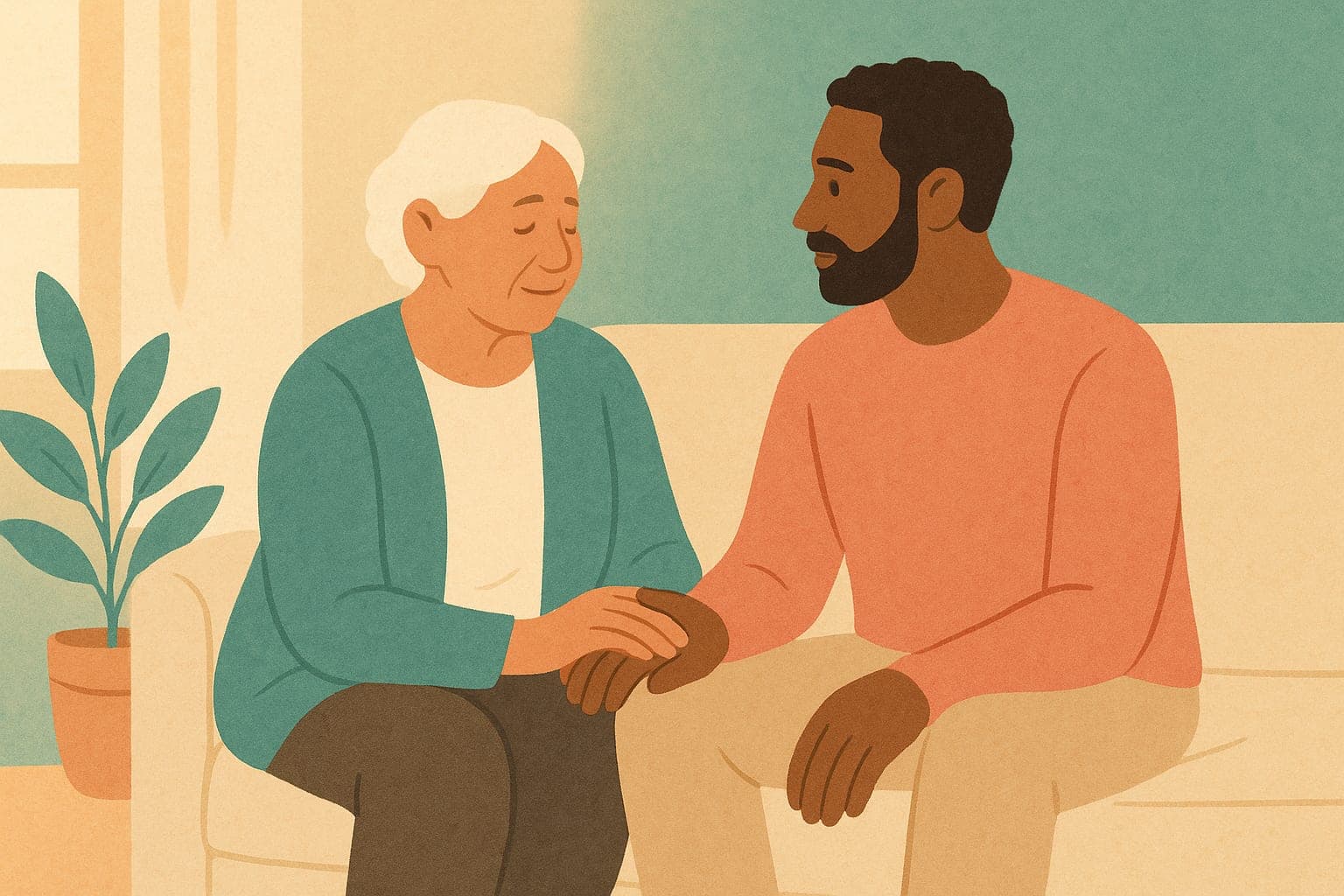
Start early, start small, and lead with your parent's goals — not your fears. The conversations that go best aren't single dramatic talks; they're a series of short, respectful ones where you listen more than you argue, name one specific concern at a time, and let your parent keep as much choice and control as safety allows. Use "I" statements ("I worry when…") instead of "you" statements, bring in a trusted third party like the doctor when your voice alone stalls, and always pair a hard message ("driving isn't safe anymore") with a real alternative. When a topic is too charged, it's okay to pause and try again another day. The goal is not to win a single conversation — it's to move, together, toward a plan your parent helped shape.
Key points
- Have many small talks, not one big showdown. Bring up one topic at a time and start before a crisis forces the issue.
- Lead with dignity and their goals. Ask what matters most to them (staying home, independence, not being a burden) and build the plan around that.
- Use "I" statements and listen more than you talk. "I feel worried when I see the unpaid bills" lands better than "You can't manage your money."
- Borrow a trusted voice. A doctor, clergy member, or family social worker often carries weight that an adult child does not.
- Never take something away without offering a replacement — especially with driving. Line up rides before the keys become the fight.
- A "no" today isn't final. If your parent has the capacity to decide, respect it, keep the door open, and revisit later — unless there's an immediate safety danger.
Why do these conversations feel so hard — and what actually helps?
These talks are hard because you're asking a parent to trade a piece of independence for safety — and because the roles feel reversed. The person who once took care of you is now hearing that they may need care. That stirs up pride, fear, and grief on both sides. Going in aware of that emotional weight is half the battle.
The single biggest shift that helps: stop trying to win one big conversation. Aging is a series of changes, so the plan should come from a series of short, low-pressure talks over weeks or months — in the car, doing dishes, on a walk — not one tense sit-down where everyone feels ambushed. Pick calm moments, not the middle of an argument or right after a scare.
A few approaches consistently lower conflict:
- Lead with love and their goals, not your anxiety. Open with "I want you to be able to stay in your home as long as possible — can we talk about how to make that work?"
- Use "I" statements. Family Caregiver Alliance recommends saying "I need…" instead of "You should…" — it invites a partner instead of putting your parent on defense.
- Listen more than you talk. NIA's guidance is to listen carefully and encourage the person to keep sharing; their reasons and fears are the map to a workable plan.
- Name one specific, observable concern — "I noticed two months of mail piling up" — rather than a sweeping verdict like "You can't handle things anymore."
- Protect dignity. Offer choices, not orders. "Would mornings or afternoons be better for someone to come help?" preserves control even when the bigger direction is set.
How do I bring up that Mom or Dad needs more help?
Start before there's a crisis. It is far easier to talk about a little help now than to make emergency decisions from a hospital hallway later. If you wait for a fall or a burned pot, the conversation happens on the worst possible terms.
Ground the talk in specific things you've seen, and ask instead of announce. The National Institute on Aging points to watching for signs like unpaid bills stacking up, spoiled food in the fridge, weight loss, missed medications, unexplained bruises, or a home that's suddenly cluttered or unclean. Turn what you've noticed into a gentle, curious question: "I saw the fridge was pretty empty — is getting to the store feeling harder lately?" That gives your parent room to tell you what's really going on.
Frame help as a way to keep their independence, not a step toward losing it — because it genuinely is. A little support with cleaning, groceries, or rides is often exactly what lets someone stay in their own home longer. If your parent brushes off your concern, you don't have to force it. NIA notes people sometimes open up more to a doctor or someone in their spiritual community, and it's fine to plant the seed and return to it another day. In California, if some help is clearly needed, it's worth learning early about In-Home Supportive Services (IHSS), which can pay for a caregiver — sometimes a family member — for people who qualify through Medi-Cal.
How do I talk about driving without a blowup?
Driving is often the hardest topic because a license means freedom. Approach it as a safety conversation about specific behaviors — not a judgment on who your parent is. The Alzheimer's Association describes warning signs that someone should stop driving, including forgetting how to locate familiar places, confusing the brake and gas pedals, drifting between lanes, missing stop signs or signals, and getting lost on routes they've driven for years. New dents, scrapes, or near-misses are red flags too.
When you raise it, the Alzheimer's Association's advice is to "initiate a dialogue to express your concerns" and to "stress the positive and offer alternatives." That second half matters most: never aim to just take the keys — aim to replace the driving. Before the conversation, line up how your parent will still get to the doctor, church, the store, and friends. In Southern California that might mean rides from family on a set schedule, rideshare or taxi, senior transportation through your local Area Agency on Aging, paratransit, or grocery and pharmacy delivery.
If your parent won't hear it from you, borrow a more neutral voice. Doctors often carry more weight than an adult child, and asking the physician to make driving safety part of a visit can turn a family fight into medical advice. In California, a physician — or a concerned family member — can also ask the DMV to evaluate a driver's fitness, which can lead to a re-examination; a doctor's office or the DMV can walk you through that request. Disabling or removing the car is a real last resort, and the Association is clear it should come only after safe, reliable transportation is truly in place.
How do I talk about money and legal documents?
Money is intensely private, so tread gently and start with the "why." The goal isn't to take over your parent's finances — it's to make sure their wishes are followed and their money is protected if they ever can't manage it themselves. The Alzheimer's Association puts it plainly: putting financial and legal plans in place now "allows the person with dementia to express wishes for future care" and gives everyone time to work through complex long-term-care issues while your parent can still take the lead.
You don't need to see every account balance to be helpful. A good early ask is simply: "If you ever got sick, would I know where things are and who to call?" From there, the documents that matter most are:
Handle this as a partner, not an auditor. If your parent is guarded about money — many people of this generation are — start with the easiest piece, like knowing where the will is kept, and build trust from there. Being organized also protects against fraud: knowing who normally contacts your parent makes it easier to spot a scam aimed at their savings.
- A durable power of attorney for finances — names someone to handle money and bills if your parent can't.
- An advance health care directive (in California this also names a health care agent) — spells out medical wishes and who speaks for them. NIA calls this advance care planning and encourages starting it before a health crisis.
- A will or trust, plus a simple list of accounts, insurance policies, passwords, and where documents are kept.
- Knowing the professionals involved — doctor, attorney, accountant, banker — and having permission to talk with them.
How do I raise the idea of getting help at home — or moving?
Whether the question is bringing help into the home or leaving it, start by asking what your parent wants their life to look like, then work backward. Most older adults want to stay in their own home, so make that the shared goal and be honest about what it would take: "You want to stay here — I'm with you. Let's figure out what has to be true for that to be safe." Sometimes that's grab bars, a medical alert button, and a few hours of help a week; sometimes the honest answer points toward assisted living or moving closer to family.
Introduce change in small, reversible steps rather than one giant leap. A housecleaner, a meal delivery, or a companion a couple of afternoons a week is easier to accept than "you need full-time care" — and it lets your parent experience help as relief instead of loss. Frame a possible move around gains (less upkeep, more company, closer to grandkids), and where you can, visit options together so your parent is choosing, not being placed.
If a move truly becomes necessary, give it time and involve your parent in every decision you reasonably can — which room, what furniture comes along, how to keep their routines. The feeling of being consulted, even about small things, is often what makes the difference between a decision that sticks and one that breeds resentment.
What if my parent says no — or my siblings can't agree?
First, separate a bad choice from a lack of capacity. An adult who understands the risks and still chooses differently than you would has the right to do so — pushing harder usually backfires and damages trust. If your parent has the capacity to decide, respect the "no," keep the relationship warm, and revisit the topic later; people often come around once an idea has had time to settle. The exception is immediate danger — a parent who is getting lost, leaving the stove on, or being financially exploited — where safety has to come first and you may need a doctor's help or Adult Protective Services.
When the conflict is among siblings, a family meeting is one of the most effective tools you have. Family Caregiver Alliance suggests including everyone on the caregiving team, setting an agenda ahead of time (the latest medical update, daily needs, finances, who decides what, and how each person can pitch in), and using ground rules like "I" statements and letting all feelings be heard. List the problems first before jumping to solutions, and write down who agreed to do what.
If old family patterns keep derailing things, bring in a neutral facilitator — a social worker, geriatric care manager, counselor, or clergy member — so everyone has a fair chance to be heard. And treat the meeting as ongoing, not one-and-done; caregiving needs change, so plan to check in regularly rather than expecting a single conversation to settle everything.
Frequently asked questions
When is the right time to start these conversations?
Before a crisis — ideally while your parent is healthy and fully able to take part. It's far easier to talk about a little help, a backup plan, or paperwork when nothing is urgent than to make emergency decisions after a fall or hospital stay. If you've missed the "early" window, the next best time is now, on a calm day, one topic at a time.
My parent gets angry and shuts down every time I bring this up. What can I do?
Slow down and shrink the ask. Trade the big sit-down for short, casual moments, and raise just one specific concern rather than a list. Use "I" statements so it feels like partnership, not criticism, and listen to the fear underneath the anger — usually it's about losing independence. If your voice keeps triggering a wall, ask a trusted outsider like the doctor or a faith leader to raise it. And it's okay to say "let's talk about this another time" and try again later.
How do I convince my parent to stop driving when they refuse?
Focus on specific unsafe behaviors, not their identity, and always pair the message with a real transportation plan so stopping doesn't mean losing their freedom. Ask the physician to weigh in — doctors often have more influence than family. In California, a doctor or concerned family member can also request that the DMV evaluate the driver, which may lead to a re-examination. Disabling or removing the car is a genuine last resort, only after reliable rides are truly in place.
My parent doesn't have dementia — do they still need power of attorney and an advance directive?
Yes. These documents matter for everyone as they age, not just people with dementia, because illness or injury can happen suddenly at any time. Putting a durable financial power of attorney and an advance health care directive in place while your parent is fully capable ensures their own wishes guide any future decisions and that someone they trust can act if needed. This is educational information, not legal advice — an estate or elder-law attorney can prepare California-specific documents.
My siblings and I keep fighting about our parent's care. How do we get on the same page?
Hold a structured family meeting. Set an agenda in advance covering the medical picture, daily needs, finances, and who is responsible for what; use ground rules like "I" statements and hearing everyone out; and write down the decisions. If unresolved history keeps getting in the way, bring in a neutral facilitator such as a geriatric care manager, social worker, or counselor. Plan to meet regularly, since needs change over time.
What if I think my parent is being financially scammed or is truly unsafe?
When there's immediate danger — exploitation, wandering, leaving the stove on, serious neglect — safety comes before preserving the peace. Talk with their doctor, and in California you can contact Adult Protective Services through your county for a welfare check and guidance. For an immediate, life-threatening emergency, call 911. Protecting your parent from harm is not a betrayal of their independence; it's part of caring for them.
Need care at home? We will connect you.
Skilled nursing, therapy, personal care, and recovery help — right at home, from trusted local providers. Tell us what you need and we will take it from there. Free, no obligation.
Get home-health careSources
- National Institute on Aging — Does an Older Adult in Your Life Need Help?
- National Institute on Aging — Advance Care Planning: Tips for Caregivers and Families
- Family Caregiver Alliance — Holding a Family Meeting
- Alzheimer's Association — Dementia and Driving
- Alzheimer's Association — Financial and Legal Planning
Related guides
This guide is educational and is not medical advice. In an emergency, call 911.