
Paying for care
How to Get Paid as a Family Caregiver in California
Last reviewed July 29, 2026
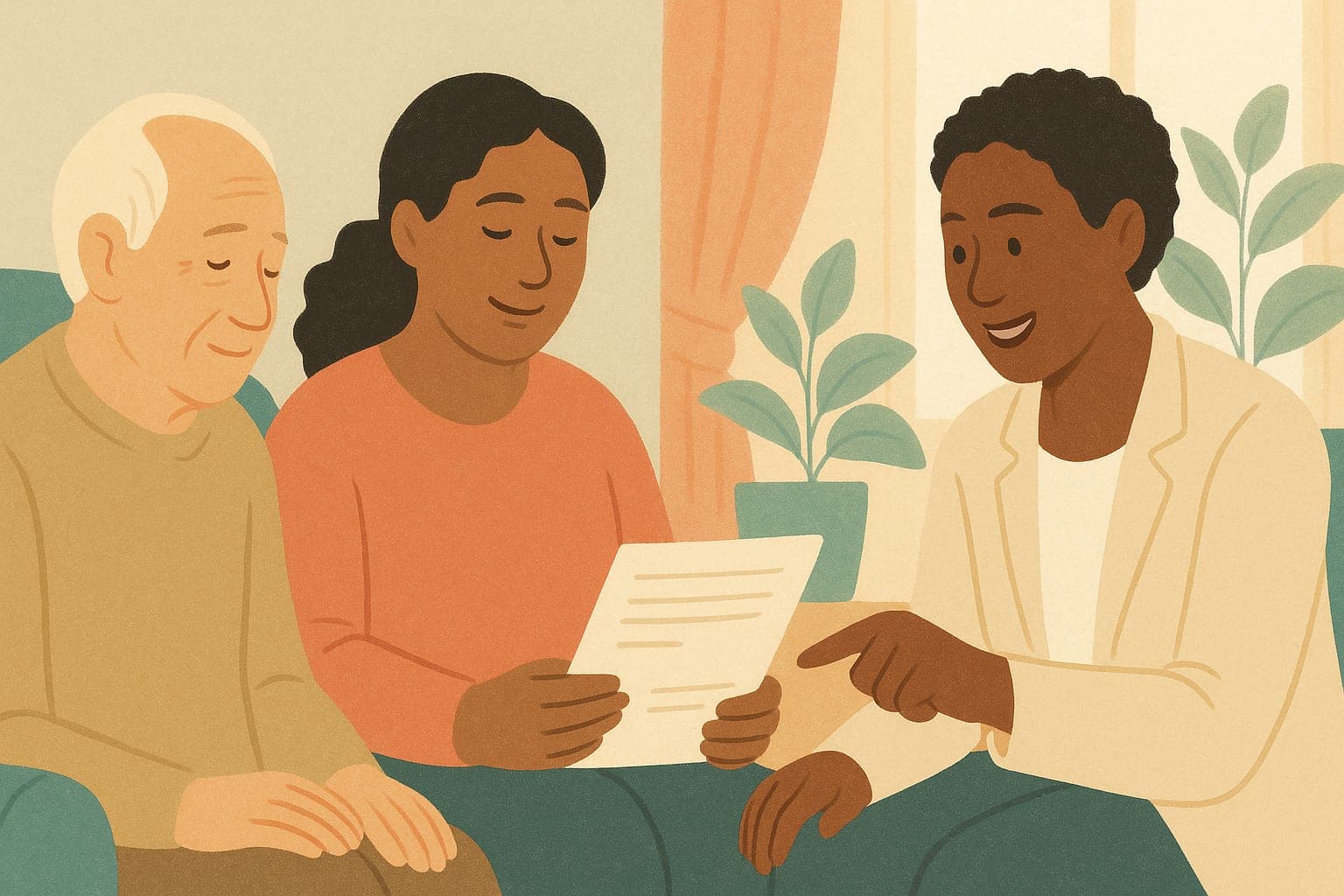
Yes — in California a family member can often be paid to care for a parent or spouse. The most common route is IHSS (In-Home Supportive Services), a Medi-Cal program that pays relatives as providers. Veterans' programs, other Medi-Cal options, and short-term Paid Family Leave can also help.
Key points
- Family members can legally be paid to provide care in California, and IHSS is by far the most common path — an adult child caring for a parent is routine.
- The person who needs care has to qualify first (usually through Medi-Cal); you then enroll as their chosen caregiver, or "provider."
- Veterans have extra options: Veteran-Directed Care and Aid & Attendance can fund a family caregiver, and the PCAFC program pays a monthly stipend directly to a family caregiver.
- California Paid Family Leave gives employed caregivers a few weeks of partial wage replacement during a crisis — helpful, but it is short-term, not ongoing pay.
- These are real government programs. You should never pay a fee to "unlock" IHSS or VA benefits — that is a common scam.
Can I really get paid to care for my parent or spouse in California?
Yes. If you are already giving up hours, energy, and income to care for someone you love, it is fair to ask whether that work can be paid — and in California, several public programs are built to do exactly that. You are not gaming the system by asking. These programs exist because keeping someone safe at home, with a caregiver who knows and loves them, is often better and less costly than a facility.
There is no single "family caregiver paycheck." Instead, there are a handful of separate programs, each with its own rules. The right one depends on who needs care, their income and health coverage, and whether they are a veteran. Most of the time the money is tied to the person receiving care, and you get enrolled as their approved caregiver.
The main paths to explore in California are:
- IHSS (In-Home Supportive Services) — a Medi-Cal-funded program that pays a caregiver by the hour. This is the big one for most families.
- VA programs — for veterans: Veteran-Directed Care, Aid & Attendance pension benefits, and a stipend paid directly to family caregivers (PCAFC).
- Other Medi-Cal options — home and community-based waivers and services that support care at home.
- Paid Family Leave (PFL) — short-term partial wage replacement through the state for employed caregivers who need time off during a serious illness.
How does IHSS work, and can a relative be the paid caregiver?
IHSS is a California program, funded largely through Medi-Cal and run by each county. It pays a caregiver an hourly wage to help an older adult or a person with a disability with daily needs so they can stay safely in their own home — things like bathing, dressing, meals, cleaning, help getting around, and reminders for medications.
Here is the key point for families: the person receiving IHSS gets to choose their own caregiver — and that caregiver can be a relative. An adult child caring for an aging parent, a niece caring for an uncle, a friend, or a neighbor can all be paid IHSS providers. Spouses and parents of a minor child can sometimes be providers too, but there are extra federal and state restrictions, so ask your county IHSS office specifically what a spouse or parent qualifies for.
To use IHSS, the person needing care must generally qualify for Medi-Cal, live at home (not a facility), and be assessed as needing help. A county social worker visits, reviews what the person can and cannot do safely, and authorizes a set number of care hours per month. Those authorized hours — not an open-ended amount — are what you are paid for.
A few practical things to know about IHSS pay:
- Pay is hourly, set at or above the local minimum wage, and the exact rate varies by county.
- You are paid for the hours the county authorizes, submitted on timesheets (usually through the state's online Electronic Services Portal).
- Overtime and weekly hour limits apply, so ask how many hours you can be paid for if you are the only caregiver.
- IHSS wages are taxable income — but if you live in the same home as the person you care for, a federal tax rule may let you exclude those wages from federal income tax. Check with a tax professional about your situation.
How do I become a paid IHSS provider, step by step?
The order matters: the person needing care has to be approved for IHSS before you can be paid to help them. Here is the usual sequence.
Step 1 — Apply for IHSS. The person needing care (or you, on their behalf) contacts the county IHSS or social services office to apply. A county social worker schedules a home visit to assess needs and decide how many care hours to authorize.
Step 2 — Get named as the provider. Once the person is approved and hours are authorized, they choose you as their provider and let the county know.
Step 3 — Complete provider enrollment. As the provider, you typically attend a provider orientation, fill out the state's provider enrollment forms, show valid ID and a Social Security number, and complete a background check (Live Scan fingerprinting). You and the recipient sign an agreement confirming the working relationship.
Step 4 — Set up timesheets and get paid. After enrollment is approved, you register for electronic timesheets, log the hours you actually work within the authorized amount, and get paid on the regular IHSS pay schedule. Your county IHSS office is your go-to contact for every step, and a local Public Authority or IHSS registry can also help you through the paperwork.
What VA programs pay family caregivers?
If the person you care for is a veteran (or in some cases a surviving spouse), the U.S. Department of Veterans Affairs offers several ways to support — and sometimes directly pay — a family caregiver. These run separately from IHSS, and eligibility rules are specific, so start by talking to the VA or the caregiver's VA medical center.
The main VA options to ask about are:
- Veteran-Directed Care (VD-HCBS) — the veteran receives a flexible monthly budget, with help managing it, and can use it to hire caregivers of their choosing, including family members. It is offered through participating VA medical centers.
- Aid & Attendance — an increased monthly VA pension for eligible wartime veterans or surviving spouses who need help with everyday activities. It is a needs-based benefit with service, income, and asset requirements; the extra money can be used to pay for care, including a family caregiver.
- Program of Comprehensive Assistance for Family Caregivers (PCAFC) — this one can pay a monthly stipend directly to a designated primary family caregiver of an eligible veteran with a serious service-connected condition. It can also include caregiver training, respite, mental health support, and, for some, health coverage.
Are there other Medi-Cal options besides IHSS?
IHSS is the main way Medi-Cal pays family caregivers, but it is worth knowing the broader picture, because being on Medi-Cal is often the doorway to home-based support in California.
California also runs Home and Community-Based Services (HCBS) waivers — such as the Home and Community-Based Alternatives (HCBA) waiver and the Assisted Living Waiver — designed to help people who would otherwise need nursing-home care stay in the community instead. Some of these programs allow the person to direct their own care and hire caregivers. Availability and enrollment can be limited, so ask your county or a local Medi-Cal caseworker what fits.
Other Medi-Cal services support caregivers even when they don't pay you directly. Community-Based Adult Services (CBAS), for example, provides supervised adult day programs that give a working family caregiver hours of safe, structured care during the day. If the person you care for is not yet on Medi-Cal, applying is usually the first step, because so many home-care supports flow from it.
What about California Paid Family Leave — and does it help long term?
California Paid Family Leave (PFL), run by the Employment Development Department (EDD), is different from the programs above. It is designed for people who are employed and paying into State Disability Insurance, and it replaces part of your wages when you take time off work to care for a seriously ill family member — including a parent, spouse, domestic partner, child, grandparent, grandchild, sibling, or in-law.
PFL pays a share of your usual wages (a percentage set by state law) for up to 8 weeks within a 12-month period. That makes it a real help during a hospital stay, a new diagnosis, or a rough stretch — but it is short-term wage replacement, not an ongoing paycheck for being a caregiver.
One important caveat: PFL replaces some income, but by itself it does not guarantee your job will be held for you. Job protection comes from separate laws (the federal FMLA and California's CFRA) if you and your employer qualify. If you are thinking about taking leave, ask your employer's HR about job protection before you rely on PFL, and apply for PFL through the EDD.
What should I know about taxes, limits, and avoiding scams?
A few honest realities will save you trouble. Money you earn as a paid caregiver (through IHSS or the VA) is generally taxable income, though the live-in tax exclusion mentioned earlier can change that for some IHSS providers. A tax professional or an elder-law attorney can help you set things up correctly, especially if the family also wants a written personal care agreement for privately paid hours.
Protect yourself from scams. IHSS and VA benefits are free to apply for — you never have to pay a fee to "qualify" or "unlock" them. Be especially wary of anyone who offers, for a fee, to get a veteran approved for Aid & Attendance; the VA warns against these pension schemes. Only work through official county IHSS offices, the VA and accredited representatives, and EDD for Paid Family Leave.
Finally, keep your timesheets honest and accurate. Only claim hours you actually worked. IHSS fraud is taken seriously and prosecuted, and honest records protect both you and the person you care for.
This guide is educational and not legal, tax, or medical advice — rules and rates change, so confirm details with the official programs listed below. And if the person you care for is ever in a medical emergency, call 911 first.
Frequently asked questions
Can I get paid to care for my spouse through IHSS?
Sometimes, but spouses face extra federal and state restrictions that don't apply to, say, an adult child caring for a parent. A spouse can only be a paid IHSS provider under specific conditions. Contact your county IHSS office and ask exactly what a spouse qualifies for in your case.
Do I have to live with the person to be paid as a caregiver?
No. You can be a paid IHSS provider whether or not you live together. Living in the same home doesn't change your eligibility, but it may qualify you for a federal income tax exclusion on your IHSS wages. Ask a tax professional about the live-in provider rule.
How much does IHSS pay a family caregiver?
IHSS pays an hourly wage that varies by county and is set at or above the local minimum wage. You're paid only for the number of hours the county social worker authorizes each month based on the person's assessed needs, submitted on timesheets. Your county office can tell you the current local rate.
Will Medicare pay me to care for a family member?
No. Medicare does not pay family members to provide personal or custodial care. Medicare's home health benefit only covers limited skilled care from a certified agency for a homebound patient. To be paid as a family caregiver in California, look at IHSS, VA programs, or other Medi-Cal options instead.
How long does California Paid Family Leave last?
Up to 8 weeks of partial wage replacement within a 12-month period, for time off to care for a seriously ill family member. It's meant for short-term relief during a crisis, not ongoing pay, and it doesn't by itself guarantee your job is protected — that comes from FMLA or CFRA if you qualify.
Can a veteran use both IHSS and VA caregiver programs?
Often the person can access support from more than one program, but the programs coordinate and rules differ, so you can't assume the hours or dollars simply stack. Talk to both your county IHSS office and the veteran's VA caregiver support team so each program knows about the other and you stay in compliance.
Need care at home? We will connect you.
Skilled nursing, therapy, personal care, and recovery help — right at home, from trusted local providers. Tell us what you need and we will take it from there. Free, no obligation.
Get home-health careSources
- California Department of Social Services — In-Home Supportive Services (IHSS)
- U.S. Department of Veterans Affairs — Aid and Attendance / Housebound benefits
- U.S. Department of Veterans Affairs — Family and Caregiver Benefits
- California EDD — Paid Family Leave
- California Department of Health Care Services — Medi-Cal
Related guides
This guide is educational and is not medical advice. In an emergency, call 911.