
California benefits
IHSS in California: Free In-Home Care Help for Your Family
Last reviewed July 28, 2026
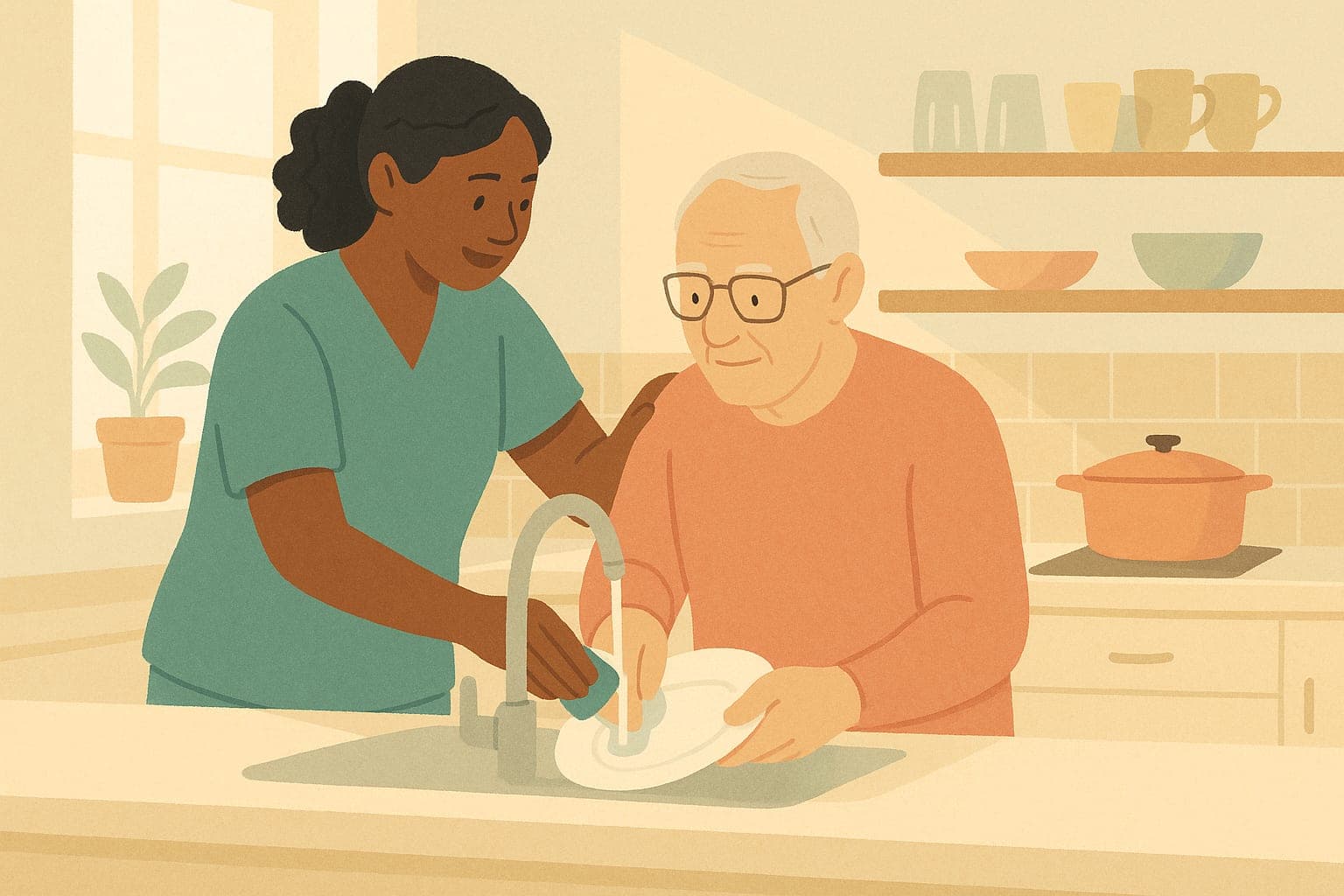
IHSS (In-Home Supportive Services) is a free California Medi-Cal program that pays for in-home care so older, blind, or disabled people can stay safely at home instead of a nursing home. It covers personal care, meals, help around the house, and doctor-ordered care. A family member can often be the paid caregiver.
Key points
- IHSS is a free California Medi-Cal program that pays for in-home care so older, blind, or disabled people can stay safely at home.
- To qualify, you must live in your own home in California, have (or be eligible for) Medi-Cal, need help with daily activities, and turn in a signed Health Care Certification.
- It covers personal care, meals, help around the house, rides to the doctor, and doctor-ordered paramedical care.
- A family member can often be the paid caregiver, and a county social worker decides your approved monthly hours (up to 283 for severe impairment). Apply through your county IHSS office.
What is IHSS and how does it help my family?
IHSS stands for In-Home Supportive Services. It is a statewide California program, paid for through Medi-Cal, that helps older adults and people who are blind or have a disability stay safely in their own home instead of moving to a nursing home or care facility.
Here is the part many families do not realize: IHSS does not send a stranger to your house. Instead, the program lets the person needing care hire their own caregiver, pay them through the state, and keep them in charge. That caregiver can often be a family member you already trust.
For Southern California families, this can be life-changing. It means an aging parent can stay in their own home in Los Angeles, Orange County, or the Inland Empire, with a son, daughter, or other loved one helping them, and that helper gets paid for the work.
Who qualifies for IHSS in California?
To get IHSS, the person who needs care must meet all of these basic rules:
- Live in California and live in their own home. This can be a house, apartment, mobile home, or a room. It cannot be a hospital or a licensed care facility.
- Be age 65 or older, OR be blind, OR have a disability.
- Have Medi-Cal, or be eligible for it. IHSS is part of Medi-Cal, so you usually apply for Medi-Cal at the same time.
- Need help with daily activities to stay safely at home. Without this help, the person would be at risk of having to move into out-of-home care.
- Turn in a Health Care Certification form. A licensed health care provider (like your doctor) signs a form saying you need help with certain daily activities.
What does IHSS pay for?
IHSS covers hands-on help with everyday life. The main types of care are:
- Personal care: help with bathing, grooming, dressing, using the bathroom, eating, and moving from a bed to a chair.
- Meal preparation and cleanup: cooking meals and cleaning up afterward.
- Help around the home: light housework, laundry, shopping for food, and running errands like picking up medicine.
- Getting to medical appointments: help traveling to and from the doctor.
- Paramedical services: care ordered by a doctor, such as help with injections, wound care, catheters, or range-of-motion exercises.
- Protective supervision: watching over someone with a serious memory or mental condition (like advanced dementia) to keep them from accidentally hurting themselves.
Can a family member be the paid IHSS caregiver?
Yes, in most cases. IHSS lets the person receiving care hire their own provider, and that provider can be a relative, friend, or neighbor. Many families have an adult child, sibling, or other relative be the paid caregiver.
A few special rules apply. A spouse or the parent of a minor child can sometimes be paid, but only under limited conditions. The county can explain whether your exact situation qualifies.
To be paid, the caregiver must complete provider enrollment with the county (including an orientation and a background check) and turn in timesheets. IHSS pays the caregiver directly for the approved hours worked. The pay rate depends on the county, since each county sets its own IHSS wage.
This does not replace medical care. IHSS caregivers help with daily living, not diagnosis or treatment. Keep working with the doctor for medical questions.
How are my hours decided, and how do I apply?
After you apply, a county social worker sets up an in-home visit. This visit usually takes a couple of hours. The social worker looks at what the person can and cannot do safely, talks through daily needs, and reviews the home. Based on that, they decide how many hours of help each month IHSS will approve.
There are limits on monthly hours. People assessed as severely impaired can get up to 283 hours a month. People assessed as non-severely impaired can get up to about 195 hours a month.
To apply, contact your county IHSS or social services office. You can call, and many counties also let you apply online or by mail using the application form (SOC 295). In Southern California, each county runs its own IHSS office, including Los Angeles County (through DPSS), Orange, San Diego, Riverside, San Bernardino, and Ventura counties.
It helps to have your Medi-Cal information ready and to line up a doctor who can sign the Health Care Certification form. If you are denied or disagree with the hours you are given, you have the right to appeal.
If someone is in immediate danger or having a medical emergency, call 911. IHSS is for ongoing daily help, not emergencies.
Frequently asked questions
Does IHSS cost anything?
IHSS is part of Medi-Cal, so most people who qualify get the services at no cost. Some people with higher income may owe a Medi-Cal share of cost. Your county can tell you if this applies to you.
Can I get IHSS and be the paid caregiver for my own parent?
Yes, in most cases. An adult child can be their parent's paid IHSS provider. You must enroll as a provider with the county, pass a background check, and submit timesheets to get paid.
How long does it take to get approved for IHSS?
It varies by county, but the process includes applying, getting your doctor to sign the Health Care Certification, and having a social worker visit your home. It often takes several weeks. Applying early and returning forms quickly helps.
Do I need a doctor's note to get IHSS?
Yes. California requires a Health Care Certification form signed by a licensed health care provider. It confirms you need help with daily activities to stay safely at home. Ask your doctor to complete it early in the process.
What if I don't speak English well?
County IHSS offices offer help in many languages, and application forms are available in several languages. You can ask for an interpreter when you call or visit your county office.
Is IHSS the same as home health or hospice care?
No. IHSS helps with daily living tasks like bathing, meals, and housework. It is not medical treatment, home health nursing, or hospice. You can keep those services separate while getting IHSS help.
Need care at home? We will connect you.
Skilled nursing, therapy, personal care, and recovery help — right at home, from trusted local providers. Tell us what you need and we will take it from there. Free, no obligation.
Get home-health careSources
- California Department of Social Services (CDSS) - In-Home Supportive Services (IHSS)
- Disability Benefits 101 (DB101) California - IHSS Eligibility and Application
- Los Angeles County DPSS - In-Home Supportive Services
- Justice in Aging - In-Home Supportive Services: California's Personal Caregiving Program
Related guides
This guide is educational and is not medical advice. In an emergency, call 911.