
Caregiver support
Respite Care: How Family Caregivers Get a Much-Needed Break
Last reviewed July 28, 2026
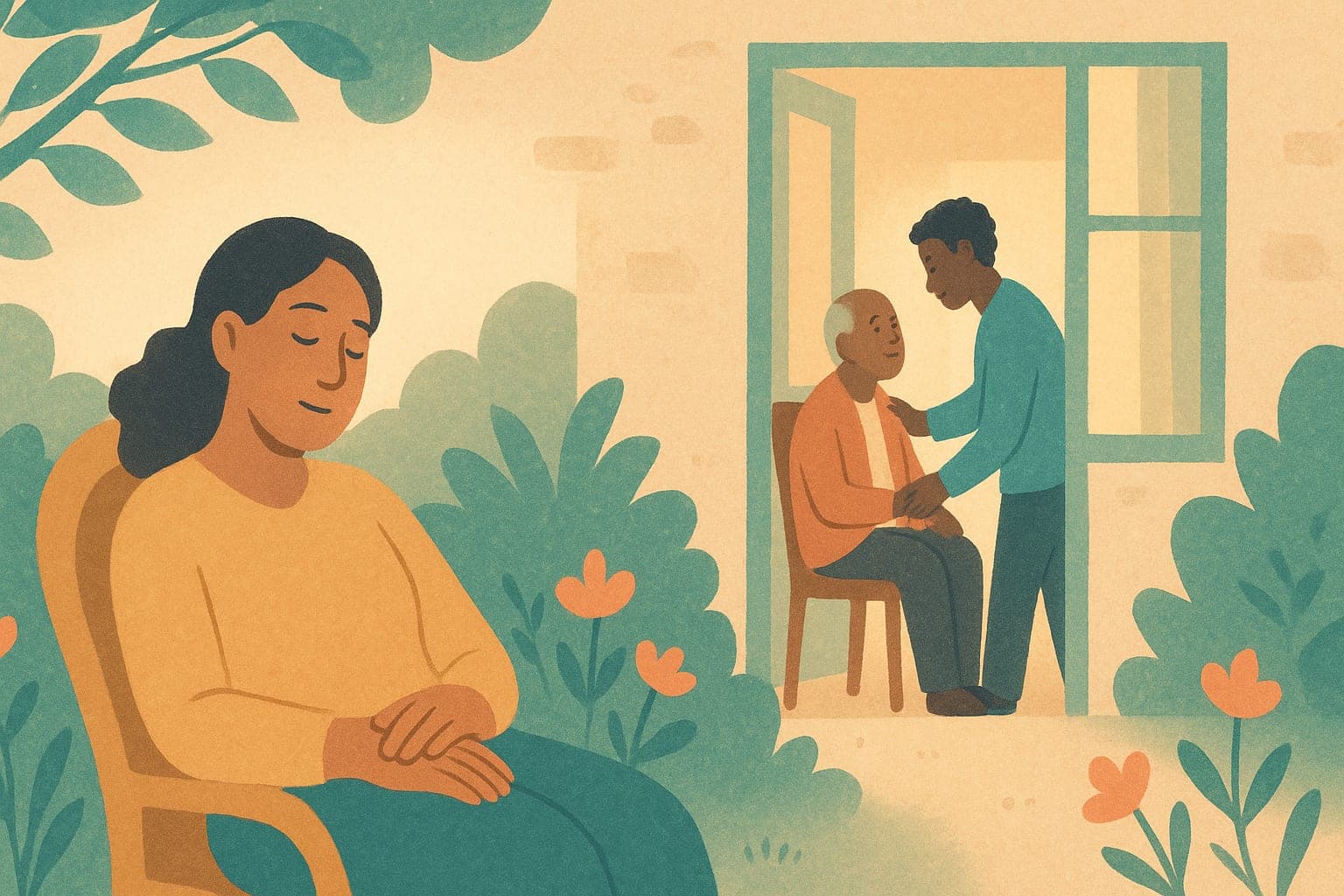
Respite care is short-term care that gives a family caregiver a break while their loved one is safely looked after. It can be help at home, an adult day program, or a short overnight stay. In California you may pay through IHSS, Medi-Cal, the VA, or free county programs.
Key points
- Taking breaks is necessary, not selfish. Rest helps you keep caring for your loved one longer and more safely.
- Respite comes in three main forms: in-home help, adult day programs (like Medi-Cal CBAS), and short overnight stays at a facility.
- You may not have to pay out of pocket. IHSS, Medi-Cal, the VA, and California's free Caregiver Resource Centers can all help cover respite.
- Start with one free phone call: the Eldercare Locator at 1-800-677-1116 or your regional Caregiver Resource Center connects you to local options.
What is respite care, and why isn't taking a break selfish?
Respite care is short-term care for your loved one so that you, the family caregiver, can rest. Someone else steps in for a few hours, a day, or a few nights while your family member stays safe and cared for.
You might use respite to sleep, see your own doctor, run errands, work, go to church, or just breathe. It can be planned ahead of time, or arranged for an emergency like when you get sick.
Caring for a parent, spouse, or family member is one of the hardest jobs there is. Many caregivers feel guilty even thinking about a break. Please hear this clearly: rest is not selfish.
Caregivers who never rest are more likely to get sick, injured, depressed, or burned out. When that happens, both people suffer. Taking breaks is how you protect your own health so you can keep caring for your loved one at home, longer.
- A break of a few hours: in-home help while you leave the house
- A regular weekday break: an adult day program your loved one attends
- A longer break: a short overnight or multi-day stay at a care facility
What types of respite care can I choose from?
There are three main kinds of respite care. The right one depends on your loved one's needs, your budget, and how long a break you need.
In-home respite means a trained aide or companion comes to your home. They can help with bathing, meals, medicine reminders, and supervision while you step out. This is a good fit if your loved one is more comfortable at home or hard to move.
Adult day programs give your loved one a place to go during weekday hours, usually 6 to 8 hours a day. They get meals, activities, and social time with others, and many centers offer transportation. In California, a medical version of this is called Community-Based Adult Services (CBAS), a Medi-Cal benefit that adds skilled nursing, therapies, and personal care at the center.
Short overnight or facility stays let your loved one stay a few nights (or up to a couple of weeks) at an assisted living home, board-and-care, or nursing facility. This is helpful when you travel, have surgery, or simply need several days of real rest.
- In-home respite: an aide comes to you (best for staying home and one-on-one care)
- Adult day / CBAS: your loved one goes out on weekdays (best for daytime work or routine breaks, plus social time)
- Short overnight stay: a few nights at a facility (best for travel, surgery, or a longer rest)
How do I pay for respite care in California?
This is the biggest worry for most families, and there is good news: many caregivers pay little or nothing. Here are the main ways to cover respite in California.
In-Home Supportive Services (IHSS) is a Medi-Cal program that pays for in-home personal care hours. A family member can be the paid provider. If you are the paid caregiver and need time off, a backup or secondary provider can be approved to cover your loved one's authorized hours so you get a break.
Medi-Cal (CBAS) can cover attendance at an adult day health center for people who qualify medically. Ask your Medi-Cal managed care plan whether CBAS or CalAIM community supports are available to your loved one.
VA respite: If your loved one is a veteran with a caregiver approved under the VA's Program of Comprehensive Assistance for Family Caregivers, the VA offers at least 30 days of respite care per year. The veteran generally needs a VA disability rating of 70% or higher, at least six months of needed in-person care, and enrollment in VA health care. Any veteran enrolled in VA health care may also ask about respite as a standard VA service.
California Caregiver Resource Centers (CRCs) and the National Family Caregiver Support Program (through your Area Agency on Aging) offer respite at low or no cost. These are often the easiest free options for families.
Private pay is always an option too. In-home agencies and adult day centers accept out-of-pocket payment, and you can use just a few hours to start.
- IHSS – pays in-home care hours; a backup provider can cover your break
- Medi-Cal CBAS – adult day health center for those who qualify medically
- VA – at least 30 days of respite a year for approved veteran caregivers
- Caregiver Resource Centers – free or low-cost respite in every California county
- Area Agency on Aging (National Family Caregiver Support Program) – free respite grants and vouchers
- Private pay – flexible, start with just a few hours
- Note: Original Medicare does NOT cover respite except for hospice patients
How do I arrange respite care in Southern California?
You do not have to figure this out alone, and you do not need to know the "right" program name to get started. One phone call can point you to everything in your area.
Start with your regional California Caregiver Resource Center. These state-funded centers cover every county, including Los Angeles, Orange, San Diego, Riverside, San Bernardino, Ventura, and Imperial. They give free family consultations, help arrange respite, and can pay for some of it. Find yours at caregivercalifornia.org.
You can also call the Eldercare Locator at 1-800-677-1116 (a free public service). Tell them your ZIP code and they connect you to your local Area Agency on Aging, which runs respite and caregiver programs for people caring for someone 60 or older, or someone with Alzheimer's or dementia at any age.
For quick local referrals in Southern California, you can dial 211 (free, 24/7, many languages) and ask for caregiver respite or adult day programs near you. The Alzheimer's Association Helpline at 1-800-272-3900 is also free, 24/7, and can guide dementia caregivers to local respite and support.
- Call your regional Caregiver Resource Center (find it at caregivercalifornia.org)
- Call the Eldercare Locator: 1-800-677-1116, weekdays, free
- Dial 211 for free local referrals, 24 hours, in many languages
- Veterans: call the VA Caregiver Support Line at 1-855-260-3274
- Dementia caregivers: call the Alzheimer's Association at 1-800-272-3900 (24/7)
What should I do to make sure respite goes smoothly?
A little planning makes respite easier for everyone, and helps your loved one feel safe with a new caregiver.
Write down a simple one-page sheet: your loved one's medicines and times, allergies, favorite foods, daily routine, what calms them, and what upsets them. Include doctor and family phone numbers.
Start small if you are nervous. Try a short in-home visit or a single day at an adult day center before booking a longer stay. This lets your loved one get comfortable and lets you build trust with the provider.
Ask the provider how they handle emergencies, whether staff are trained for your loved one's condition (like dementia or fall risk), and what languages they speak. Many Southern California programs have Spanish-speaking staff and other languages.
Call 911 right away for a true emergency, such as trouble breathing, chest pain, a bad fall, sudden confusion, or a stroke sign like a drooping face or weak arm. Respite care is for planned or short-term relief, not for medical emergencies.
- Prepare a one-page care sheet (medicines, routine, allergies, contacts)
- Do a short trial visit before a longer stay
- Ask about staff training, emergency plans, and languages spoken
- Call 911 for any true medical emergency
Frequently asked questions
Does Medicare pay for respite care?
Original Medicare does not cover respite care for most people. The one exception is if your loved one is on hospice, which includes short inpatient respite stays. For non-hospice respite in California, look to IHSS, Medi-Cal (CBAS), the VA, or free Caregiver Resource Center and Area Agency on Aging programs instead.
Is there any free respite care in Southern California?
Yes. California's Caregiver Resource Centers offer respite at low or no cost in every county, and your local Area Agency on Aging provides free respite through the National Family Caregiver Support Program for those caring for someone 60 or older, or someone with dementia at any age. Call the Eldercare Locator at 1-800-677-1116 to find these.
How many days of respite can I get?
It depends on the program. Approved veteran caregivers get at least 30 days of VA respite per year. Free county and Caregiver Resource Center programs often provide a set number of respite hours or a voucher amount per year, which varies by area. Ask your local program what they can offer.
Can a family member be paid to give me a break?
Through IHSS, a family member can be a paid in-home care provider. If you are the paid caregiver and need time off, a backup or secondary provider can be approved to cover your loved one's authorized hours. Ask your county IHSS office how to set up a backup provider.
My mom has dementia. Will respite confuse or upset her?
Many programs are trained for dementia and use calm routines to help. Start with a short visit so she can get used to the caregiver or center, and share a one-page sheet on what soothes her. The Alzheimer's Association Helpline (1-800-272-3900, free, 24/7) can help you find dementia-capable respite near you.
I feel guilty leaving my loved one. Is respite really okay?
Yes, and it is one of the most caring things you can do. Rested caregivers stay healthier and are able to care for their loved one at home longer. Respite is a normal, expected part of caregiving, not a sign that you are failing. Your well-being is part of your loved one's care.
Need care at home? We will connect you.
Skilled nursing, therapy, personal care, and recovery help — right at home, from trusted local providers. Tell us what you need and we will take it from there. Free, no obligation.
Get home-health careSources
Related guides
This guide is educational and is not medical advice. In an emergency, call 911.