
Paying for care
Medicare vs. Medi-Cal: How They Work Together to Pay for Home Care
Last reviewed July 29, 2026
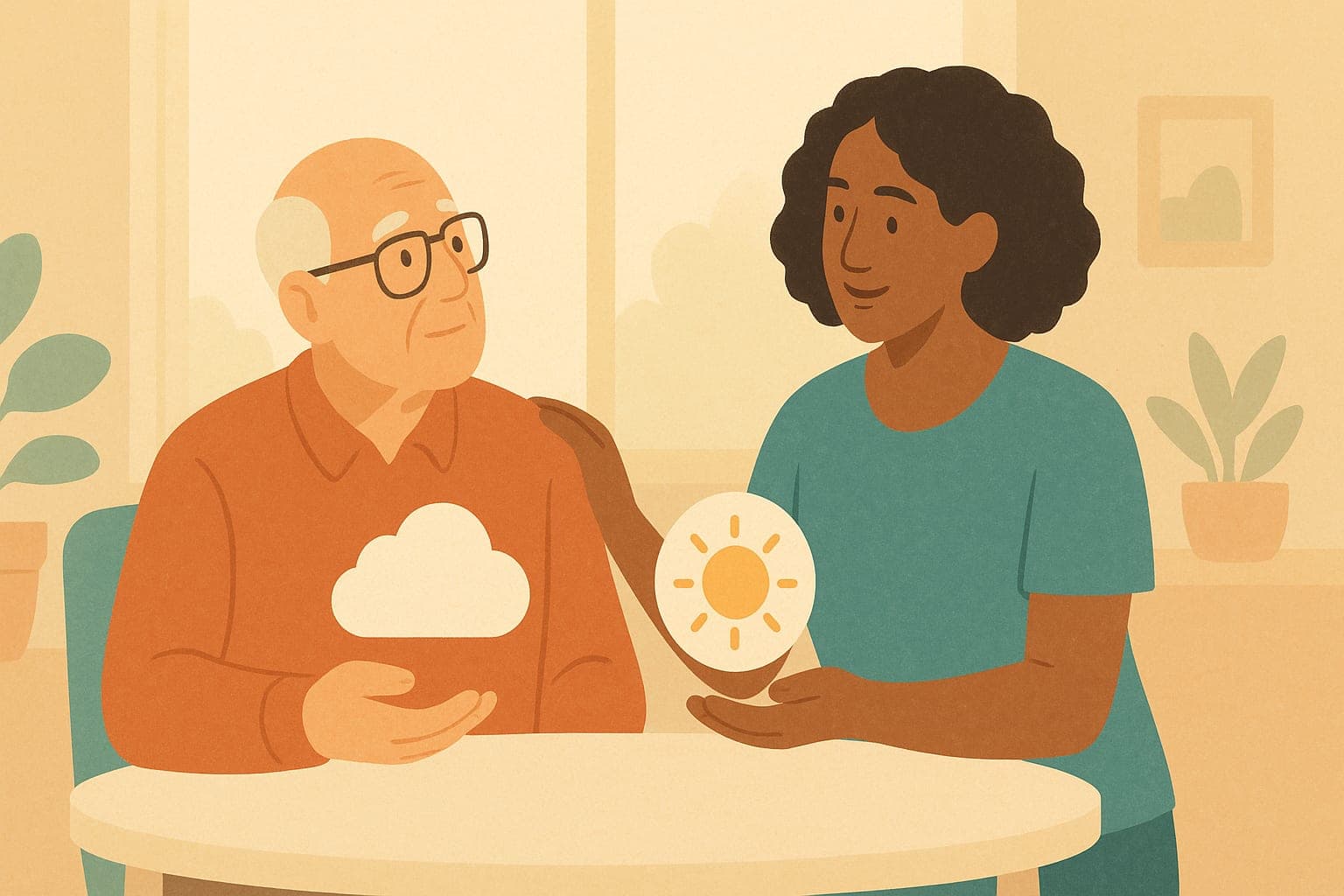
Medicare is federal health insurance you get through age or disability, and it pays for short-term skilled home health — nursing and therapy. Medi-Cal is California's income-based Medicaid, and it covers the ongoing personal care Medicare won't, like IHSS. Many older adults qualify for both, and the two coordinate.
Key points
- Think of it this way: Medicare is about who you are (age 65+ or a qualifying disability), and Medi-Cal is about what you have (income, and in 2026 an asset limit again). They are two different doors.
- Medicare home health is skilled and short-term — nursing and therapy — and you must be homebound. It does not pay for ongoing help with bathing, dressing, or meals when that is the only care your loved one needs.
- Medi-Cal covers the long-term, hands-on personal care Medicare skips. In California that most often comes through IHSS (In-Home Supportive Services).
- If your loved one qualifies for both ('dual eligible'), Medicare pays first and Medi-Cal fills the gaps — including Medicare premiums, deductibles, and copays.
- As of January 1, 2026, California brought back a Medi-Cal asset limit ($130,000 for one person), but the family home and one vehicle are still exempt.
- Free, unbiased help exists. California's HICAP counselors can walk you through both programs at no cost.
What's the real difference between Medicare and Medi-Cal?
The names sound almost identical, and that is exactly why families mix them up during the most stressful weeks of their lives. But they are two separate programs, run by different agencies, built for different reasons.
Medicare is federal health insurance, run by the U.S. government (the Centers for Medicare & Medicaid Services). You earn it through age or disability, not through your income — a retired millionaire and a retired bus driver both get the same Medicare. It works like the insurance you had at work: it helps pay for hospital stays, doctor visits, prescriptions, and some short-term skilled care at home.
Medi-Cal is California's version of Medicaid — a joint federal-state program run here by the Department of Health Care Services (DHCS). It is based on financial need: your income, and starting again in 2026, your assets. Because it is a safety-net program, Medi-Cal covers things Medicare simply does not, especially long-term and personal care.
The shortcut that helps most families: Medicare is about who you are. Medi-Cal is about what you have. Once you hold that distinction, everything else gets easier to sort out.
Who qualifies for each one?
Qualifying for the two programs works in completely different ways, and one has nothing to do with the other. Your loved one may qualify for one, both, or (for a short window) neither.
Medicare eligibility is tied to age and work history through Social Security. Medi-Cal eligibility is tied to income, and — as of January 1, 2026 — an asset limit that California had briefly removed. The good news is that this asset limit is generous compared to the old $2,000 rule, and the most important thing most families own, the home, does not count.
- Medicare: Generally available at age 65. Also available before 65 to people who have received Social Security disability (SSDI) for 24 months, or who have ALS or end-stage renal disease. Enrollment happens through Social Security, often automatically at 65.
- Medi-Cal (income): Covers low-income Californians of any age. Working-age adults generally qualify up to 138% of the federal poverty level; seniors and people with disabilities qualify through separate 'non-MAGI' rules.
- Medi-Cal (assets, 2026): For non-MAGI programs, the reinstated limit is about $130,000 for one person and $195,000 for a couple, plus $65,000 for each additional household member. The primary home, one car, and household goods are exempt.
- Married couples: Special 'spousal impoverishment' protections let the at-home spouse keep a larger share of income and savings when the other spouse needs long-term care.
What does each program actually pay for at home?
This is the question that matters most, and it is where families are most often caught off guard. The two programs cover very different kinds of help under the same roof.
Medicare home health is skilled and short-term. To qualify, a doctor must certify that your loved one is homebound and needs part-time skilled care, and the care must come from a Medicare-certified agency under a plan of care. Covered services include skilled nursing (like wound care or managing a new medication regimen), physical, occupational, and speech therapy, and — only alongside that skilled care — a home health aide for a few hours to help with bathing. It is meant to help someone recover, not to provide daily help indefinitely.
Here is the hard part to hear: Medicare does not pay for a caregiver to come every day to help with bathing, dressing, meals, and companionship when that personal care is the only thing needed. It does not cover 24-hour care at home, meal delivery, or homemaker services like cleaning and laundry on their own.
Medi-Cal is where that everyday, hands-on care lives. In California, it flows mostly through these programs:
- IHSS (In-Home Supportive Services): Pays for a caregiver — often a family member — to help with bathing, dressing, toileting, meal preparation, feeding, and housework so your loved one can stay safely at home.
- CBAS (Community-Based Adult Services): Adult day health centers offering nursing, therapy, meals, and supervision during the day, which also gives family caregivers a break.
- Long-term nursing facility care: Medi-Cal is the main payer for ongoing nursing home care in California; Medicare only covers short, skilled stays after a hospitalization.
- Home- and community-based waiver services: Extra supports designed to keep people out of institutions and living at home.
What is 'dual eligibility,' and how do the two work together?
Many older adults in Southern California qualify for both programs at once. They are called 'dual eligible,' or 'Medi-Medi' for short, and it is one of the strongest positions to be in when paying for care.
When someone has both, Medicare pays first as the primary insurance, and Medi-Cal acts as the secondary payer and the payer of last resort. In practice, the two dovetail beautifully: Medicare's skilled nurse handles the wound care after surgery, while Medi-Cal's IHSS worker handles the daily bathing and meals. Nothing overlaps — each covers the piece the other leaves out.
Medi-Cal also protects the household budget. Through the Medicare Savings Programs, Medi-Cal can pay Medicare's Part B premium, deductibles, and copays for people who qualify — real money back in a family's pocket each month.
California is also making this coordination simpler. Medicare Medi-Cal Plans (also called Medi-Medi Plans or D-SNPs) wrap both programs into a single health plan with one ID card and one care coordinator. These plans expanded to 41 California counties in 2026, including much of Southern California. They are optional, but for families juggling two sets of paperwork, they can be a relief.
How do I apply, and where do I start?
Because the two programs are separate, you apply for them in separate places. You do not have to do it all in one day, and applying is always free.
For Medicare, enrollment runs through Social Security. If your loved one is turning 65, watch for the enrollment window around their birthday; many people are enrolled automatically if they already receive Social Security. You can start at ssa.gov or call 1-800-MEDICARE.
For Medi-Cal, apply any time of year through your county human services agency or online at BenefitsCal (California's benefits portal). There is no open-enrollment deadline — you can apply the moment you need it.
IHSS comes after Medi-Cal. Once your loved one has Medi-Cal, apply through your county IHSS office; a social worker will visit, assess needs, and authorize hours. Because a family member can often be the paid caregiver, this is worth pursuing early.
You do not have to figure this out alone. Every California county has free HICAP (Health Insurance Counseling and Advocacy Program) counselors who give unbiased guidance on Medicare and Medi-Cal. And be cautious: no legitimate program charges a fee to apply, and anyone pressuring your family for payment or personal account numbers over the phone is a warning sign.
What are the common mix-ups families run into?
A few myths cause real heartache and delay. Clearing them up early saves families money and worry.
First: 'Medicare will pay for a caregiver so Mom can stay home.' Not for daily personal care alone — that is the single most common and painful surprise. Medicare's home health benefit is short-term and skilled; the everyday help comes through Medi-Cal and IHSS.
Second: 'You have to be flat broke to get Medi-Cal.' With the 2026 asset limit set around $130,000 for an individual, and the home and one car exempt, many middle-income families qualify — especially seniors with modest incomes and significant care needs.
Third: 'Signing up for one will cancel the other.' It won't. Having both is not only allowed, it is the goal for many older adults, because together the programs cover far more than either does alone.
This guide is educational and not legal, medical, or financial advice. Rules and dollar amounts change, and every family's situation is different — for decisions about your loved one's care and finances, check the official sources below or speak with a HICAP counselor or elder-law attorney. In an emergency, call 911.
Frequently asked questions
Does Medicare pay for a caregiver to help my parent bathe and dress at home?
Not by itself. Medicare only pays for a home health aide when your parent also needs skilled care — like nursing or therapy — and is homebound under a doctor's plan of care, and even then it's part-time and short-term. For ongoing daily help with bathing, dressing, and meals, the program to look at is Medi-Cal's IHSS.
Can someone have both Medicare and Medi-Cal at the same time?
Yes. People with both are called 'dual eligible' or 'Medi-Medi.' Medicare pays first for medical and skilled care, and Medi-Cal fills the gaps — covering long-term personal care and often paying Medicare's premiums and copays. In many California counties you can combine them into one coordinated Medicare Medi-Cal Plan.
If my parent goes on Medi-Cal, will the state take their house?
While your parent is living, the home is an exempt asset and does not affect eligibility. After death, California's Estate Recovery Program may seek repayment for certain long-term care services — but since 2017 the state can only recover from assets that pass through probate, and only for a limited set of services. A home held in a living trust or passed to a named beneficiary often avoids recovery. Because this is complex and personal, ask an elder-law attorney or HICAP before making plans.
Is IHSS the same thing as Medi-Cal?
Not exactly. IHSS is a program funded through Medi-Cal that pays for in-home personal care, but you access it separately, through your county after your loved one is approved for Medi-Cal. Think of Medi-Cal as the eligibility, and IHSS as one of the benefits it unlocks.
Did California really bring back a Medi-Cal asset limit in 2026?
Yes. California removed the asset test for non-MAGI Medi-Cal in January 2024, then reinstated it effective January 1, 2026 — about $130,000 for one person and $195,000 for a couple. It's far more generous than the old $2,000 rule, and the home, one car, and household goods still don't count.
Where can I get free help understanding both programs?
Contact your local HICAP (Health Insurance Counseling and Advocacy Program), a free California service that gives unbiased guidance on Medicare and Medi-Cal. You can also call 1-800-MEDICARE for Medicare questions and your county human services office or BenefitsCal for Medi-Cal. None of these charge a fee.
Need care at home? We will connect you.
Skilled nursing, therapy, personal care, and recovery help — right at home, from trusted local providers. Tell us what you need and we will take it from there. Free, no obligation.
Get home-health careSources
Related guides
This guide is educational and is not medical advice. In an emergency, call 911.