
California benefits
CBAS: California's Adult Day Health Care Program Explained
Last reviewed July 28, 2026
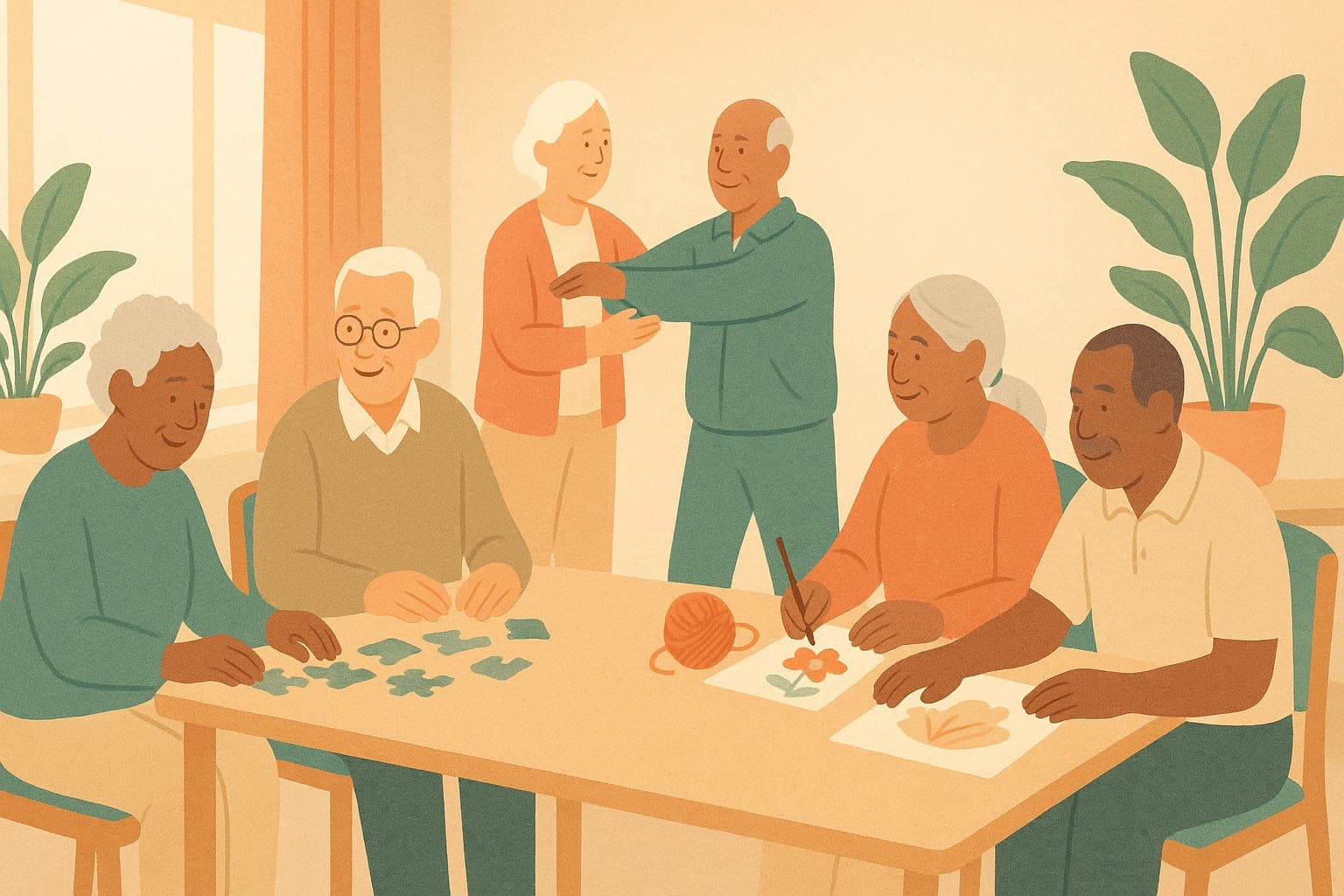
Community-Based Adult Services (CBAS) is a licensed California Medi-Cal day program that offers nursing, therapy, meals, activities, and transportation. It keeps an older or disabled loved one safe and engaged during the day while giving family caregivers a needed break. To qualify, you need Medi-Cal plus a medical, cognitive, or functional need.
Key points
- CBAS is California's licensed Medi-Cal adult day health program, offering nursing, therapy, meals, activities, and transportation in one place.
- To qualify, your loved one needs full-scope Medi-Cal plus an assessed medical, cognitive, or functional need — not just a diagnosis.
- It gives family caregivers dependable, safe hours of respite while keeping a loved one healthy and socially engaged.
- To start, secure Medi-Cal, call your Medi-Cal managed care health plan for an assessment, or contact the California Department of Aging at (916) 419-7545.
What is Community-Based Adult Services (CBAS)?
Community-Based Adult Services, or CBAS, is a licensed day program in California for older adults and adults with disabilities. It used to be called Adult Day Health Care (ADHC). A person goes to a CBAS center during the daytime, then returns home to their family in the evening.
CBAS is a Medi-Cal benefit. The goal is simple: help your loved one stay as healthy and independent as possible, and delay or avoid a move into a nursing home when that is not what the family wants.
A CBAS center is not a nursing home and not a hospital. It is a friendly, staffed place where your loved one gets health care, hot meals, and social time, all in one building, on the days they attend.
- Licensed and regulated by the State of California
- Paid for by Medi-Cal for people who qualify
- Part-day program, usually a set number of days per week
- Your loved one goes home to family each day
Who qualifies for CBAS in California?
To join CBAS, a person generally needs two things: full-scope Medi-Cal, and a real medical, cognitive, or functional need for the care a center provides.
Eligibility is based on care needs, not just a diagnosis. Your health plan uses a state assessment tool to look at how much help your loved one needs with daily tasks like bathing, dressing, walking, taking medicine, or staying safe.
People often qualify when they have one or more of these needs:
- Need help with everyday activities like bathing, dressing, moving around, or managing medicine
- Alzheimer's disease or another form of dementia (a diagnosis alone does not guarantee eligibility — the need must be assessed)
- A chronic mental health condition
- A developmental disability or a brain injury
- A level of need that would otherwise point toward a nursing facility
What happens at a CBAS center each day?
A CBAS center brings several services together under one roof so families do not have to run to many appointments. Trained staff watch over your loved one's health and keep the day active and social.
Every center offers a core set of services covered by Medi-Cal:
- Professional nursing to watch health, check vital signs, and manage medications
- Physical, occupational, and speech therapy when needed
- Personal care help, such as help with the bathroom or walking safely
- A hot meal and nutrition support, with menus for special diets
- Mental health and social work support
- Group activities, exercise, and social time to keep the mind and body engaged
- Round-trip transportation between home and the center
How does CBAS give family caregivers a break?
Caring for a parent or spouse full-time is exhausting. Many family caregivers in Southern California juggle a job, kids, and their own health at the same time. Burnout is real, and it is not a personal failing.
CBAS gives you scheduled, dependable hours when your loved one is safe, fed, and cared for by professionals. This is often called respite. You can go to work, rest, see your own doctor, or simply breathe.
Because the center provides transportation, you may not need to drive your loved one there and back. That alone can save hours each week.
Your loved one benefits too. Instead of sitting home alone, they get medical oversight, movement, a warm meal, and the company of others. For someone with early dementia, that daily routine and social contact can help their mood and slow decline.
How do I find and enroll in a CBAS center in Southern California?
CBAS centers operate across Southern California, including Los Angeles, Orange, Riverside, San Bernardino, San Diego, and Imperial counties. Many centers offer service in Spanish and other languages, so ask.
Here is a simple path to get started:
- Step 1: Make sure your loved one has full-scope Medi-Cal. If they do not have Medi-Cal yet, apply through BenefitsCal.com, CoveredCA.com, or your county social services office, and say you need long-term home and community-based care.
- Step 2: Call the Medi-Cal managed care health plan. In Southern California this may be L.A. Care or Health Net (Los Angeles), CalOptima (Orange County), IEHP or Molina (Riverside and San Bernardino), or a San Diego plan. The plan decides CBAS eligibility and can name centers.
- Step 3: Ask for a CBAS assessment. A nurse or social worker will review your loved one's needs.
- Step 4: To find centers directly, contact the California Department of Aging CBAS line at (916) 419-7545 or email CBASCDA@aging.ca.gov, or ask your health plan for its list of nearby centers.
- Step 5: Visit a center or two before deciding. Tour, meet staff, and ask about days available, languages, and transportation range.
Frequently asked questions
Does CBAS cost the family anything?
For people with full-scope Medi-Cal who qualify, CBAS is a covered Medi-Cal benefit, so there is generally no separate bill for covered services. Some people with higher income may have a Medi-Cal "share of cost." Your county or health plan can explain your exact situation.
Is CBAS the same as a nursing home?
No. CBAS is a daytime program. Your loved one attends during the day and goes home to family each evening. It is designed to help people stay in their own home and community instead of moving into a nursing facility.
Can someone with dementia go to CBAS?
Yes, many CBAS participants have Alzheimer's disease or another dementia. A diagnosis by itself does not guarantee eligibility — the health plan assesses how much daily help and supervision the person needs. Centers are staffed to keep people with memory loss safe and engaged.
How many days a week can my loved one attend?
The number of days is based on your loved one's assessed needs and care plan, set with the center and health plan. Some people attend a few days a week, others more. Ask the center and your Medi-Cal plan what schedule they can approve.
What if we only have Medicare, not Medi-Cal?
CBAS is a Medi-Cal program, so Medicare alone does not cover it. If your loved one has low income, they may qualify for Medi-Cal too (this is called being dually eligible). Apply through BenefitsCal.com or your county office to find out.
Does CBAS provide transportation?
Yes. Round-trip transportation between home and the center is a standard CBAS service. This is a big help for families who cannot drive their loved one every day. Confirm the center serves your address, since each center covers a set area.
Need care at home? We will connect you.
Skilled nursing, therapy, personal care, and recovery help — right at home, from trusted local providers. Tell us what you need and we will take it from there. Free, no obligation.
Get home-health careSources
Related guides
This guide is educational and is not medical advice. In an emergency, call 911.