
California benefits
Nutrition and Meal Help for Older Adults in Southern California
Last reviewed July 28, 2026
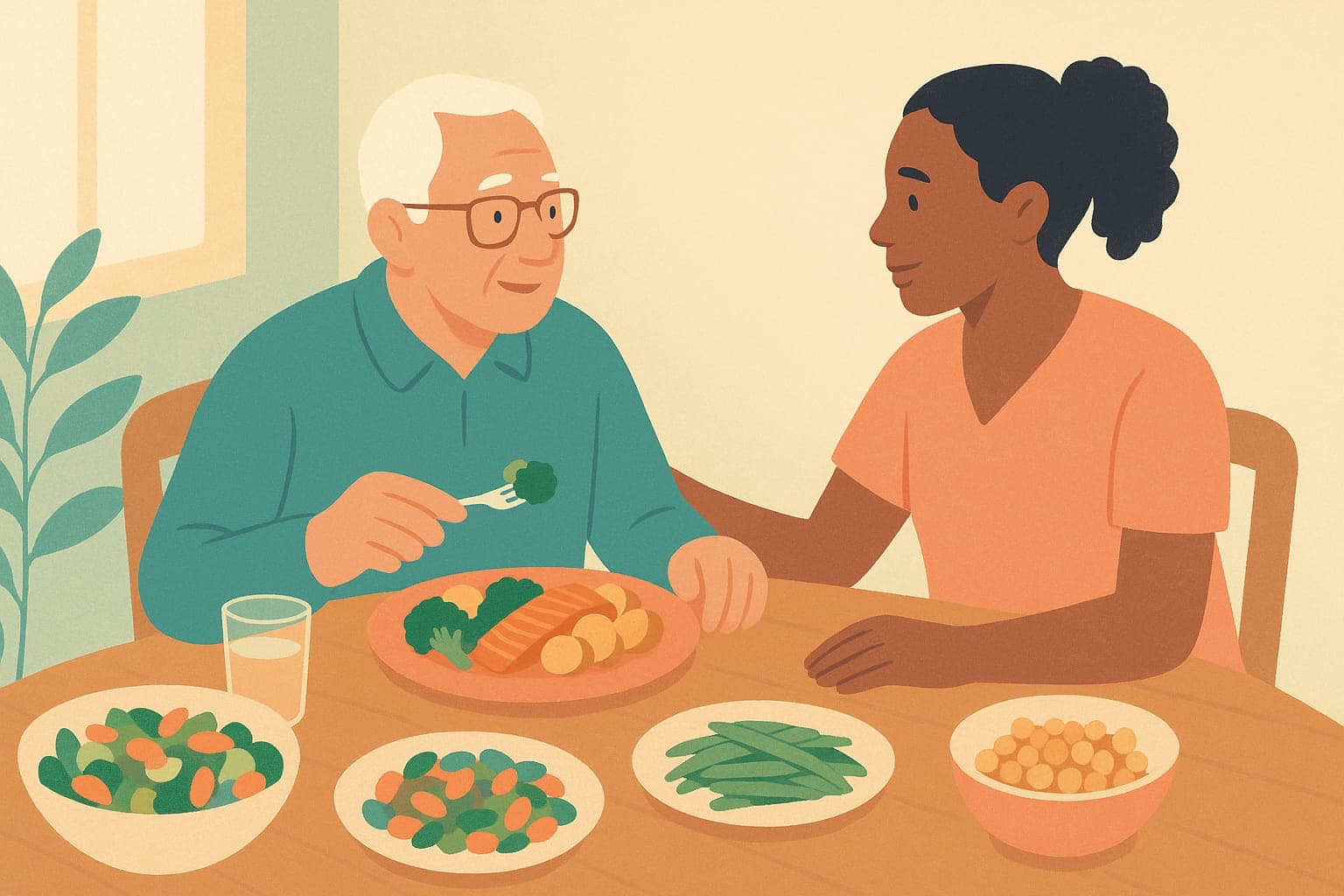
Older adults in Southern California can eat well with the right support. Watch for weight loss and low appetite, focus on protein and fluids, and use free or low-cost programs like Meals on Wheels, senior center meals, CalFresh, and IHSS. To find local help, call your Area Agency on Aging at 1-800-510-2020.
Key points
- About 1 in 2 older adults is at risk of poor nutrition; watch for unplanned weight loss, low appetite, weakness, and mood changes, and tell the doctor.
- Focus on protein at every meal, easy-to-eat foods, colorful fruits and vegetables, and steady fluids, especially in hot inland areas.
- Free and low-cost meal help is available: Meals on Wheels, senior center meals, CalFresh benefits, and IHSS meal preparation.
- One call to your Area Agency on Aging at 1-800-510-2020 connects you to local meal programs across Southern California.
Why does good nutrition matter so much as we age?
Eating well is one of the most powerful things an older adult can do to stay strong, steady on their feet, and independent at home. Good nutrition helps protect against falls, speeds up healing after an illness or surgery, supports memory and mood, and helps the body manage conditions like diabetes and heart disease.
As we get older, our bodies need fewer calories but the same amount of, or even more, key nutrients like protein. That makes every meal count. A person can eat plenty of food and still be missing what their body needs. In fact, poor nutrition affects people of every body size, including those who are overweight.
This matters for a lot of families. Experts estimate that about 1 in 2 older adults is at risk of malnutrition, and millions of older Americans do not always have enough food. In Southern California, high living costs, living alone, and trouble getting to the store can all make eating well harder.
What are the warning signs of poor nutrition in a senior?
Poor nutrition often creeps up slowly. You may notice it in a parent or neighbor before they notice it themselves. Watch for these signs:
Many things can cause these changes: loss of appetite, medication side effects, dental problems, depression, memory loss, a tight budget, or simply not being able to shop and cook anymore. If you notice several of these signs, or a sudden change, talk with the person's doctor. Unplanned weight loss is always worth a medical visit, because it can be an early clue to a treatable problem.
- Losing weight without trying, or clothes and rings becoming loose
- Little appetite, skipping meals, or an empty refrigerator
- Feeling weak, tired, or dizzy more than usual
- Getting sick often or healing slowly from cuts and infections
- Bruising easily
- New sadness, irritability, or low mood
- Trouble chewing, sore teeth, dry mouth, or trouble swallowing
- Forgetting to eat, or no longer cooking meals they used to enjoy
What are practical tips for eating well and staying hydrated?
Small, steady changes work better than big ones. The goal is nourishing food that is easy to prepare and enjoyable to eat.
A quick note on hydration limits: some people with heart or kidney conditions are told to limit fluids. Always follow the person's own doctor's instructions over general tips.
- Put protein at every meal. Eggs, beans, lentils, Greek yogurt, cheese, fish, chicken, tofu, and nut butters help keep muscles strong.
- Make food easy to eat. Choose soft, ready-to-eat, or pre-cut foods if chewing is hard. Keep simple snacks within reach.
- Aim for color on the plate. Fruits and vegetables (fresh, frozen, or canned with low salt) add fiber and vitamins. Frozen is just as healthy and lasts longer.
- Do not skip fluids. Many older adults feel less thirsty, so offer water throughout the day. Soups, milk, and fruit like watermelon and oranges also count. In our hot inland areas, from the Inland Empire to the deserts, dehydration is a real risk, especially in summer.
- Make meals social. People eat better with company. A shared lunch at a senior center or a standing family dinner can make a big difference.
- Ask the doctor or pharmacist about medicines and appetite. Some drugs change taste or appetite, and some interact with certain foods.
- Consider a registered dietitian. For diabetes, kidney disease, or swallowing problems, ask the doctor for a referral for a plan made for that person.
What programs provide meals for older adults?
Southern California has a strong network of free and low-cost meal programs. Most are funded through the federal Older Americans Act and run locally. Here are the main ones.
Meals on Wheels (home-delivered meals). Volunteers and staff bring ready-to-eat meals right to the homes of older adults who have trouble shopping or cooking. Along with food, drivers do a friendly wellness check, which can be a lifeline for someone who lives alone. These programs generally serve people age 60 and older. There is no income test, though programs may serve those with the greatest need first, and a small voluntary donation is often welcomed but never required.
Senior center congregate meals. Many senior centers, community centers, and faith-based sites across Los Angeles, Orange, San Diego, Riverside, San Bernardino, and Ventura counties serve a hot, balanced lunch in a group setting. These meals are open to people 60 and older (and their spouse of any age). Beyond the food, they offer friendship and a chance to get out of the house, which fights the loneliness that often leads to poor eating.
CalFresh food benefits (California's SNAP). CalFresh puts money on an EBT card each month to buy groceries at stores, many farmers markets, and some online retailers. Seniors get special treatment: a household with a member 60 or older does not have to pass the usual gross-income test, can deduct out-of-pocket medical costs over $35 a month, and may qualify with higher costs of living. Even a small monthly benefit helps stretch a fixed income. Note: new CalFresh work rules begin June 1, 2026, but older adults are generally exempt.
IHSS meal preparation (In-Home Supportive Services). IHSS is a California program that pays a caregiver, who can often be a family member, to help an eligible low-income older or disabled person stay safely at home. Covered help includes meal preparation (planning, cooking, and serving) and meal cleanup. A county social worker visits to assess needs and approve hours. This is a great fit when someone can stay home but can no longer cook safely on their own.
How do I find these programs near me in Southern California?
The single best starting point is your county Area Agency on Aging (AAA). California has a network of these agencies, and each one knows the meal sites, delivery programs, and services in your community.
One phone call connects you:
You do not need to know which program is right before you call. Tell them the situation, that a parent is losing weight, cannot get to the store, or lives alone and is not eating, and they will help match you to the right help. These calls are free, and asking for help is a sign of good caregiving, not failure.
- Call the California Aging and Adult Information Line at 1-800-510-2020. It is toll-free and automatically routes you to your local Area Agency on Aging. Interpreters are available in many languages.
- Call the national Eldercare Locator at 1-800-677-1116 to find services anywhere in the country.
- For CalFresh, apply online at BenefitsCal.com, call 1-877-847-3663, or visit your county social services office.
- For IHSS, contact your county IHSS or social services office, or ask the Area Agency on Aging to point you there.
- For Meals on Wheels, visit mealsonwheelsamerica.org to find your local program, or ask your AAA.
Frequently asked questions
Who qualifies for Meals on Wheels in Southern California?
Most programs serve adults age 60 and older who have trouble shopping for or preparing meals. There is usually no income requirement, though programs may prioritize those with the greatest need. Call your Area Agency on Aging at 1-800-510-2020 to check and sign up.
Can I get CalFresh if I receive Social Security or a small pension?
Often, yes. Getting Social Security or a pension does not automatically disqualify you. Households with a member 60 or older get special rules, including a medical expense deduction and no regular gross-income test. Apply at BenefitsCal.com or call 1-877-847-3663 to see what you qualify for.
Does IHSS really pay a family member to cook for my parent?
Yes, in many cases. IHSS can pay an approved caregiver, including a family member, to prepare meals and clean up for an eligible low-income older or disabled person. A county social worker assesses the need and approves the hours. Contact your county IHSS office to start.
My mom has lost weight and barely eats. What should I do first?
Start with her doctor, because unplanned weight loss can signal a treatable medical or dental problem. Then line up meal support, such as Meals on Wheels or CalFresh, by calling 1-800-510-2020. Offer easy, protein-rich foods and regular fluids in the meantime.
Are senior center meals free?
Congregate meals at senior centers are offered to people 60 and older at no set charge. A small voluntary donation is welcomed but never required, and no one is turned away for being unable to pay. Your Area Agency on Aging can tell you the nearest meal site.
How much water should an older adult drink each day?
There is no single number that fits everyone, and some people with heart or kidney conditions are told to limit fluids. Offer water throughout the day, include foods like soup and fruit, and follow the person's own doctor's guidance, especially during hot Southern California summers.
Need care at home? We will connect you.
Skilled nursing, therapy, personal care, and recovery help — right at home, from trusted local providers. Tell us what you need and we will take it from there. Free, no obligation.
Get home-health careSources
- Administration for Community Living (ACL) — Older Americans Act Senior Nutrition Services
- California Department of Aging — Nutrition Services
- National Council on Aging — Malnutrition and Older Adults: Signs, Causes, and Facts
- California Department of Social Services — IHSS Consumer Handbook
- Meals on Wheels America
Related guides
This guide is educational and is not medical advice. In an emergency, call 911.