
Veterans
Filipino World War II Veterans: Benefits, Recognition, and Where Families Can Get Free Help
Last reviewed August 3, 2026
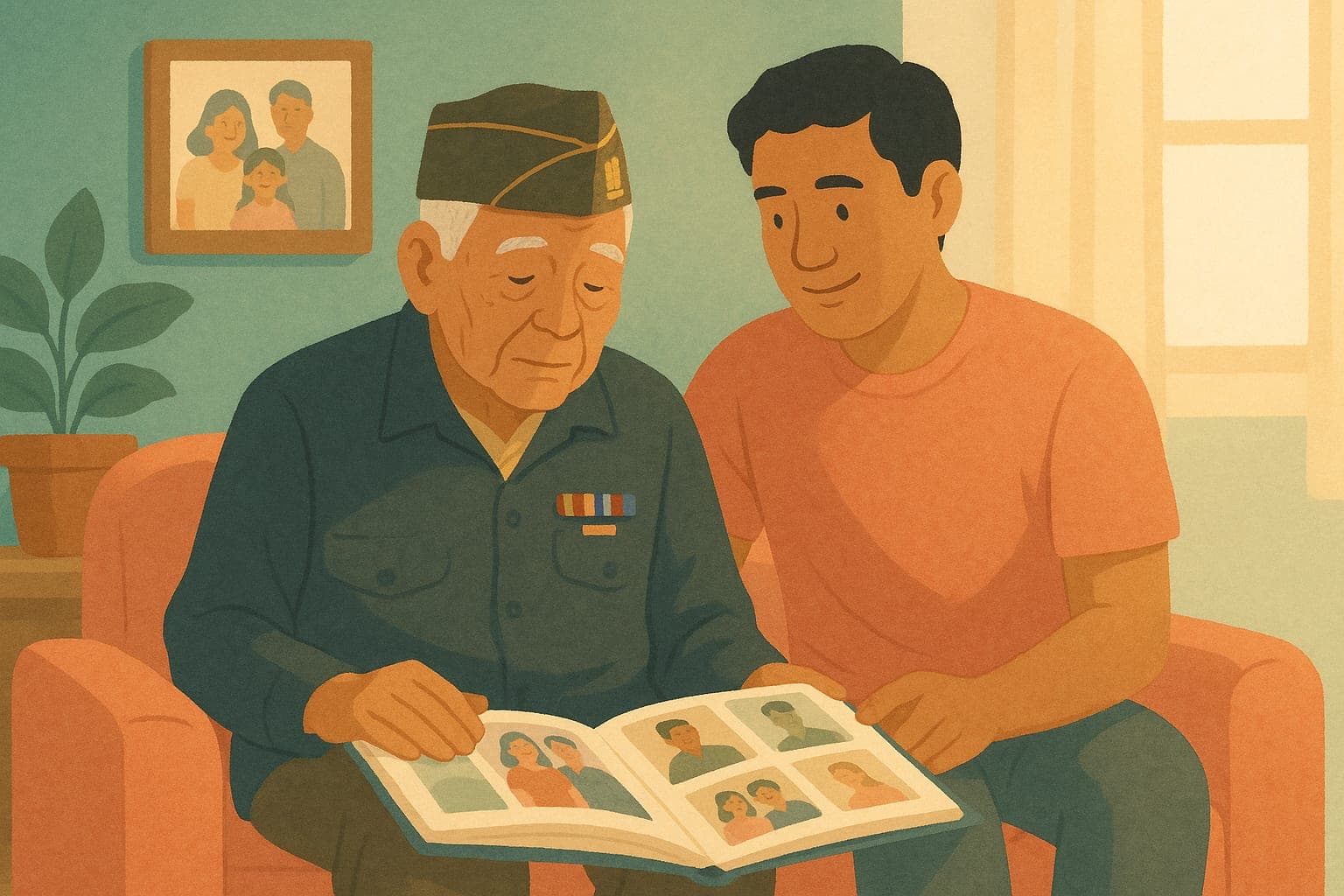
Filipino World War II veterans hold a special and complicated place in U.S. law. Some may receive the full range of VA benefits; others may receive only certain benefits, sometimes at half rate. The one-time Filipino Veterans Equity Compensation (FVEC) payment is closed — the filing deadline passed in February 2010, and VA confirmed as of March 2025 that no further payments will be made. But disability compensation, survivor benefits, burial benefits, VA health care for some groups, immigration parole, and the Congressional Gold Medal may still be available.
Key points
- The FVEC lump sum is closed. The one-year filing window ended in February 2010, and VA confirmed as of March 2025 that no further payments will be made. No one can get it for you now.
- Which unit matters more than anything else. U.S. Armed Forces, Regular Philippine Scouts, and Insular Force of the U.S. Navy service is shown as bringing compensation, pension, and clothing allowance. Commonwealth Army, recognized guerrilla, and new Philippine Scout service brings compensation and clothing allowance — VA's fact sheet lists pension as "No".
- The half-rate rule is real, and so is the way out of it. Payments under the excepted chapters are generally made at $0.50 per dollar, but compensation and survivor DIC may be paid at the full rate to someone residing in the U.S. who is a citizen or lawful permanent resident.
- Survivor benefits are the most overlooked. DIC, accrued benefits, and burial benefits have no one-year deadline like the FVEC had — many families never applied because the veteran died decades ago.
- VA health care may be available in California. Federal law directs VA to furnish hospital, nursing home, and medical services to Commonwealth Army veterans, recognized guerrillas, and new Philippine Scouts who live in the U.S. as citizens or lawful permanent residents. Apply with VA Form 10-10EZ.
- The Congressional Gold Medal is an honor, not an eligibility ticket. Its definition of service is broader than VA's benefit rules, and next of kin can apply to FilVetREP for a bronze replica.
- Free, accredited help exists everywhere in Southern California. VSO representatives' services on VA claims are always free, County Veterans Service Offices cost nothing, and attorneys and claims agents generally cannot charge until after VA issues a decision and a notice of disagreement is filed.
- Every dollar figure here changes each December 1 with the COLA. Confirm current amounts with VA before you rely on them, and remember only VA can decide eligibility.
What do most veteran families miss?
These are the easy-to-miss angles — the early-eligibility rules and quiet ways veteran families leave help on the table. Each one is explained in full below.
- Check for a second period of service. Many men served in the Commonwealth Army or a guerrilla unit during the war and then enlisted in the U.S. Army or the Regular Philippine Scouts afterward. A later period of qualifying U.S. service can change the entire benefit picture, including pension eligibility. Ask VA to review the complete service record, not just the wartime portion.
- Report a change in citizenship or residence immediately. Under 38 U.S.C. section 107(c), the half-rate rule does not apply to compensation or survivor DIC for a person residing in the United States who is a U.S. citizen or an alien lawfully admitted for permanent residence. A surviving spouse who becomes a green card holder or citizen after moving to California may see the payment change — but VA has to be told.
- Accepting the FVEC payment did not erase health care, survivor, or burial eligibility. The statute's release clause specifically preserves benefits the person would have been eligible to receive under the laws in effect the day before the Act was enacted. Families who were told the lump sum was 'the end of it' should ask again.
- An old FVEC payment should not count against needs-based programs. The 2009 law says the payments are treated as damages for human suffering for federal tax purposes and shall not be included in income or resources when determining eligibility for, or the amount of, other federal or federally assisted programs. If an eligibility worker is counting an old FVEC payment against a benefit, ask a free benefits counselor to look at the statute.
- Survivors of veterans who died long ago can still file. Unlike the FVEC, DIC and burial benefits have no one-year window. Families who assumed the file was closed in 1975 or 1998 should have a County Veterans Service Officer review it. Form 21P-534EZ covers DIC, Survivors Pension, and accrued benefits in one application.
- Ask about the clothing allowance. VA's fact sheet lists it as available at half rate for Commonwealth Army, guerrilla, and new Philippine Scout veterans. It is an annual payment for a veteran whose service-connected disability requires a prosthetic or orthopedic device that damages clothing. It is small, it is annual, and it is regularly forgotten.
- National cemetery burial and full-rate burial benefits are two different rules — ask about both. 38 U.S.C. 2402(a)(8) makes an individual whose service is described in section 107 eligible for interment in a national cemetery if, at the time of death, they were a U.S. citizen or lawful permanent resident and resided in the United States. Section 107(d) separately lifts the half-rate rule for chapter 23 burial benefits, but adds compensation-related and death-date conditions. VA's burial eligibility page lists death on or after November 1, 2000 or December 16, 2003 depending on the service.
- Request expedited processing because of age. USCIS says many people seeking parole as family of a Filipino war veteran are at an advanced age, and describes how to request expedited processing of Form I-130 and of a pending humanitarian reinstatement request tied to the FWVP program — call the USCIS Contact Center after you get your receipt notice.
- Verify credentials before handing anyone a document. VA's Office of General Counsel runs a free public accreditation search, and you can download the full lists of accredited attorneys, claims agents, and VSO representatives. If the person is not listed, do not sign a fee agreement.
- Ask VA whether the section 1312(a) carve-out affects your case. Section 107 excepts chapter 13 for survivors, but specifically excludes section 1312(a). It is a narrow point, but it is a real one — a free accredited representative can tell you whether it touches your claim.
Who were the Filipino veterans of World War II, and what changed in 1946?
On July 26, 1941, President Franklin D. Roosevelt signed a military order calling the organized military forces of the Government of the Philippines into the service of the United States. The United States Armed Forces in the Far East (USAFFE) was established the next day under General Douglas MacArthur.
Congress later recorded, in the findings of the Congressional Gold Medal law, that those who served under USAFFE included the Philippine Scouts, members of the Philippine Commonwealth Army, the new Philippine Scouts who volunteered after U.S. forces returned, Filipino civilians who were attached to Army units in 1945 and 1946, and the Guerrilla Services who fought behind enemy lines. The same findings note Japanese intelligence estimates that around 300,000 Filipinos fought against Japanese forces.
They fought, starved, and died as part of the American war effort. Many were promised the benefits that came with U.S. military service.
In 1946, Congress passed what are commonly called the Rescission Acts. The result, now written into federal law at 38 U.S.C. section 107, is that service before July 1, 1946 in the organized military forces of the Commonwealth of the Philippines — including recognized guerrilla forces — and service in the new Philippine Scouts is deemed not to be active service for most U.S. benefit laws. A short list of benefits was carved out as exceptions. The Gold Medal law's own findings say plainly that the Rescission Acts of 1946 reversed what the 1941 order had promised.
This single decision is why, eighty years later, two Filipino veterans who fought in the same battle can have very different benefits. It is not a mistake in your paperwork. It is written into the law.
What was the Filipino Veterans Equity Compensation (FVEC) Fund, and can my family still apply?
The FVEC Fund was created to give a one-time, lump-sum payment to Filipino World War II veterans. The fund itself was established in a 2009 appropriations act. Congress then funded it and set the rules through the American Recovery and Reinvestment Act of 2009 (Public Law 111-5), which the President signed on February 17, 2009 and which appropriated $198,000,000 for the fund. Because claims came in higher than expected, Congress later authorized an additional transfer of up to $67 million so that every eligible payment could be made.
The law set two payment amounts: $9,000 for an eligible person who was not a U.S. citizen, and $15,000 for an eligible person who was a U.S. citizen. Only one payment could ever be made per veteran.
Please read this next part carefully, because it is the question families ask most. The law allowed a claim only during the one-year period beginning on the date the Act was enacted. That window closed in February 2010. A congressional press release dated May 12, 2026 states that, as of March 2025, VA confirmed there are no remaining pending claims or appeals and no further payments will be made from the fund. About $56 million remains unobligated in the account, and a bill has been introduced to close the account and return that money to the Treasury.
We are sorry to be blunt about this. If your father or grandfather did not file an FVEC claim by the 2010 deadline, there is no way to file one now, and anyone who offers to get you that $15,000 today is not telling you the truth. But please keep reading — other benefits are still open, and they are the ones that matter most for a family caring for someone at home.
- Payment was $9,000 for a non-U.S. citizen and $15,000 for a U.S. citizen (amounts fixed by the 2009 law).
- Claims had to be filed within one year of February 17, 2009 — that deadline has passed.
- If an eligible person filed a claim and died before payment, the law directed the payment to the surviving spouse instead.
- As of March 2025, VA confirmed no claims or appeals remain pending and no further payments will be made.
- At the November 20, 2014 congressional hearing on the fund, a member stated that almost 19,000 claims had been approved and nearly 24,000 had been denied. VA testimony at the same hearing reported that, as of October 31, 2014, of 42,755 claims received, the Manila regional office had granted 18,929 FVEC payments totaling $225,668,204.
Which Filipino veterans may get VA benefits today — and which may not?
VA groups Filipino veterans by the unit they served in. The group determines which benefits may be available. This is the most important page in your family's file.
According to VA's Veterans Benefits Administration fact sheet (updated August 2018), veterans who served in the Armed Forces of the United States, in the Regular Philippine Scouts (enlisted before October 6, 1945), or in the Insular Force of the U.S. Navy are shown as eligible for disability compensation, VA pension, and clothing allowance — the same three monetary benefits as any other U.S. veteran.
For the Commonwealth Army of the Philippines (service from July 26, 1941 through June 30, 1946), recognized guerrilla units (service before July 1, 1946), and the Special (new) Philippine Scouts (enlisted between October 6, 1945 and June 30, 1947), the same fact sheet shows disability compensation as available — at the full rate for U.S. residents and the half rate for non-U.S. residents — and clothing allowance at the half rate. It lists pension as "No" for all three of these groups.
We want to be very clear about what that means, because our site writes often about the VA pension with Aid and Attendance for home care. If your loved one's only service was in the Commonwealth Army, a recognized guerrilla unit, or the new Philippine Scouts, the VA needs-based pension — and the Aid and Attendance increase that comes with it — is generally not available on that service. Please do not let anyone charge you to file for it. Ask VA or a free accredited representative to confirm exactly which category your loved one's records show before anyone spends money.
- Armed Forces of the United States — compensation, pension, and clothing allowance.
- Regular Philippine Scouts (enlisted before Oct. 6, 1945) and Insular Force of the U.S. Navy — compensation, pension, and clothing allowance.
- Commonwealth Army of the Philippines — compensation (full rate for U.S. residents, half rate otherwise) and clothing allowance at half rate; VA's fact sheet lists pension as "No".
- Recognized guerrilla service before July 1, 1946 — compensation (full rate for U.S. residents, half rate otherwise) and clothing allowance at half rate; pension listed as "No".
- Special (new) Philippine Scouts (enlisted Oct. 6, 1945 – June 30, 1947) — compensation (full rate for U.S. residents, half rate otherwise) and clothing allowance at half rate; pension listed as "No".
- Always ask VA to confirm the category on the actual service record. Do not rely on this list alone.
Why do some families receive only half the amount?
This is the rule that surprises families most. Under 38 U.S.C. section 107, this service is not counted as active service except for a short list of benefit chapters — chapter 11 (disability compensation), chapter 13 (survivor Dependency and Indemnity Compensation, except section 1312(a)), chapter 23 (burial benefits), and chapter 24 (national cemeteries). And for those chapters the law says payments are made at a rate of $0.50 for each dollar authorized. Half. Where annual income is a factor, the income limits also apply at fifty cents on the dollar.
There is an important exception, and it is worth knowing because it can double a check. For disability compensation and for survivor Dependency and Indemnity Compensation, section 107(c) says the half-rate sentence does not apply to a person who is residing in the United States and who is a citizen of the United States or an alien lawfully admitted for permanent residence.
In plain words: a Filipino veteran or surviving spouse who lives in the United States and holds U.S. citizenship or a green card may be paid at the full rate rather than half. A family member who moves to California and later becomes a lawful permanent resident or a citizen should tell VA right away, because the rate may change.
A similar full-rate rule in section 107(d) applies to burial benefits under chapter 23 for individuals who, at the time of death, met citizenship or green-card status, U.S. residence, and certain compensation-related conditions, and who died on or after the dates the law specifies. Ask VA to review your specific situation — please do not assume.
Can a Filipino World War II veteran get VA health care and home care?
Sometimes yes, and this is one of the most useful benefits still on the table for a family caring for someone at home.
Federal law at 38 U.S.C. section 1734 directs VA to furnish hospital care, nursing home care, and medical services to a Commonwealth Army veteran or new Philippine Scout in the same manner, and subject to the same terms, as it does for other veterans — if that person is residing in the United States and is a U.S. citizen or an alien lawfully admitted for permanent residence. Section 1735 defines Commonwealth Army veterans to include organized guerrilla forces under commanders appointed, designated, or later recognized by the U.S. commander in the Southwest Pacific Area.
VA's fact sheet says the same thing in plainer words: Commonwealth Army, Special Philippine Scouts, and guerrilla veterans may be eligible for health care benefits in the U.S. on the same basis as U.S. veterans if they are U.S. citizens or lawfully admitted for permanent residence. Regular Philippine Scouts are eligible for VA health care based on their status as U.S. veterans.
If your loved one qualifies and is enrolled in VA health care, the door opens to services families actually need day to day — primary care, specialty care, and, depending on the VA facility and a clinical assessment, home-based services. Enrollment is the first step, and it is free to apply. Enrollment does not by itself guarantee any particular home care service; that depends on a clinical assessment and what the local VA offers.
- Apply for VA health care with VA Form 10-10EZ, Application for Health Benefits — online at VA.gov, by phone, by mail, or in person at a VA medical center or clinic.
- VA's health care application line is 877-222-8387, Monday through Friday, 8:00 a.m. to 8:00 p.m. ET.
- Applications by mail go to the Health Eligibility Center, PO Box 5207, Janesville, WI 53547-5207.
- Bring proof of U.S. citizenship or lawful permanent residence and proof that you live in the United States — for these groups, the law requires both.
- Bring any service documents you have: discharge or recognition papers, the VA claim number, Army recognition records, or old VA letters.
- Ask a free accredited representative to sit with you rather than filling out the form alone.
What benefits can a surviving spouse or child receive?
Survivor benefits are the most commonly missed benefit in Filipino veteran families, often because the veteran passed away years ago and no one thought to ask.
Dependency and Indemnity Compensation (DIC) is a tax-free monthly payment to certain survivors of a veteran who died from a service-related cause. Chapter 13 of Title 38 is one of the benefit chapters excepted in section 107 — with a carve-out for section 1312(a) — so survivors of Commonwealth Army, guerrilla, and new Philippine Scout veterans may be eligible, subject to the same half-rate rule and the same full-rate exception for survivors who live in the United States as citizens or lawful permanent residents.
VA's current rate table, effective December 1, 2025, shows a base monthly DIC rate of $1,699.36 for a surviving spouse of a veteran who died on or after January 1, 1993. VA lists added monthly amounts of $360.85 for the 8-year provision, $421.00 for Aid and Attendance, $197.22 for Housebound, $421.00 for each child under 18, and a $359.00 transitional benefit for the first two years after the veteran's death. These figures change every December 1 with the cost-of-living adjustment, so please confirm the current amount with VA. Remember that a survivor who does not meet the U.S.-residence and citizenship or green-card test may be paid at half these rates.
Burial benefits are also on the excepted list. VA states that a Philippine veteran may be eligible for burial in a VA national cemetery if, at the time of death, they were a U.S. citizen or an alien lawfully admitted for permanent residence and were residing in the United States, and if they served before July 1, 1946 in the Philippine military (including recognized guerrilla forces) while those forces were in the service of the U.S. Armed Forces and died on or after November 1, 2000 — or enlisted between October 6, 1945 and June 30, 1947 with the U.S. Armed Forces with the consent of the Philippine government and died on or after December 16, 2003. Rules for spouses and dependents can differ from the rules for the veteran, so ask the National Cemetery Administration directly rather than assuming.
- DIC for a surviving spouse or child of a veteran — VA Form 21P-534EZ, Application for DIC, Survivors Pension, and/or Accrued Benefits.
- DIC for a surviving spouse or child of a service member who died on active duty — VA Form 21P-534a.
- DIC for a surviving parent — VA Form 21P-535, Application for Dependency and Indemnity Compensation by Parent(s).
- Ask about accrued benefits VA may have owed the veteran at death — the same 21P-534EZ form covers them.
- Ask about burial allowance and eligibility for a VA national cemetery.
- Ask whether a change in the survivor's citizenship or U.S. residence changes the payment rate.
- Note: the VA needs-based Survivors Pension comes from the pension chapter that section 107 does not except, so it is generally not available on Commonwealth Army, guerrilla, or new Philippine Scout service. Ask VA about your specific case.
Is the Filipino World War II Veterans Parole (FWVP) program still open?
According to the USCIS program page, yes. The FWVP program was established in June 2016 to let certain Filipino World War II veterans, and their U.S. citizen or lawful permanent resident spouses, request parole for certain family members so those relatives could come to the United States before an immigrant visa became available.
USCIS announced in August 2019 an intention to end the program. On its program page — last reviewed and updated October 28, 2025 — USCIS states: although it announced that intention in August 2019, it no longer plans to terminate the program.
One honest caution: elsewhere on the same page, in the section on requesting a new parole period, USCIS refers to considering re-parole requests "under the same terms of the former FWVP program." The page mixes present and past wording. Because of that, and because immigration policy can change quickly, please check the USCIS page or call USCIS before you file or pay anything.
To request parole, the veteran or the veteran's surviving spouse must be a U.S. citizen or green card holder living in the United States, must already have an approved Form I-130 for the family member, and the qualifying family relationship must have existed on or before May 9, 2016. Parole is requested on Form I-131. If both the veteran and the veteran's spouse have died, certain sons, daughters, brothers, and sisters may be able to request parole on their own behalf, if the conditions USCIS lists are met.
USCIS itself warns that scammers may pose as U.S. government representatives and offer to help file FWVP paperwork for money. Official U.S. government websites and email addresses end in .gov.
- Parole is temporary. It is not a green card and not an immigrant visa.
- USCIS notes it may be many years before immigrant visas for FWVP beneficiaries become current — you are responsible for tracking your own priority date.
- People already paroled should request re-parole at least 90 days before their parole period expires.
- A parolee may apply for work authorization using Form I-765.
- A fee waiver may be requested with Form I-912 if the family cannot afford the filing fee.
- USCIS Contact Center: 800-375-5283 inside the U.S., 212-620-3418 outside the U.S., TTY 800-767-1833.
How does a family receive the Congressional Gold Medal?
In 2016, Congress awarded the Congressional Gold Medal — the highest civilian honor Congress can give — to the Filipino Veterans of World War II. The bill, S.1555, became Public Law 114-265 on December 14, 2016.
The law defines Filipino Veterans of World War II broadly: those who served honorably at any time during the period beginning July 26, 1941 and ending December 31, 1946 in active-duty status under the command of the U.S. Armed Forces in the Far East, within the Philippine Commonwealth Army, the Philippine Scouts, the Philippine Constabulary, recognized guerrilla units, the New Philippine Scouts, the First Filipino Infantry Regiment, the Second Filipino Infantry Battalion (Separate), or the First Reconnaissance Battalion — as well as U.S. officers and enlisted soldiers who commanded or served with those units.
Under the law, a single gold medal was struck and given to the Smithsonian Institution, where it is available for display and research. Individual veterans and families can seek a bronze replica through the Filipino Veterans Recognition and Education Project (FilVetREP), the nonprofit that ran the recognition campaign. Next of kin of a deceased veteran may apply, and FilVetREP says approved applicants receive a framed copy of the Gold Medal Act and a bronze replica of the medal where possible. Applications go to FilVetREP's assigned regional director for an eligibility determination.
Please note one thing carefully. The Gold Medal law's definition of service is wider than VA's rules for benefits. Receiving the medal is a national honor. It does not, by itself, make anyone eligible for VA compensation, pension, or health care.
Where can Filipino veteran families in Southern California get free help?
You should never have to pay someone to file a first VA claim. VA states that the services an accredited VSO representative provides on your VA benefit claims are always free.
Accredited attorneys and claims agents may charge fees, but only within limits. VA's Office of General Counsel explains that, generally, to charge a fee for representation before VA, an agency of original jurisdiction must have issued a decision on the claim and the claimant must have filed a notice of disagreement on or after June 20, 2007 with respect to that decision. VA also states that accredited agents and attorneys may only charge fees for representation and may not charge fees for preparing a claims form. If someone asks you for money to fill out your first application, that is a warning sign.
In California, County Veterans Service Offices (CVSOs) employ trained Veteran Service Officers who help veterans, dependents, and survivors file federal and state claims at no charge. In Los Angeles County, the Department of Military and Veterans Affairs is based at Bob Hope Patriotic Hall, 1816 S. Figueroa St., Los Angeles, CA 90015, reachable at (877) 452-8387, which spells (877) 4LA-VETS. Every Southern California county has a comparable office — use CalVet's CVSO directory or search for "County Veterans Service Office" plus your county name.
You can also verify anyone's credentials yourself before handing over documents. VA's Office of General Counsel keeps a free public accreditation search where you can look up accredited attorneys, claims agents, and VSO representatives by name and location, and download the full lists.
- Verify accreditation first at VA's Office of General Counsel accreditation search — it is free and public.
- Your County Veterans Service Office — free, in person, and used to working with older adults and families. Find yours through CalVet.
- National VSOs such as the Veterans of Foreign Wars, Disabled American Veterans, and the American Legion — their accredited representatives help with VA claims for free.
- Los Angeles VA Regional Benefit Office, 11000 Wilshire Blvd., Federal Building, Los Angeles, CA 90024.
- VA benefits hotline: 800-827-1000. VA health care application line: 877-222-8387.
- Bring the veteran's discharge or recognition papers, VA claim number, marriage and death certificates, and proof of citizenship or lawful permanent residence.
- SoCal Home Health is an independent educational resource. We are not affiliated with, endorsed by, or acting on behalf of the U.S. Department of Veterans Affairs, USCIS, or any government agency. Nothing here is a promise of benefits — only VA can decide eligibility.
Frequently asked questions
My grandfather never got the $15,000. Can we still claim it?
No. The 2009 law allowed FVEC claims only during the one-year period beginning February 17, 2009, and that window closed in February 2010. A May 12, 2026 congressional press release states that VA confirmed, as of March 2025, that no claims or appeals remain pending and no further payments will be made from the fund. Anyone offering to obtain that payment for you today — especially for a fee — is not being honest. Please look instead at survivor benefits, burial benefits, VA health care, and the Congressional Gold Medal, which may still be available.
My father accepted the FVEC payment years ago. Did that cancel his other VA benefits?
Not the ones he already had. The law says accepting the payment is final and is a complete release of claims against the United States based on that service — but the same section also says nothing in it prohibits a person from receiving any benefit, including health care, survivor, or burial benefits, that they would have been eligible to receive under the laws in effect the day before the Act was enacted. If a family was told the payment ended everything, ask a free accredited representative to look again.
Can a Filipino World War II veteran get VA Aid and Attendance to pay for home care?
It depends entirely on which unit he served in, and for many families the honest answer is no. VA's fact sheet lists pension as "No" for Commonwealth Army, recognized guerrilla, and Special (new) Philippine Scout service — and the Aid and Attendance increase we write about elsewhere is part of that pension. Veterans who served in the U.S. Armed Forces, the Regular Philippine Scouts, or the Insular Force of the U.S. Navy are shown as eligible for pension. A surviving spouse receiving DIC is a separate situation and may qualify for a DIC Aid and Attendance added amount. Ask VA or a free accredited representative to check your loved one's category before anyone spends money on a claim.
Why is my mother's monthly check half of what the VA rate table says?
Because of the half-rate rule in 38 U.S.C. section 107, payments based on this service are generally made at fifty cents for each dollar authorized. The law makes an exception for disability compensation and survivor DIC paid to someone who is residing in the United States and who is a U.S. citizen or an alien lawfully admitted for permanent residence. If your mother has moved to the United States, or has since obtained a green card or citizenship, tell VA — the rate may change. Confirm the current figures with VA, since rates are adjusted every December 1.
Is the Filipino World War II Veterans Parole program still accepting applications?
According to the USCIS program page, last reviewed and updated October 28, 2025, USCIS says that although it announced an intention in August 2019 to end the program, it no longer plans to terminate it, and the page still describes how to request parole. One caution: another part of the same page refers to "the former FWVP program," so the wording is not fully consistent. Because immigration policy can change, check the USCIS page or call the USCIS Contact Center at 800-375-5283 before filing. Be careful of anyone claiming to be a government representative who asks for money to help you file.
How do we get the Congressional Gold Medal for a grandfather who has passed away?
Next of kin may apply. Public Law 114-265 awarded a single gold medal to the Smithsonian Institution, and bronze replicas are distributed through the Filipino Veterans Recognition and Education Project (FilVetREP), which reviews applications and supporting service documents through its regional directors. FilVetREP says approved applicants receive a framed copy of the Act and a bronze replica where possible. Keep in mind that the medal recognizes service more broadly than VA's benefit rules — the honor does not by itself create VA eligibility.
Someone offered to file my VA claim for a percentage of the back pay. Is that allowed?
Be very careful. VA states that an accredited VSO representative's services on your VA benefit claims are always free. VA's Office of General Counsel explains that accredited attorneys and claims agents generally cannot charge for representation until an agency of original jurisdiction has issued a decision on the claim and a notice of disagreement has been filed on or after June 20, 2007, and that they may only charge for representation — not for preparing a claims form. Before signing anything, look the person up in VA's free public accreditation search, and consider going to your County Veterans Service Office instead.
Is my loved one's service in a recognized guerrilla unit enough for VA health care?
It may be, but two extra conditions apply. Federal law at 38 U.S.C. section 1734 and 1735 treats recognized guerrilla forces as Commonwealth Army veterans, and directs VA to furnish hospital, nursing home, and medical services to them on the same terms as other veterans — but only if the person is residing in the United States and is a U.S. citizen or an alien lawfully admitted for permanent residence. Bring proof of both. Apply with VA Form 10-10EZ, and ask a free accredited representative or your County Veterans Service Office to help. Only VA can decide eligibility.
Need care at home? We will connect you.
Skilled nursing, therapy, personal care, and recovery help — right at home, from trusted local providers. Tell us what you need and we will take it from there. Free, no obligation.
Get home-health careSources
- VA Veterans Benefits Administration — Benefits for Filipino Veterans fact sheet (marked "Updated August 2018")
- 38 U.S.C. Sec. 107 — Certain service deemed not to be active service (excepted chapters, half-rate rule, and full-rate exceptions in (c) and (d))
- Public Law 111-5, American Recovery and Reinvestment Act of 2009 — Sec. 1002, Filipino Veterans Equity Compensation Fund (full text)
- Cornell LII — 38 U.S.C. Sec. 107 with the full text of Pub. L. 111-5 Sec. 1002 in the notes (payment amounts, one-year window, release clause, income/resource exclusion)
- 38 U.S.C. Sec. 1734 — Hospital and nursing home care and medical services in the United States
- 38 U.S.C. Sec. 1735 — Definitions of Commonwealth Army veteran (including recognized guerrilla forces) and new Philippine Scout
- 38 U.S.C. Sec. 2402 — Persons eligible for interment in national cemeteries (see paragraph (a)(8))
- USCIS — Filipino World War II Veterans Parole Program (Last Reviewed/Updated 10/28/2025)
- Public Law 114-265 — Filipino Veterans of World War II Congressional Gold Medal Act of 2015, full text (findings, definition of service, Smithsonian, bronze duplicates)
- Congress.gov — S.1555, Filipino Veterans of World War II Congressional Gold Medal Act of 2015 (became Public Law 114-265 on 12/14/2016)
- VA — Current DIC rates for spouses and dependents (effective December 1, 2025)
- VA — Dependency and Indemnity Compensation (DIC) eligibility and application forms (21P-534EZ, 21P-534a, 21P-535)
- VA — Burial and memorial benefits eligibility (includes the Philippine veteran conditions and death-date requirements)
- VA — How to apply for VA health care (VA Form 10-10EZ, 877-222-8387, Health Eligibility Center address)
- VA — Get help from an accredited representative ("the services an accredited VSO representative provides on your VA benefit claims are always free")
- VA — Veterans Service Organizations and accredited representatives FAQ
- VA Office of General Counsel — Accreditation FAQs (when attorneys and claims agents may charge fees; no fees for preparing a claims form)
- VA Office of General Counsel — Accreditation search tool (verify a representative)
- U.S. House Committee on Veterans' Affairs — FVEC Fund: Inquiry Into the Adequacy of Process in Verifying Eligibility, hearing transcript, November 20, 2014 (approval/denial figures)
- U.S. Rep. Keith Self — press release on the FVEC Fund closeout, May 12, 2026 ($198M appropriation, up to $67M additional transfer, $56M unobligated, VA's March 2025 confirmation)
- CalVet — County Veterans Service Office (CVSO) locations directory
- Los Angeles County Department of Military and Veterans Affairs (Bob Hope Patriotic Hall, 1816 S. Figueroa St., (877) 452-8387)
- VA — Los Angeles VA Regional Benefit Office, 11000 Wilshire Blvd., Federal Building, Los Angeles, CA 90024
- Filipino Veterans Recognition and Education Project (FilVetREP) — Congressional Gold Medal eligibility and application
Related guides
- VA Health Care for Older Veterans: Who Qualifies and How to Enroll
- VA Aid and Attendance: Extra Monthly Money for Veterans and Spouses Who Need Help at Home
- VA Caregiver Support: The PCAFC Stipend and Free PGCSS Help, Explained
- VA Homemaker and Home Health Aide (H/HHA) Care: How a Veteran Gets an Aide at Home
- VA Community Care: How the VA Pays a Home Health Agency to Come to Your Home
- Avoiding Home-Care Fraud and Scams: A Caregiver's Guide
- Where to Start: California Aging & Disability Help
- SSI and SSDI Explained: A Southern California Family's Guide to Social Security Disability Benefits
This guide is educational and is not medical advice. In an emergency, call 911.