
Home safety
Home Modifications for Aging in Place: A Caregiver's Guide
Last reviewed July 29, 2026
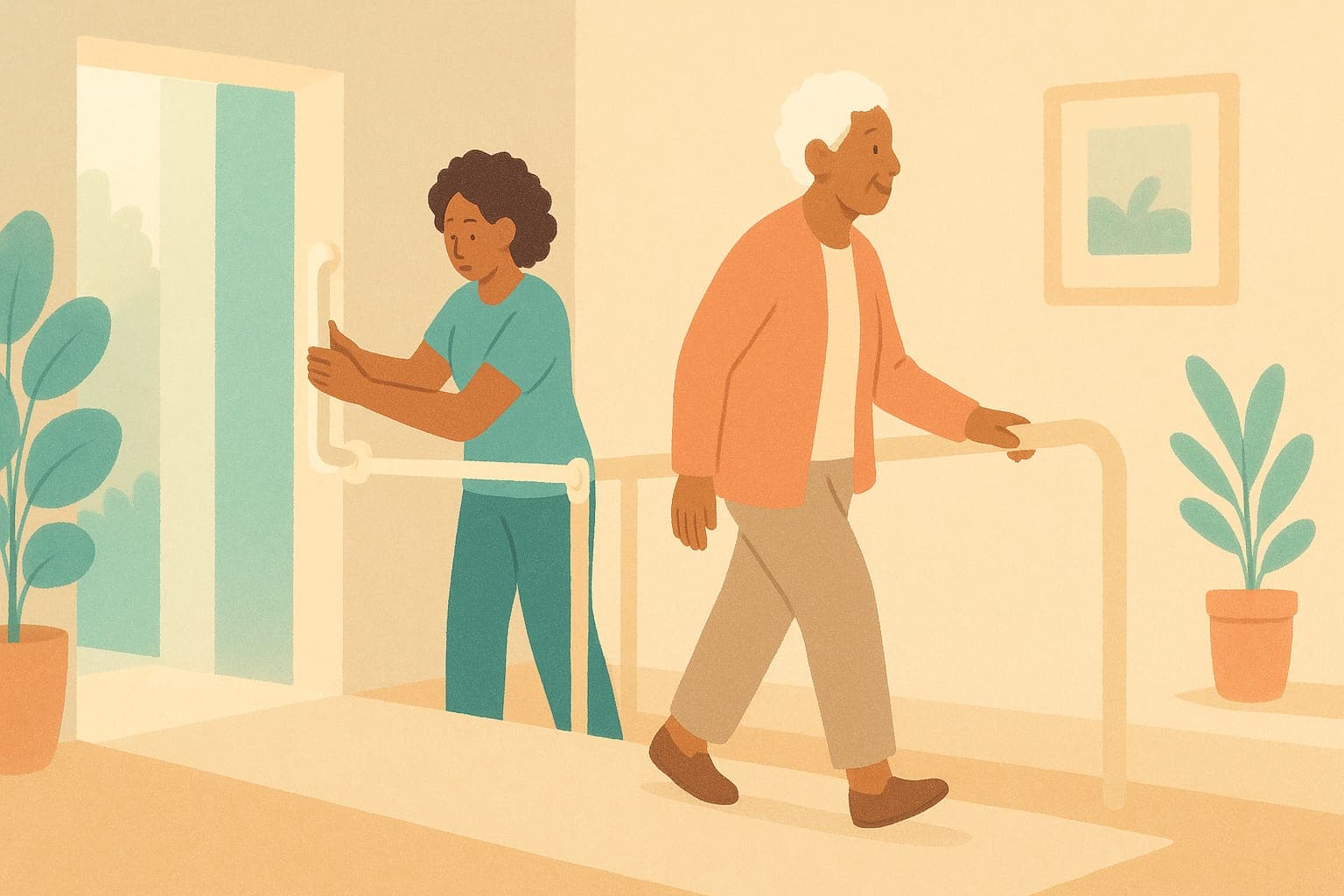
The most effective home modifications are usually the simplest and cheapest: grab bars, better lighting, removing trip hazards, and a safer bathroom. Start with the bathroom and stairs, where most serious falls happen, then work outward. Several programs—Medi-Cal waivers, VA grants, HUD-funded local help, and your Area Agency on Aging—can help pay.
Key points
- Start with the bathroom and stairs—where most serious falls happen—then work outward one room at a time.
- Grab bars must be screwed into wall studs or solid blocking and able to hold full body weight; suction-cup bars are not safe for balance.
- Original Medicare generally won't pay for grab bars or ramps, but some Medicare Advantage plans and the Medi-Cal HCBA waiver (and CalAIM Community Supports) may.
- Veterans may qualify for VA housing grants (SAH, SHA) or the HISA benefit to help pay for bathroom and access changes.
- One free call to the Eldercare Locator (1-800-677-1116) connects you to your local Area Agency on Aging and the programs in your ZIP code.
- An occupational therapist home safety evaluation tells you exactly what to change first, so you don't overspend.
Where should I start—which changes prevent the most falls?
It's easy to feel like the whole house needs work at once. It usually doesn't. The best first move is to walk through your parent's home one room at a time and fix the things most likely to cause a serious fall first. Most bad falls happen in two places—the bathroom and on the stairs—so start there, then work outward.
This matters more than it might seem. According to the CDC, more than one in four adults age 65 and older falls each year, and falls are the leading cause of injury for older adults. A few small, inexpensive changes genuinely protect the person you love—and can be the difference between staying home and a hospital stay.
Here are the high-impact, low-cost changes worth doing first:
- Add grab bars by the toilet and in the tub or shower—anchored to the wall, never the suction-cup kind.
- Remove throw rugs (or secure them with non-slip backing) and clear cords and clutter out of walkways.
- Improve the lighting—brighter bulbs, a lamp within reach of the bed, and motion-sensor night lights along the path to the bathroom.
- Put a sturdy handrail on both sides of every staircase.
- Use non-slip mats inside the tub and by the sink, and set water heaters to a safe temperature to avoid scalds.
How do I make the bathroom safer?
The bathroom packs the most risk into the smallest space: wet floors, hard surfaces, and a lot of standing, turning, and lowering. Good news—most bathroom fixes are affordable and make a big difference right away.
A grab bar is only as strong as what it's screwed into. It must be anchored into wall studs or solid blocking behind the wall and able to hold a person's full weight. Skip the suction-cup bars for anything weight-bearing—they can release suddenly. Height and placement matter as much as the bar itself, so if you're unsure, have a handyman or occupational therapist install them.
Beyond grab bars, the changes that help most are:
- A raised toilet seat or a bedside commode over the toilet, so your parent doesn't have to lower and rise so far.
- A shower or tub bench and a handheld showerhead, so they can sit and stay in control of the water.
- Non-slip strips or a rubber mat on the tub or shower floor.
- Lever-style faucet handles, which are far easier than knobs for arthritic hands.
- For a bigger budget: a curbless (walk-in) shower or a tub with a built-in door, which removes the dangerous step-over entirely.
What about lighting, stairs, floors, and getting in the front door?
Poor lighting and small trip hazards cause a surprising number of falls. Aim for bright, even light with no dark patches—especially on stairs and on the route to the bathroom. Put light switches where they can be reached from the bed and at both the top and bottom of stairs, and add motion-sensor night lights so no one crosses a dark room.
On floors, the biggest wins are removing or securing throw rugs, taping down cords, and fixing raised thresholds and uneven spots. On stairs, add a handrail on both sides, mark the edge of each step with a contrasting strip so it's easy to see, and use non-slip treads.
Getting in and out of the house safely matters too. A ramp helps anyone using a walker or wheelchair—a common design guideline is one foot of ramp for every inch of step height, so a 6-inch step needs roughly a 6-foot ramp to be gentle enough. For a small lip at a doorway, an inexpensive threshold ramp does the job. Swapping door knobs for lever handles, adding a bench by the door, and lighting the porch all make daily comings and goings safer.
Does Medicare or Medi-Cal pay for home modifications?
This is where families are most often surprised. Original Medicare (Parts A and B) generally does not pay for home modifications—grab bars, ramps, walk-in showers, or widening doorways—because it treats them as home improvements, not durable medical equipment. Medicare will cover some in-home equipment such as a bedside commode, and if your parent qualifies for the Medicare home health benefit, an occupational therapist can do a home safety evaluation as part of that care.
Some Medicare Advantage (Part C) plans now offer supplemental benefits that may include bathroom safety items or grab bars. These vary a lot by plan, so call the plan directly and ask what's covered before you buy anything.
Medi-Cal can go further for those who qualify. The Home and Community-Based Alternatives (HCBA) Waiver can cover 'environmental accessibility adaptations'—home modifications like grab bars, ramps, and chair lifts—for members who need a nursing-facility level of care but want to stay home. Enrollment is limited, so apply early. Separately, under California's CalAIM initiative, many Medi-Cal managed care plans now offer Environmental Accessibility Adaptations (home modifications) as a 'Community Support'; call your parent's plan and ask. For any rental, you'll need the property owner's written consent before anything is installed.
One common misunderstanding: In-Home Supportive Services (IHSS) pays for a caregiver's time—bathing, meals, housekeeping—not for physical modifications. Don't count on IHSS to fund a ramp, but it can pay a person to help with the very tasks a modification also makes safer.
We're a veteran family (or on a tight budget)—what else can help?
If your parent is a veteran, the VA has real money for this. For veterans (and some surviving spouses) with a qualifying service-connected disability, VA housing grants can pay for adaptations like roll-in showers, ramps, and wider doorways. The Specially Adapted Housing (SAH) grant covers larger projects (up to about $126,000 in fiscal year 2026) and the Special Home Adaptation (SHA) grant a smaller amount (up to about $25,000). A separate VA benefit, HISA (Home Improvements and Structural Alterations), can help pay for medically necessary bathroom and access changes and is available to more veterans, including some non-service-connected conditions—ask the VA or a VA social worker which fits.
For low-income homeowners, HUD funds the Older Adults Home Modification Program, which pays local nonprofits and housing agencies to provide low-cost safety modifications—often including an occupational therapist visit. These are run locally, so what's available depends on your area. Many California cities and counties also run home-repair and modification programs using federal Community Development Block Grant money, usually for lower-income homeowners.
When you don't know where to start, your local Area Agency on Aging is the single best phone call—they know which programs actually operate in your ZIP code. Reach them free through the Eldercare Locator at 1-800-677-1116 or eldercare.acl.gov.
How do I figure out exactly what my parent needs—and hire safely?
The most useful first step is an occupational therapist (OT) home safety evaluation. An OT watches how your parent actually moves through their own home and recommends specific, prioritized changes—so your money goes where it prevents the most falls. A doctor can order one, Medicare may cover it if your parent qualifies for home health, and many Area Agencies on Aging and some fire departments offer free or low-cost home safety checks.
For bigger jobs—ramps, walk-in showers, widening doorways—look for a contractor experienced with accessibility; some hold a Certified Aging-in-Place Specialist (CAPS) credential. Protect yourself from scams that target older homeowners: verify the contractor's license through California's Contractors State License Board, get at least three written bids, never pay the full amount up front, and be wary of anyone who pressures you or shows up uninvited after a fall.
This guide is educational and isn't medical, legal, or financial advice—confirm eligibility with each program directly. If your parent has fallen and may be hurt, or can't get up, call 911.
Frequently asked questions
Does Medicare pay for grab bars or a walk-in shower?
Usually no. Original Medicare treats home modifications as home improvements, not durable medical equipment, so it won't pay for grab bars, ramps, or walk-in showers. It does cover some in-home equipment like a bedside commode, and some Medicare Advantage plans now offer bathroom safety items as an extra benefit—call the plan to ask. Medi-Cal's HCBA waiver may cover modifications for those who qualify.
Are suction-cup grab bars safe?
Not for holding your weight. A suction bar is fine as a light towel-style handhold, but it can release suddenly and should never be trusted to catch a fall or bear weight. A real grab bar is bolted into wall studs or solid blocking. If you're unsure, have a handyman or occupational therapist install it at the correct height and angle.
How much do home modifications cost?
It ranges widely. A motion-sensor night light or a non-slip mat costs a few dollars; a couple of properly installed grab bars, somewhat more; and a ramp, walk-in shower, or stair lift can run into the thousands. That's exactly why an OT evaluation and several written bids help—you spend on what prevents the most falls first. Ask your Area Agency on Aging about programs that lower the cost.
Can we modify a home my parent rents?
Often yes, but you need the landlord's permission first. Under fair housing rules, a landlord generally must allow reasonable modifications for a disability, though the tenant may have to pay and, in some cases, restore the space later. If you're using the Medi-Cal HCBA waiver, the program specifically requires written consent from the property owner before anything is installed.
Who can come out and tell us what to fix?
An occupational therapist is ideal—they assess how your parent actually moves at home. A doctor can order one, and Medicare may cover it if your parent qualifies for home health. You can also call your Area Agency on Aging through the Eldercare Locator (1-800-677-1116); many offer home safety checks, and some local fire departments do safety visits and install free smoke alarms.
Need care at home? We will connect you.
Skilled nursing, therapy, personal care, and recovery help — right at home, from trusted local providers. Tell us what you need and we will take it from there. Free, no obligation.
Get home-health careSources
- National Institute on Aging — Aging in Place: Growing Older at Home
- National Institute on Aging — Preventing Falls at Home: Room by Room
- CDC — About Older Adult Fall Prevention
- Eldercare Locator (Administration for Community Living)
- HUD — Healthy Homes Grant Opportunities (Older Adults Home Modification Program)
- U.S. Department of Veterans Affairs — Disability Housing Grants (SAH/SHA)
- California DHCS — Home and Community-Based Alternatives (HCBA) Waiver
Related guides
This guide is educational and is not medical advice. In an emergency, call 911.