
Home safety
How to Prevent Falls and Make the Home Safe for an Older Adult
Last reviewed July 28, 2026
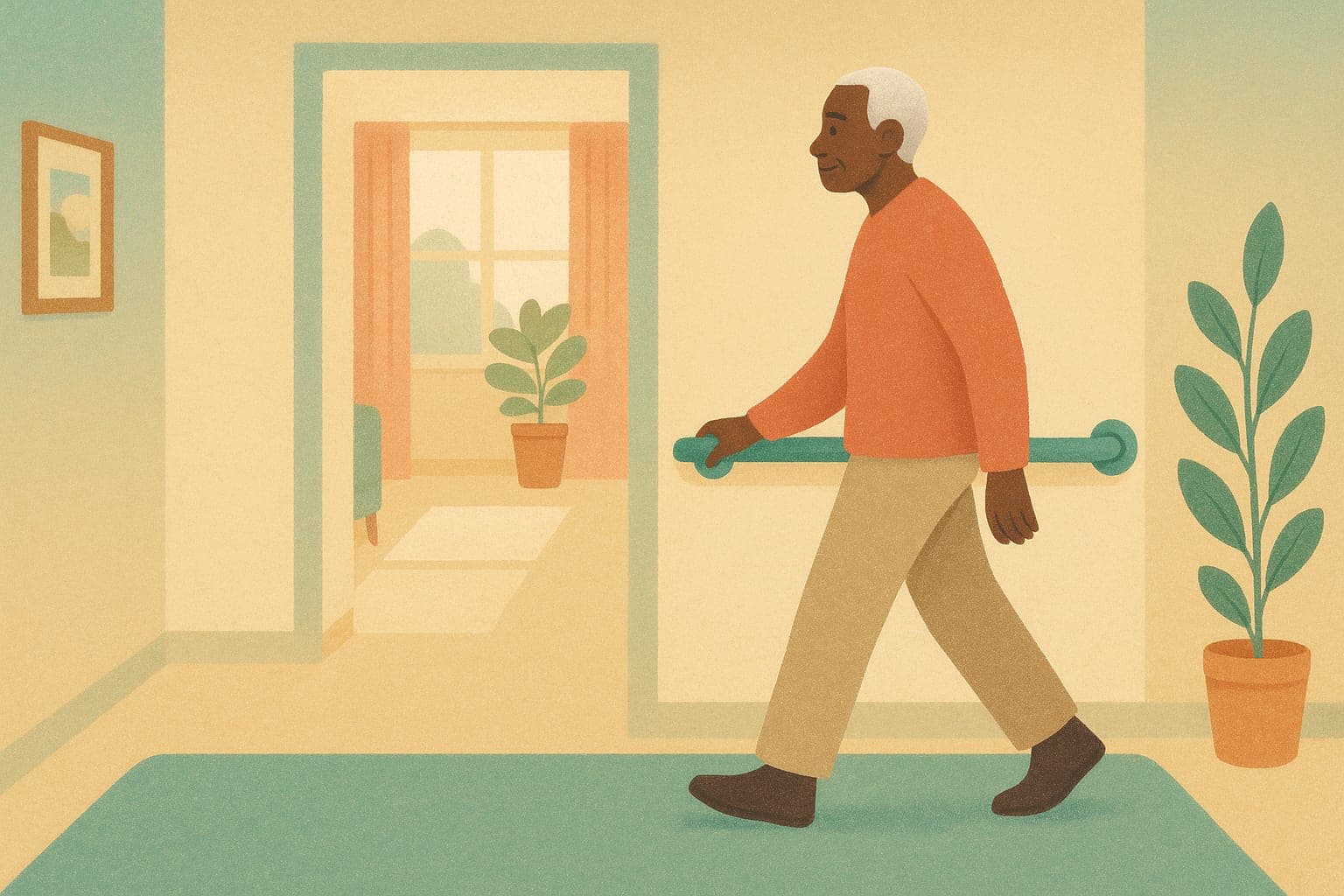
To prevent falls, make the home safer room by room: brighten lighting, remove or secure throw rugs, add bathroom grab bars, clear cords, and keep stairs clutter-free. Wear sturdy shoes, use a cane or walker if needed, review medications with a doctor, and ask about a fall-risk assessment.
Key points
- Falls are the leading cause of injury for people 65 and older, but most are preventable, not a normal part of aging.
- Do a room-by-room safety check: brighten lighting, secure or remove throw rugs, add real grab bars in the bathroom, clear cords, and put handrails on both sides of stairs.
- Wear sturdy non-slip shoes, use a cane or walker if recommended, and ask a doctor or pharmacist whether any medicines could be causing dizziness.
- Stay active with balance and strength exercises, and ask a doctor or physical therapist for a fall-risk assessment (CDC STEADI) if you have fallen or feel unsteady.
Why are falls so dangerous for older adults?
Falls are the number one cause of injury for people age 65 and older. About 1 in 4 older adults falls each year, and many falls lead to broken bones, head injuries, and a long, hard recovery.
A fall can change a person's whole life. A broken hip may mean surgery, weeks in a rehab center, and needing more help at home. Even a fall that does not cause a serious injury can make an older adult afraid to move around. That fear leads to less activity, weaker muscles, and a higher chance of falling again.
Falls are common, but they are not a normal part of getting older. Most falls happen because of things you can change, such as poor lighting, loose rugs, or medicine that causes dizziness. That is good news, because it means many falls can be prevented.
- In California, falls caused 2,521 deaths, more than 114,000 hospital stays, and over 317,000 emergency room visits among people 65 and older in a recent year.
- Fall injuries cost the U.S. health care system about $80 billion in 2020.
- The number of fall deaths in older adults has been rising, which is why prevention matters more than ever.
What is a room-by-room home safety checklist to prevent falls?
Most falls happen at home. Walking through the house one room at a time is the best way to spot hazards. Here is a simple checklist you can do in an afternoon.
Start with the living room and entryway, then work through the bathroom, kitchen, bedroom, and stairs:
- Living room and entryway: Remove throw rugs, or hold them down flat with double-sided carpet tape or a non-slip pad. Loose rugs are one of the biggest tripping hazards. Move phone, charger, and extension cords away from walking paths. Keep walkways clear of clutter, shoes, and pet toys.
- Bathroom: Install grab bars next to the toilet and inside the tub or shower, screwed into the wall studs. A towel bar is NOT a grab bar and will not hold a person's weight. Add a non-slip mat inside the tub and a rubber-backed mat outside it. A raised toilet seat and a shower chair can help, too.
- Kitchen: Keep everyday dishes and food on lower shelves so no one has to climb or reach. Wipe up spills right away. Never stand on a chair; use a stable step stool with a handle.
- Bedroom: Put a lamp within easy reach of the bed, use a nightlight on the path to the bathroom, and keep a phone or a way to call for help beside the bed.
- Stairs and hallways: Add a sturdy handrail on BOTH sides of every staircase, keep steps clear, mark the edge of each step with bright tape, and fix loose or torn carpet.
- Lighting everywhere: Use bright bulbs, add nightlights in halls and bathrooms, and place light switches within reach at both ends of stairs and hallways.
How do shoes and mobility aids lower fall risk?
What a person wears on their feet makes a real difference. Many falls happen because of loose slippers, socks with no grip, or worn-out shoes.
In Southern California's warm weather, flip-flops and backless sandals are everywhere, but they are risky because they slide off and offer no support. Encourage sturdy shoes instead, even indoors.
- Choose shoes that fit well, have a firm non-slip sole, and fasten with laces or Velcro so they stay on.
- Avoid walking in socks, stockings, or floppy slippers on smooth tile or wood floors.
- If a cane or walker is recommended, use it every time, not just on bad days. A device left in the closet cannot help.
- Make sure a cane or walker is the right height and has fresh, non-slip rubber tips. A physical therapist can fit it correctly and show the safe way to use it.
- Keep the mobility aid close to the bed and chair so it is easy to grab when standing up.
Which medications can raise the risk of falling?
Some medicines make people dizzy, sleepy, or lightheaded, which can lead to a fall. The risk goes up when a person takes several medicines at once, which is common for older adults.
Medicines that more often affect balance include sleeping pills, sedatives and tranquilizers, opioid pain medicine, some antidepressants, and blood pressure or heart medicines that can cause a sudden drop in blood pressure when standing up. Over-the-counter allergy and sleep aids can also cause drowsiness.
Do not stop any medicine on your own. Instead, bring a full list of every pill, including vitamins and over-the-counter products, to the doctor or pharmacist and ask, "Could any of these be raising the risk of a fall?" The doctor may adjust the dose, switch a medicine, or change the timing. Many California pharmacies offer a free medication review, too.
How can balance exercises help, and when should you ask for a fall-risk assessment?
Stronger legs and better balance are one of the most powerful ways to prevent falls. Movement does not have to be hard or take a lot of time. Southern California's mild weather makes daily walking easy most of the year.
Simple steps that help (check with a doctor before starting, and hold a counter or sturdy chair for support): stand up from a chair and sit back down a few times in a row to build leg strength; practice standing on one foot while holding the counter; take a daily walk, even a short one around the block or a mall; and try a proven balance class such as Tai Chi, which many senior centers and Area Agencies on Aging offer low-cost or free.
Ask a doctor or physical therapist for a fall-risk assessment if the older adult has fallen in the past year, feels unsteady when walking, or worries about falling. The CDC's STEADI approach (Stopping Elderly Accidents, Deaths and Injuries) gives providers three simple steps: Screen for risk with a few questions, Assess things like balance, medicines, and eyesight, and Intervene with a plan such as exercise, a medicine change, or home changes. A yearly Medicare wellness visit is a good time to bring this up, and a physical therapist can create a personal exercise plan.
What help is available in Southern California?
You do not have to do all of this alone. California has programs that help older adults stay safe at home, and many are free or low-cost.
The California Department of Aging runs the Dignity at Home Fall Prevention Program, which can provide home safety checks, small home changes like grab bars, and connections to other services. Your local Area Agency on Aging can point you to fall-prevention classes and in-home help.
For families who help an older parent, the In-Home Supportive Services (IHSS) program may pay a caregiver to assist with daily tasks. One more Southern California tip: because of earthquakes, secure tall bookcases and furniture to the wall so they cannot tip over onto someone.
To find local help, call the Eldercare Locator at 1-800-677-1116. If you speak a language other than English, ask for an interpreter; the service is free.
Frequently asked questions
How often do older adults fall?
About 1 in 4 people age 65 and older falls each year. Falls are the leading cause of injury and injury deaths in this age group, but most falls can be prevented by making the home safer, staying active, and reviewing medicines with a doctor.
What should I do if my parent falls and cannot get up?
Stay calm and do not rush to lift them. Check for pain, bleeding, or signs of a broken bone. Call 911 right away if they hit their head, cannot move, have severe pain, or are confused. If they seem okay, help them roll to their side, rest, and slowly rise using a sturdy chair.
Does Medicare cover a fall-risk check or grab bars?
Medicare's yearly wellness visit can include a fall-risk screening at no extra cost, and a doctor can order physical therapy if needed. Standard Medicare usually does not pay for grab bars or home changes, but some Medicare Advantage plans and state programs may help. Check with your plan.
Are a towel bar and a grab bar the same thing?
No. A towel bar is only made to hold light towels and can pull out of the wall if someone leans on it. A grab bar is stronger and must be screwed into the wall studs. Always install real grab bars near the toilet, tub, and shower, and have them mounted securely.
Can exercise really lower the risk of falling?
Yes. Exercises that build leg strength and improve balance, such as chair stands, standing on one foot, walking, and Tai Chi, are proven to reduce falls. Start slowly, hold onto a sturdy support, and ask a doctor or physical therapist which exercises are safe for you.
What is the CDC STEADI approach?
STEADI stands for Stopping Elderly Accidents, Deaths and Injuries. It is a CDC program that guides health providers to Screen older adults for fall risk, Assess causes like balance, eyesight, and medicines, and Intervene with a plan. Ask your doctor to do a STEADI screening at your next visit.
Need care at home? We will connect you.
Skilled nursing, therapy, personal care, and recovery help — right at home, from trusted local providers. Tell us what you need and we will take it from there. Free, no obligation.
Get home-health careSources
- CDC — Facts About Falls (Older Adult Fall Prevention)
- CDC — STEADI (Stopping Elderly Accidents, Deaths & Injuries)
- National Council on Aging — Get the Facts on Falls Prevention
- California Department of Aging — Falls Prevention Resources
- California Department of Aging — Dignity at Home Fall Prevention Program
Related guides
This guide is educational and is not medical advice. In an emergency, call 911.