
Leaving the hospital
Bringing an Older Parent Home From the Hospital or Rehab: A Southern California Family Guide
Last reviewed July 28, 2026
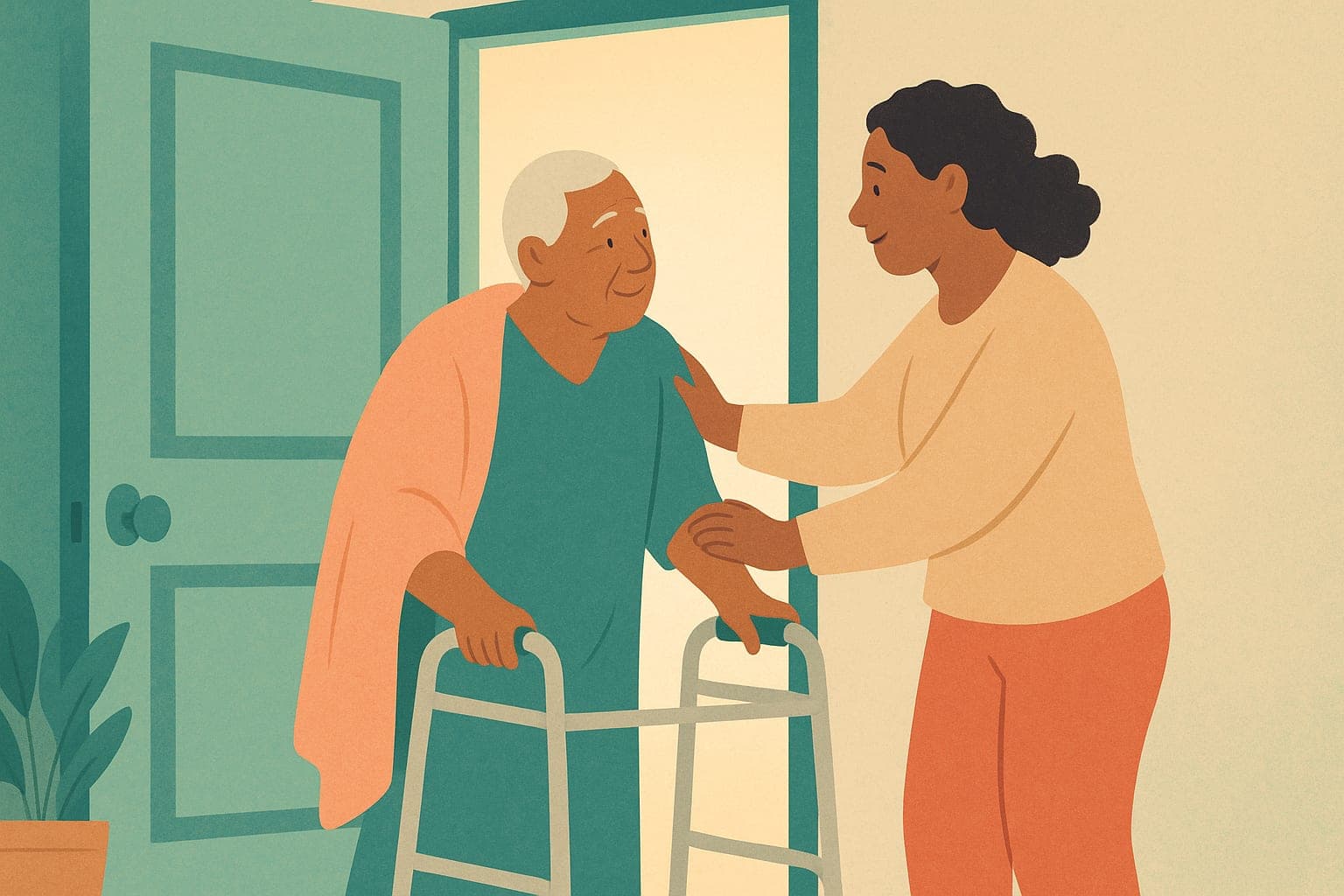
Before your parent leaves the hospital or rehab, work with the discharge planner to line up home health, medical equipment, a clear medication list, follow-up appointments, and a ride home. Prepare the home to prevent falls, and know the warning signs in the first days that mean call the doctor or 911.
Key points
- Start planning the day your parent is admitted, not the day they leave. Ask for the discharge planner or social worker early and put your parent's home, equipment, and helper situation on their radar.
- Medicare-covered home health visits cost $0 in 2026 if your parent qualifies (homebound, needs skilled care, doctor's order, Medicare-certified agency), and care should begin within 14 days of discharge.
- Get ONE updated medication list before you leave, and confirm follow-up appointments, equipment, and a safe ride home are all arranged in writing.
- If you feel your parent is being sent home too soon, you have the right to a fast appeal. The phone number is on the 'Important Message from Medicare' notice you were given.
What should you arrange before your parent leaves the hospital?
The safest discharges are planned early. Do not wait for the day of discharge to start. As soon as your parent is admitted, tell the nurse you want to be part of discharge planning and ask to speak with the discharge planner or social worker.
Here is what to have lined up before your parent walks out the door:
- Home health referral: If your parent needs skilled nursing or physical, occupational, or speech therapy at home, ask the team to order home health and name a Medicare-certified agency. Covered home health visits cost $0 in 2026, and care should start within 14 days of discharge.
- Durable medical equipment (DME): Walker, wheelchair, hospital bed, bedside commode, oxygen, or a shower chair. Medicare Part B covers medically necessary equipment when the doctor orders it for home use. Make sure the order is written before discharge and that the supplier is enrolled in Medicare.
- Medication reconciliation: Ask for ONE clear, updated list of every medicine, including what is new, what changed, what stopped, and what to take when. About 1 in 5 readmissions are medication-related, so this step protects your parent.
- Follow-up appointments: Confirm the first doctor visit is booked, ideally within 7 to 14 days. Write down the date, address, and phone number.
- Transportation: Arrange a safe ride home and to that first appointment. A parent who cannot sit up safely may need wheelchair or gurney transport, not a regular car or rideshare.
Who is the discharge planner or social worker, and what do they do?
Every hospital and skilled-nursing facility has staff whose job is to plan a safe exit. This is usually a nurse case manager, a discharge planner, or a licensed social worker. They are one of your most useful allies, and their help is free.
Hospitals are required to screen inpatients who may need extra help after discharge and to build a discharge plan with the patient and family as active partners. The planner helps arrange home health, equipment, follow-up care, and community programs, and connects families to services in your county.
You do not have to accept the first plan you are handed. If something will not work at home, say so. The planner can adjust equipment, add services, or point you to programs like Meals on Wheels, adult day care, or a local Area Agency on Aging. Speak up early, because options shrink as the discharge date gets closer.
What questions should you ask the care team before discharge?
A short list of clear questions can prevent a dangerous gap in care. Bring these to the doctor, nurse, and discharge planner and write down the answers.
- What is my parent's condition now, and what should recovery look like week by week?
- What are the exact medications, including anything new or changed, and are there any that should NOT be taken together?
- Will my parent need skilled nursing or therapy at home, and which agency will provide it?
- What equipment is being ordered, who delivers it, and when?
- What can my parent eat, drink, and do, and what should they avoid?
- What warning signs mean I should call the doctor, and what means call 911?
- Who do I call after hours with questions, and what is the number?
- When is the first follow-up appointment, and is it already scheduled?
How do I prepare the home so my parent is safe?
Most older adults want to recover in their own home, but a home that was fine before a hospital stay can be risky for someone who is now weaker or unsteady. Walk through each room before your parent arrives.
Focus on falls first, because falls are the most common reason people end up back in the hospital.
- Clear walking paths. Remove throw rugs, cords, and clutter between the bed, bathroom, and kitchen.
- Add light. Put nightlights in the hallway and bathroom for nighttime trips.
- Set up the bathroom. Grab bars near the toilet and shower, a raised toilet seat, and a shower chair or bench.
- Make the bedroom reachable. Keep the bed, phone, water, glasses, and medicines within easy reach, and consider a first-floor sleeping setup if stairs are hard.
- Post emergency info. Tape a card with the doctor's number, pharmacy, medication list, and 911 near the phone.
- Plan for a helper. If your parent needs hands-on personal care, California's In-Home Supportive Services (IHSS) program can pay a caregiver, including in many cases a family member, for people on Medi-Cal. The county can start a needs assessment while your parent is still in the facility, so ask the social worker to begin this early.
What warning signs in the first days home mean I should call the doctor or 911?
The first 72 hours at home are the highest-risk period. Watch your parent closely and trust your gut. You know them best.
Call 911 right away for any of these:
- Chest pain or pressure, or trouble breathing
- Sudden weakness or drooping on one side of the face or body, slurred speech, or confusion (signs of a stroke)
- Fainting, a fall with a possible head or hip injury, or unresponsiveness
- Heavy bleeding, a bluish face or lips, or a severe allergic reaction
- Thoughts of self-harm
When should I call the doctor or nurse instead of 911?
Not every problem is an emergency, but several changes still need a same-day call to the doctor, nurse, or home health agency. Catching these early often keeps your parent out of the hospital.
Call the care team the same day if you notice:
- A fever, or redness, swelling, warmth, or pus around a wound or surgical site
- New or worse pain that medicine is not controlling
- Not eating or drinking, throwing up, or signs of dehydration like a dry mouth or very little urine
- Sudden weight gain or swelling in the legs, which can signal heart or fluid problems
- New confusion, extreme sleepiness, or dizziness
- Trouble with a medicine, a missed dose, or a prescription you could not fill
- Any question about whether it is safe to wait until morning. When in doubt, call.
Frequently asked questions
Does Medicare pay for home health care after a hospital stay?
Yes, if your parent qualifies. They must be homebound, need skilled nursing or therapy on an intermittent basis, be under a doctor's care with a home health order, and use a Medicare-certified agency. Covered home health visits cost $0 out of pocket in 2026. Care should begin within 14 days of discharge.
Can I refuse a discharge if I think my parent is not ready to go home?
Yes. You have the right to a fast appeal if you believe the discharge is too soon. Ask for the 'Important Message from Medicare' notice, which lists the phone number for your Beneficiary and Family Centered Care Quality Improvement Organization (BFCC-QIO). Call by your scheduled discharge date, and your parent can stay while an independent reviewer decides.
Who pays for a wheelchair, walker, or hospital bed at home?
Medicare Part B covers medically necessary durable medical equipment when a doctor orders it for home use. After the 2026 Part B deductible of $283, Medicare generally pays 80% and your parent pays 20%. Use a supplier enrolled in Medicare, and get the order written before discharge.
How do we get a paid caregiver at home in Southern California?
If your parent has Medi-Cal, In-Home Supportive Services (IHSS) can pay a caregiver, often including a family member, to help with personal care and daily tasks. Apply through your county IHSS office. Ask the hospital social worker to start a preliminary needs assessment before discharge so help is ready when your parent gets home.
What is the single most important thing to bring home from the hospital?
One clear, updated medication list. Confusion between the old and new medicines is a top cause of dangerous problems and readmissions. Before you leave, get a written list showing exactly what to take, when, what is new, and what was stopped, and review it with your parent's regular pharmacist.
How soon should my parent see their regular doctor after discharge?
Usually within 7 to 14 days, and sometimes sooner for serious conditions. Confirm the appointment is actually booked before you leave the hospital, and arrange the ride to get there. A prompt follow-up visit is one of the best ways to catch problems early and avoid a return trip to the hospital.
Need care at home? We will connect you.
Skilled nursing, therapy, personal care, and recovery help — right at home, from trusted local providers. Tell us what you need and we will take it from there. Free, no obligation.
Get home-health careSources
- Medicare Interactive — Hospital discharge planning (your rights and the process)
- Medicare Interactive — Eligibility for home health care (Part A or Part B)
- Medicare.gov — Durable medical equipment (DME) coverage
- California Department of Social Services — In-Home Supportive Services (IHSS)
- CMS — Beneficiary and Family Centered Care Quality Improvement Organizations (BFCC-QIOs)
Related guides
This guide is educational and is not medical advice. In an emergency, call 911.