
Home safety
Managing Medications Safely for an Older Adult at Home
Last reviewed July 28, 2026
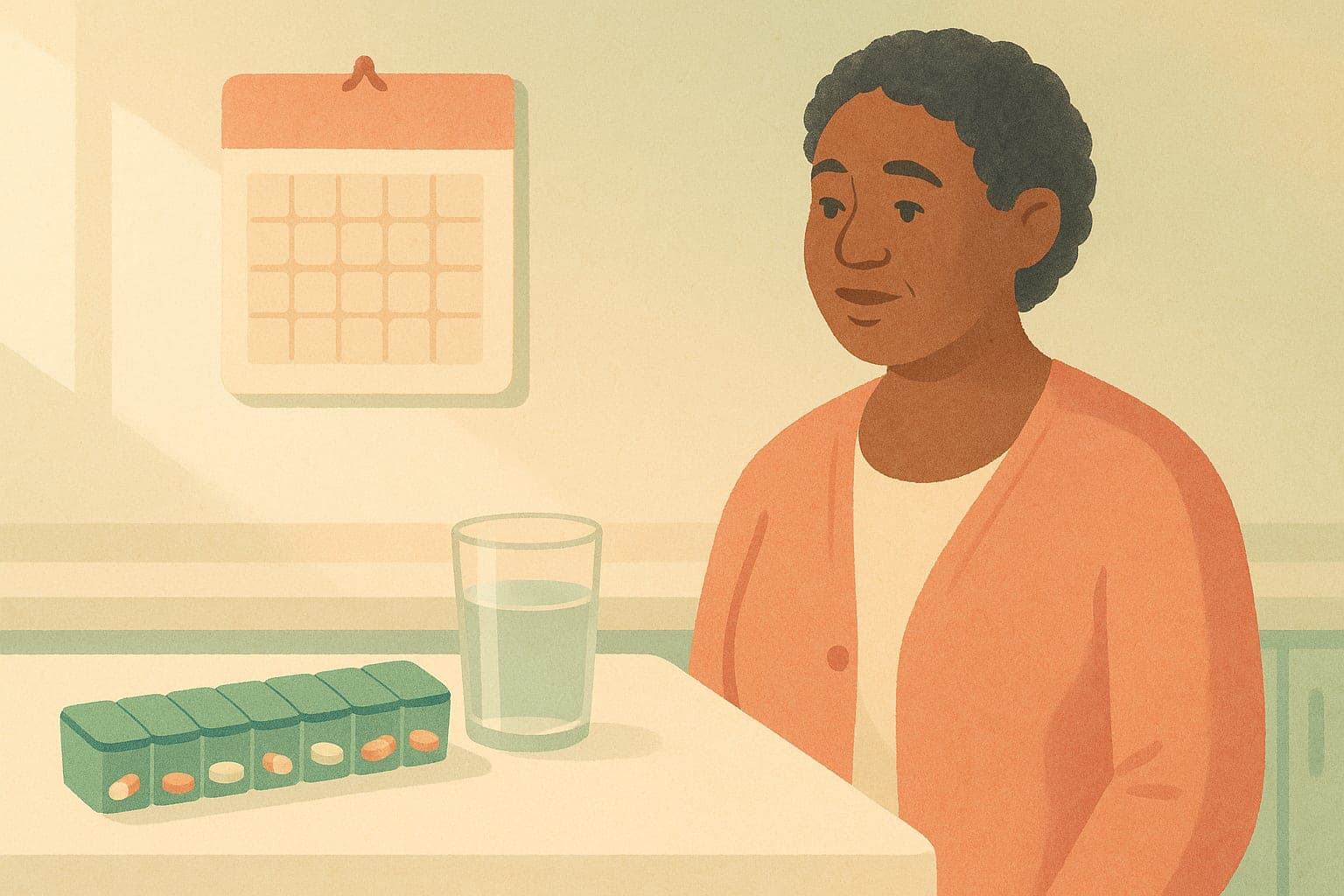
To manage an older adult's medications safely at home, keep one up-to-date list of everything they take, use a single pharmacy, set up a weekly pill organizer with reminders, store medicines safely, dispose of extras through a take-back program, and ask a pharmacist for a free medication review each year.
Key points
- Keep one current list of every medicine, vitamin, and supplement — and bring it to every appointment and the ER.
- Use one pharmacy and a weekly pill organizer with reminders so the pharmacist can catch dangerous combinations and no dose is missed or doubled.
- Dispose of unused medicine through a take-back drop-off or DEA Take Back Day; only flush medicines on the FDA flush list.
- Ask a pharmacist or doctor for a full medication review every year — it is often free through Medicare's Medication Therapy Management program.
Why does safe medication management matter so much for older adults?
As we age, it is common to take several medicines for different health problems, like high blood pressure, diabetes, or a heart condition. Taking many medicines at once is called polypharmacy. Among adults 65 and older, about 4 in 10 take five to nine medicines, and nearly 2 in 10 take ten or more.
More medicines means more chances for something to go wrong. Pills can interact with each other in dangerous ways. A dose can be missed, or taken twice by accident. Over-the-counter products, vitamins, and herbal supplements count too, and they can also cause problems when mixed with prescriptions.
This is not a small risk. Older adults are far more likely than younger people to end up in the hospital because of a bad reaction to a medicine, and many of these events could have been prevented. The good news: a few simple systems at home can prevent most medication mistakes.
- Polypharmacy raises the risk of harmful drug interactions.
- Missed doses and double doses are common and dangerous.
- Many medication-related hospital visits are preventable with good tracking.
What is the best system for keeping medications organized at home?
The single most helpful tool is one current medication list. Write down every prescription, over-the-counter medicine, vitamin, and supplement the person takes. For each one, note the name, the dose (how much), when they take it, and why. Update it every time something changes.
Keep the list where you can find it fast, and take it to every doctor visit, pharmacy trip, and emergency room. Share a copy with anyone who helps with care. The National Institute on Aging offers free worksheets you can print to get started.
A few habits make daily dosing much safer:
- Use a weekly pill organizer with a box for each day (and morning/evening if needed). Fill it once a week, on the same day.
- Set reminders — a phone alarm, a written chart on the fridge, or a simple daily checklist.
- Fill all prescriptions at one pharmacy. That way the pharmacist can see everything together and catch dangerous combinations.
- Never split, crush, or skip pills unless the doctor or pharmacist says it is okay.
- Ask the pharmacy to print labels and instructions in your language. Many Southern California pharmacies offer Spanish and other translated labels — just ask.
How should you store and get rid of medications safely?
Store medicines in a cool, dry place, away from heat and moisture. A bathroom cabinet is actually a poor choice because of steam from the shower. A bedroom shelf or kitchen cabinet away from the stove usually works better. Keep every medicine in its original labeled container, and keep them out of reach of children and grandchildren.
Getting rid of old or unused medicine the right way protects the whole household. Extra pills sitting in a cabinet can be taken by mistake or misused.
The FDA says the best option for most medicines is a drug take-back program. You can drop off unused medicine at many pharmacies and police stations, or use the DEA's National Prescription Drug Take Back Day events. Use the DEA site locator to find a drop-off box near you across Los Angeles, Orange, San Diego, Riverside, and San Bernardino counties.
If no take-back option is handy, the FDA says most medicines can go in the household trash if you: mix them with something unappealing like dirt, cat litter, or used coffee grounds; seal that in a plastic bag; and scratch out your name and information on the empty bottle before recycling or tossing it.
A small number of powerful medicines are on the FDA's "flush list" — these can cause death from a single dose and should be flushed if no take-back is available. Do not flush anything else. Check the FDA flush list before flushing any medicine.
What are the warning signs of a medication problem?
Medicines are supposed to help, but sometimes they cause trouble. New symptoms that start after a medicine is added or changed can be a warning sign, not just "getting older." Watch for these:
- New or worse confusion, memory trouble, or sudden mood changes
- Feeling very sleepy, dizzy, or off-balance
- New falls or near-falls
- Nausea, vomiting, loss of appetite, or stomach pain
- A rash, swelling, or trouble breathing
- Not acting like themselves, or seeming "out of it"
When should you ask a doctor or pharmacist for a medication review?
You do not need to wait for a problem. Ask for a full medication review at least once a year, and any time a new medicine is added, a doctor changes a dose, or the person leaves the hospital. Bring the complete list — including vitamins and supplements — and ask which medicines are still needed. Some can often be safely stopped, a process doctors call deprescribing.
Your pharmacist is one of the easiest experts to reach. You can walk in and ask them to review everything for interactions — this is free and you do not need an appointment.
If the person has Medicare Part D and takes several medicines for more than one long-term condition, they may qualify for free Medication Therapy Management (MTM) through their drug plan. This includes a yearly Comprehensive Medication Review with a pharmacist, usually about 30 minutes, where you go over every medicine together. Call the number on the back of the Medicare drug plan card to ask if they qualify.
Call 911 right away if the person has trouble breathing, swelling of the face or throat, chest pain, a seizure, or cannot be woken up. For a suspected poisoning or overdose when they are awake and breathing, you can also call Poison Control at 1-800-222-1222, available 24/7 and free.
- Review all medicines at least once a year and after any hospital stay.
- Ask your pharmacist to check for interactions — free and no appointment needed.
- Ask if a Medicare drug plan offers a free yearly medication review (MTM).
- Call 911 for trouble breathing, severe swelling, chest pain, or unresponsiveness.
Frequently asked questions
What should be on a medication list for an older adult?
List every prescription, over-the-counter medicine, vitamin, and supplement. For each, write the name, the dose, when they take it, and why. Keep it updated and bring a copy to every doctor visit, pharmacy trip, and emergency room visit.
Is it safe to flush old medicines down the toilet?
Only a small number of powerful medicines on the FDA's "flush list" should ever be flushed, and only when no take-back option is available. For everything else, use a drug take-back program, or mix it with cat litter or coffee grounds, seal it in a bag, and put it in the trash.
Where can I drop off unused medicine in Southern California?
Many CVS, Walgreens, Rite Aid, and grocery pharmacies, plus many police stations, have year-round drop-off boxes. The DEA also holds National Prescription Drug Take Back Day events. Use the DEA collection site locator to find the closest spot in your county.
Does Medicare pay for a medication review?
Yes. If someone has Medicare Part D, takes several medicines for more than one chronic condition, and meets the cost threshold, they may qualify for free Medication Therapy Management. This includes a yearly Comprehensive Medication Review with a pharmacist. Call the number on their drug plan card to ask.
Can taking too many medicines cause confusion or falls?
Yes. New confusion, dizziness, drowsiness, or falls can be side effects or the result of medicines interacting. Do not assume it is just aging. Bring the full medication list to the doctor or pharmacist and ask for a review before stopping anything on your own.
Should I use one pharmacy or several?
Use one pharmacy whenever possible. When all prescriptions go to one place, the pharmacist can see everything together and warn you about dangerous drug combinations. Using several pharmacies makes it much harder for anyone to catch a risky interaction.
Need care at home? We will connect you.
Skilled nursing, therapy, personal care, and recovery help — right at home, from trusted local providers. Tell us what you need and we will take it from there. Free, no obligation.
Get home-health careSources
- National Institute on Aging (NIH) — Taking Medicines Safely as You Age
- National Institute on Aging (NIH) — The dangers of polypharmacy and the case for deprescribing in older adults
- U.S. FDA — Disposal of Unused Medicines: What You Should Know
- U.S. DEA — National Prescription Drug Take Back Day
- Medicare.gov — Safety checks, drug management programs, and Medication Therapy Management
Related guides
This guide is educational and is not medical advice. In an emergency, call 911.