
California benefits
Free and Low-Cost Rides to Medical Care in California
Last reviewed July 29, 2026
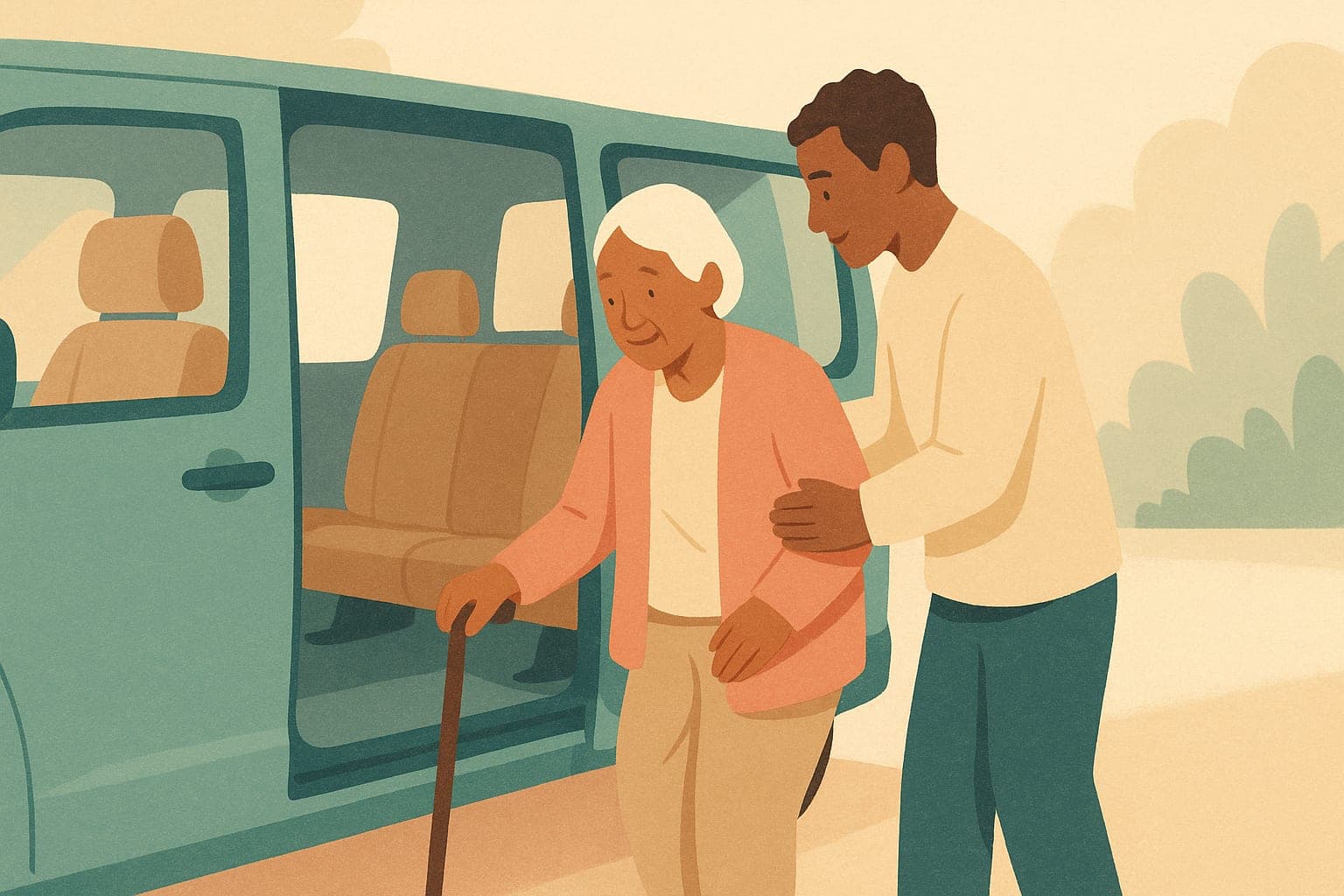
If your loved one has full-scope Medi-Cal, they can get free rides to doctor, dental, mental health, and pharmacy visits. Call the member services number on their Medi-Cal plan card and say there is no other way to get to the appointment. This covers regular cars and, with a doctor's order, wheelchair vans and litter vans. Try to call at least 5 business days ahead. Medicare, paratransit, and senior ride programs offer more options.
Key points
- Full-scope Medi-Cal covers free rides to covered medical care; call the Member Services number on the plan card and say there is no other way to get there.
- A regular car/bus ride (NMT) needs no doctor's note; a wheelchair or gurney van (NEMT) needs a doctor's Physician Certification Statement.
- Try to book at least 5 business days ahead, and always confirm the return trip; one attendant can ride with the Medi-Cal member.
- Original Medicare does not cover routine rides; only some Medicare Advantage plans do, so check the plan card and ask about ride limits.
- ADA paratransit (Access in LA County) gives curb-to-curb rides after an in-person evaluation; in LA County the one-way fare tops out at $3.50.
- Seniors, people with disabilities, and Medicare cardholders qualify for reduced-fare transit cards; LA Access riders ride most buses and rail free.
- No Medi-Cal? Dial 211 and call the Eldercare Locator at 1-800-677-1116 to find your Area Agency on Aging and local ride programs.
What shortcuts do most families miss?
Here are the easy-to-miss angles — the early-eligibility rules and quiet ways families leave money or help on the table. Each one is explained in full below.
- Medi-Cal NMT needs NO doctor's note. Many families think they need a prescription and never ask. For a regular car or bus ride to a covered visit, you just tell the plan you have no other way to get there.
- A friend or family member who drives can be paid back. Medi-Cal plans may reimburse mileage for the person who drove the member; ask the plan first, since some require approval in advance. (Members who drive themselves are not reimbursed under a managed-care plan.)
- Rides cover more than the doctor. Medi-Cal transportation also covers trips to the dentist, mental health and substance use visits, and picking up prescriptions or medical supplies.
- One attendant rides free with the Medi-Cal member, so a caregiver can go along at no cost.
- Dual-eligible loved ones (Medicare + Medi-Cal) can use the Medi-Cal ride benefit to get to Medicare appointments, not just Medi-Cal ones.
- In LA County, Access-eligible riders ride most buses, rail, and Metrolink for FREE with their green Access ID, on top of their paratransit rides.
- A Medicare card often qualifies your loved one for a reduced-fare transit card at many agencies, even under age 65; confirm with your local transit agency.
- Ask the plan to book the return trip when you book the ride out. Benefits are often counted one-way, and a stranded loved one is the most common complaint.
- Call about a Medicare Advantage ride benefit the week you schedule the appointment, not the morning of. Some plans need several days' notice and have yearly ride limits.
What ride help is available in California?
There is no single ride program. Which one fits depends on your loved one's insurance, where they live, and how they get around. Most families use one or more of these.
The biggest one is Medi-Cal. If your loved one has full-scope Medi-Cal, rides to and from covered medical care are a benefit at no cost. Medicare works very differently and covers far less. On top of insurance, cities and counties run senior and disability ride programs, and there is special shared-ride service (paratransit) for people who cannot use a regular bus.
- Medi-Cal NMT (Non-Medical Transportation): rides by car, taxi, rideshare, or bus to a covered medical service when you have no other way to get there.
- Medi-Cal NEMT (Non-Emergency Medical Transportation): ambulance, wheelchair van, or litter van for people whose condition prevents using a normal car or bus. Needs a doctor's order.
- Medicare Advantage transportation: some (not all) plans include a set number of rides per year.
- ADA paratransit (such as Access in LA County): curb-to-curb rides for people who cannot use regular buses or trains.
- Reduced-fare bus/rail cards and local dial-a-ride for seniors and people with disabilities.
- Area Agency on Aging and 211 ride programs, including volunteer-driver services.
How does my loved one get free Medi-Cal rides to appointments?
Most people with Medi-Cal are in a managed-care health plan (the plan name is printed on their Medi-Cal card). To set up a ride, call the plan's Member Services number on the back of the card.
For a regular ride in a car, taxi, rideshare, or bus (this is called NMT), you do not need a doctor's note. You simply tell the plan that you have no other way to get to your covered appointment. Plans generally ask that you call at least 5 business days before the appointment when you can, though they handle urgent needs too.
Medi-Cal covers the ride to any Medi-Cal-covered service: doctor, dentist, mental health or substance use visits, and picking up prescriptions or medical supplies. One attendant, such as a parent, spouse, or guardian, can ride along.
If you have regular fee-for-service Medi-Cal instead of a plan, submit the NMT/NEMT scheduling form or email DHCSNMT@dhcs.ca.gov. For billing or eligibility questions, the Medi-Cal Telephone Service Center is (800) 541-5555.
- Find the health plan name and Member Services number on the Medi-Cal card.
- Call and say: my loved one has a covered appointment and no other way to get there.
- Give the date, time, address, and any wheelchair or special needs.
- Ask them to book the return ride too, and get a confirmation.
- Call as early as you can, ideally at least 5 business days ahead.
What if my loved one needs a wheelchair van or gurney (litter) van?
That is the other Medi-Cal ride benefit, NEMT. It covers ambulance, wheelchair van, or litter (gurney) van rides for people whose medical or physical condition means they cannot safely use a regular car, taxi, or bus.
NEMT needs a doctor's order. The provider fills out and sends a form (often called a Physician Certification Statement, or PCS) to the Medi-Cal plan. It describes your loved one's limitations and says which type of vehicle is needed. Ask the doctor's office to complete this before you try to book.
Tell the plan's Member Services you need NEMT and that the doctor is sending (or has sent) the certification form. The plan then arranges the right vehicle.
Does Medicare pay for rides to the doctor?
Mostly no. Original Medicare (Parts A and B) does not cover routine rides to appointments, and it does not cover wheelchair vans or ambulettes for regular visits, even for wheelchair users.
Original Medicare covers ambulance rides in an emergency. It may also cover a scheduled, non-emergency ambulance ride if your doctor gives a written order saying it is medically necessary; that order must be dated no earlier than 60 days before the trip. In non-emergencies the ambulance company should give you an Advance Beneficiary Notice if Medicare may not pay.
Some Medicare Advantage plans (Part C) add a transportation benefit with a set number of one-way rides per year. This is optional and varies a lot by plan. Rides are usually counted one-way, so a single visit uses two. Call the number on the plan card and ask: does my plan include non-emergency transportation, how many rides, to which places, and how do I book?
If your loved one has both Medicare and Medi-Cal (dual eligible), they can use their Medi-Cal ride benefit to get to Medicare-covered appointments.
How does paratransit like Access Services in LA County work?
ADA paratransit is shared, curb-to-curb public transit for people who cannot use regular buses or trains because of a disability. In Los Angeles County the program is Access Services. Other counties run their own.
Eligibility is based on whether the person can use accessible buses and trains, not just on age or diagnosis, so there is an in-person evaluation. In LA County you call to get an Access ID and then schedule a transit evaluation. Bring photo ID, medical documents and a medication list explaining the disability, and the mobility device they use (cane, walker, wheelchair). A decision comes by mail, generally within about 21 days of the evaluation.
Once approved, you book a ride one to seven days in advance by phone or online. In LA County the one-way fare is distance-based with a maximum of $3.50 (different in the Antelope and Santa Clarita Valleys); confirm the current fare when you book. A personal care attendant can ride with the qualified rider.
LA County Access phone numbers: customer service and applications 800-827-0829; schedule an evaluation 626-532-1616; book a ride on the reservation line 1-800-883-1295.
Are there cheaper bus and rail fares for seniors and people with disabilities?
Yes. Most California transit agencies offer a reduced-fare card for seniors and people with disabilities, and Medicare cardholders usually qualify too. The senior age is 62 or 65 depending on the agency.
In Los Angeles, a Reduced Fare TAP card lowers the base Metro fare from $1.75 to 75 cents (35 cents off-peak), and riders never pay more than $2.50 a day or $5 over seven days; confirm current amounts with Metro. To apply, bring a government-issued photo ID (and a Medicare card if using that to qualify) to a Metro Customer Center for a temporary card the same day, or apply online.
In LA County there is a bonus: everyone who qualifies for Access paratransit can ride most buses and trains in the county, including Metrolink, for free by showing their green Access Rider ID card. No extra sign-up is needed.
Many cities also run dial-a-ride: curb-to-curb shared shuttles for seniors and people with disabilities within a local area. Ask your city or county transit office.
Who helps if my loved one is not on Medi-Cal or needs a volunteer driver?
Two free phone resources point you to local rides. Dial 211 (or search your county's 211 website) for senior and disability ride programs, volunteer-driver services, and medical-appointment transportation near you.
Your local Area Agency on Aging (AAA) coordinates services for older adults, including transportation, and it varies by area. To find your AAA and other aging services anywhere in the country, call the Eldercare Locator at 1-800-677-1116.
Some nonprofit programs offer hands-on help, escorting the person from their front door to the vehicle and into the destination, which matters for a frail or confused loved one. Availability depends on your area, so ask 211 or your AAA what exists locally.
What documents and information should I have ready?
A little preparation makes every call faster. Gather these before you call the plan or ride program.
If a ride is denied, you have rights. With a Medi-Cal plan you can file a grievance/appeal (generally within 60 days of the denial notice) and can request a State Fair Hearing by calling (800) 743-8525. Plans are expected to get members to medically necessary care on time.
- The Medi-Cal or Medicare/Medicare Advantage card (plan name and Member Services number).
- The appointment date, time, and full address, plus the return-trip details.
- Any mobility needs: wheelchair, walker, oxygen, or gurney.
- For NEMT: the doctor's certification form (Physician Certification Statement, PCS).
- For paratransit or reduced-fare cards: photo ID, and medical documentation of the disability.
Frequently asked questions
How far ahead do I need to book a Medi-Cal ride?
Plans generally ask that you call your Medi-Cal plan's Member Services at least 5 business days before the appointment when you can. They still handle urgent and same-week needs, so call as soon as you know the appointment, and always confirm the return trip.
Does my loved one need a doctor's note for a Medi-Cal ride?
Not for a regular ride (NMT) in a car, taxi, rideshare, or bus. You only need to tell the plan there is no other way to get there. A doctor's order (a Physician Certification Statement) is required only for NEMT, meaning ambulance, wheelchair van, or litter van.
Will Medicare pay for a ride to a regular checkup?
Original Medicare generally does not. It covers emergency ambulance rides, and sometimes a scheduled non-emergency ambulance ride with a doctor's written order, but not routine rides or wheelchair vans for ordinary visits. Some Medicare Advantage plans add a limited transportation benefit, so check the plan card.
Can a caregiver ride along?
Yes. Medi-Cal covers the ride for the member and one attendant, such as a parent, spouse, or guardian. On paratransit like Access, a personal care attendant can ride with the qualified rider (some connecting transit systems may charge the attendant a fare).
What do I do if the ride is denied or does not show up?
With a Medi-Cal plan, file a grievance/appeal, generally within 60 days of the denial notice, and you can request a State Fair Hearing at (800) 743-8525. For a no-show, call the ride line or plan Member Services right away and ask for an alternative.
How does my loved one qualify for Access paratransit in LA County?
Call 800-827-0829 to start and get an Access ID, then schedule an in-person transit evaluation at 626-532-1616. Bring photo ID, medical documents and a medication list, and their mobility device. A decision usually comes by mail within about 21 days of the evaluation.
We don't have Medi-Cal. Where do we start?
Dial 211 for local senior and disability ride programs and volunteer drivers, and call the Eldercare Locator at 1-800-677-1116 to reach your Area Agency on Aging. Also apply for a reduced-fare transit card and ask your city about dial-a-ride.
Need care at home? We will connect you.
Skilled nursing, therapy, personal care, and recovery help — right at home, from trusted local providers. Tell us what you need and we will take it from there. Free, no obligation.
Get home-health careSources
- DHCS - Medi-Cal Transportation Services (NMT and NEMT)
- DHCS - Frequently Asked Questions for Medi-Cal Transportation Services
- DHCS - Medi-Cal Managed Care Health Plan Directory
- Disability Rights California - Transportation Services for Medi-Cal Recipients
- Medicare.gov - Ambulance services coverage
- Access Services - How to Gain Eligibility (LA County paratransit)
- Access Services - Riding Access Overview (fares and hours)
- Access Services - Free Fare Program
- LA Metro - Reduced fares for Seniors 62+, Medicare, and riders with disabilities
- California Department of Aging - Programs and Services / Area Agencies on Aging
- Disability Rights California - Medi-Cal Managed Care: Appeals and Grievances
Related guides
This guide is educational and is not medical advice. In an emergency, call 911.