
Home health
Caring for Someone With Parkinson's at Home: A Family Guide
Last reviewed July 28, 2026
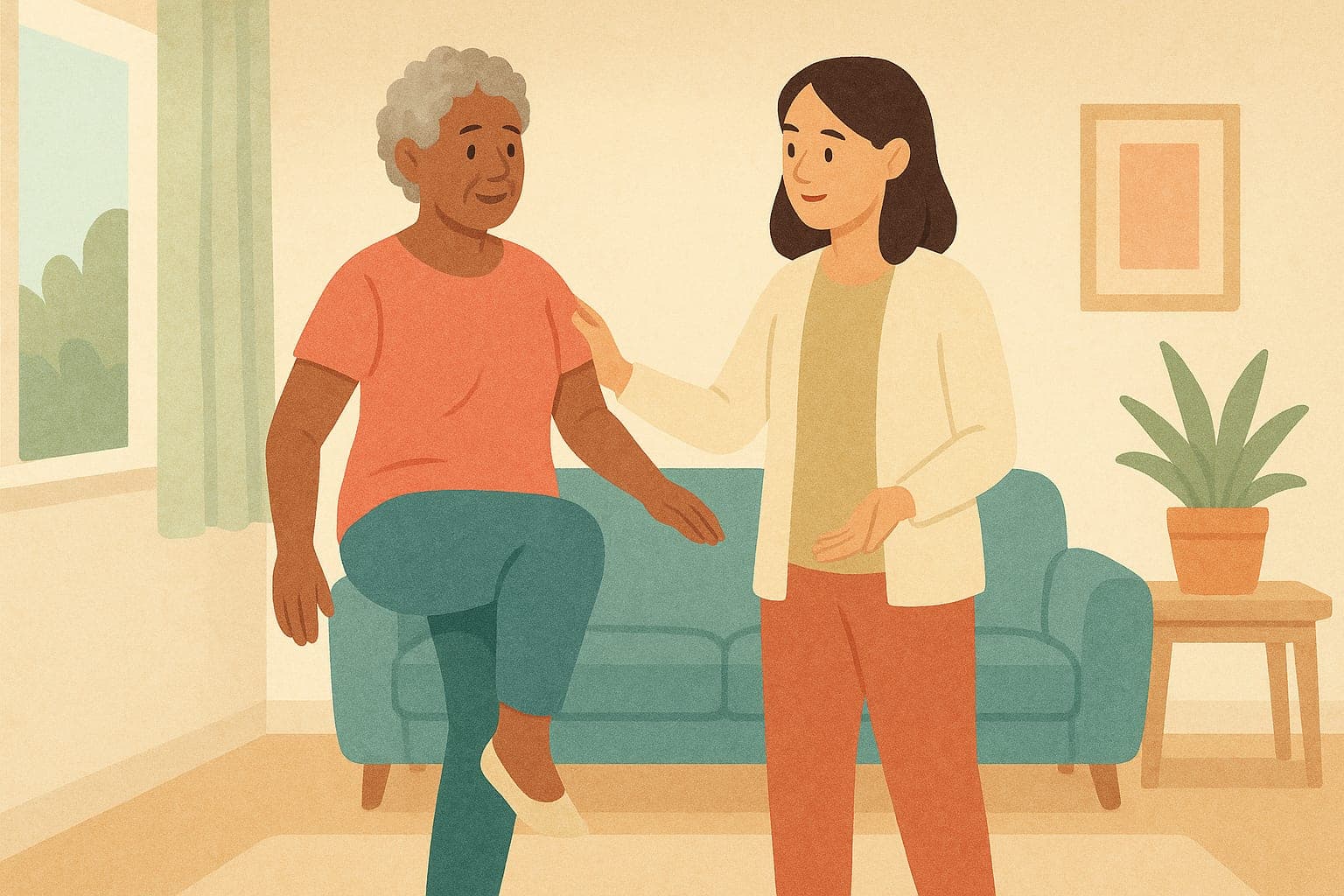
Caring for someone with Parkinson's at home means preventing falls, giving medications exactly on time, and helping with eating, dressing, and mood. Physical, occupational, and speech therapy keep skills strong. Medicare home health, California's IHSS program, and the Parkinson's Foundation Helpline can share the load.
Key points
- Giving Parkinson's medications exactly on time, every time, is one of the most important caregiver jobs; use alarms and a written schedule.
- Prevent falls by clearing walkways, adding grab bars and good lighting, and encouraging use of a walker or cane.
- Physical, occupational, and speech therapy keep your loved one moving, independent, and eating safely; ask the doctor for a referral.
- Medicare home health, California's IHSS program, and the free Parkinson's Foundation Helpline (1-800-473-4636) can share the load, so you don't do this alone.
How does Parkinson's disease affect daily life at home?
Parkinson's disease is a brain condition that gets worse slowly over years. It affects movement first, but it touches almost every part of daily life. Knowing what to expect helps you plan a safer, calmer home.
The four main movement changes are: shaking (tremor), stiff muscles, slow movement, and poor balance. You may notice your loved one shuffling, freezing in doorways, or taking small steps.
Parkinson's is more than movement, though. It can bring changes many families do not expect, listed below.
Every person is different. Some have a strong tremor and good balance; others have little tremor but move very slowly. Watch your loved one closely and share what you see with their doctor.
- Balance problems that raise the risk of falls, a leading cause of injury
- Tremor that can make holding a cup, a fork, or a pen hard
- Swallowing and chewing trouble, usually in later stages, which can cause choking or drooling
- Mood changes like depression, anxiety, and low motivation
- Sleep problems, including acting out dreams, restless nights, and daytime sleepiness
- Quiet or unclear speech, constipation, and dizziness when standing up
What are the most important home-care and safety tips?
Two things matter most at home: preventing falls and giving Parkinson's medications exactly on time. Get these right and you prevent many emergencies.
Fall prevention. Small changes make a big difference. See the checklist below.
Medications, on time, every time. This is one of the most important jobs a caregiver has. Parkinson's medicines like carbidopa-levodopa wear off between doses. A dose given even 30 to 60 minutes late can leave your loved one stiff, frozen, or unable to move or swallow safely.
Set phone alarms for every dose. Keep a written schedule on the fridge. Use a weekly pill organizer, and refill prescriptions before they run out. If your loved one goes to the hospital, bring the exact medication times in writing and speak up if a dose is late. Studies show most hospital patients with Parkinson's do not get their medicines on time, so families must advocate.
Help with eating and dressing. Serve softer foods and thicker drinks if swallowing is hard, and have your loved one sit upright and take small bites. Weighted or built-up utensils help with tremor. Choose clothes with elastic waists, Velcro, and slip-on shoes to make dressing easier and less tiring. Never rush; allow extra time.
- Remove loose rugs, cords, and clutter from walkways
- Add grab bars in the bathroom and railings on stairs
- Use good lighting, including night lights on the path to the bathroom
- Keep a walker or cane within reach and encourage its use
- Have your loved one turn in a wide arc instead of pivoting quickly
- For "freezing" (feet stuck to the floor), try counting steps, stepping over a line of tape, or rocking side to side
Why are physical, occupational, and speech therapy so valuable?
Medicine treats symptoms, but therapy keeps your loved one moving, independent, and safe. These three therapies work as a team and can often be delivered at home.
Physical therapy (PT) builds strength, balance, and walking. Therapists teach exercises and tricks to prevent falls and manage freezing. Staying active is one of the best things a person with Parkinson's can do.
Occupational therapy (OT) makes daily tasks easier, like dressing, bathing, cooking, and writing. An OT can suggest tools and home changes that keep your loved one doing what they love.
Speech therapy (SLP) helps with the quiet, unclear speech Parkinson's often causes, and it treats swallowing problems to lower choking risk. Programs designed for Parkinson's can make a real difference in being heard and eating safely.
Ask your loved one's doctor for a referral. Medicare and many insurance plans cover these therapies when a doctor orders them.
How can Medicare, IHSS, and other programs help?
You do not have to do this alone. Several programs can bring care and support into your home, and some are free or low-cost.
Medicare home health. If your loved one has Original Medicare, is under a doctor's care, needs skilled nursing or therapy, and is "homebound" (leaving home takes a big, taxing effort), Medicare may cover home health at little or no cost. This can include part-time skilled nursing, plus physical, occupational, and speech therapy, and a home health aide. Parkinson's often qualifies. Note: Medicare home health does not pay for 24-hour care or long-term help with only bathing, dressing, and meals.
IHSS (California only). In-Home Supportive Services pays a caregiver, who can often be a family member, to help with daily tasks so your loved one can stay safely at home instead of a facility. To qualify, your loved one must live in California, have Medi-Cal, and live in their own home. A county social worker visits, assesses needs, and approves monthly hours. Apply through your county IHSS office; Los Angeles, Orange, San Diego, Riverside, and every California county has one. The main state line is 1-877-800-4544.
Other support is listed below, including the free Parkinson's Foundation Helpline.
- The Parkinson's Foundation Helpline: 1-800-4PD-INFO (1-800-473-4636), Monday to Friday, 9 a.m. to 7 p.m. ET, with Spanish-speaking staff, for free answers on symptoms, medications, local resources, and caregiver support
- Local Parkinson's support groups and exercise classes across Southern California
- Meals delivery, adult day programs, and respite care to give you a break
- Your county Area Agency on Aging for local senior services
How do you take care of yourself as a caregiver?
Caring for someone with Parkinson's is a long journey, and your health matters too. A worn-out caregiver cannot give good care.
Take breaks. Ask family or friends to sit with your loved one, or look into respite care and adult day programs. Even a few hours off helps.
Accept help and share the load. Make a list of specific tasks, like a ride to the doctor, a cooked meal, or a pharmacy run, so people who offer can say yes.
Watch your own mood. Caregiver stress and depression are common. Talk to your doctor, join a support group, or call the Parkinson's Foundation Helpline to be pointed to help near you.
When to call 911: get emergency help right away for choking that does not clear, a hard fall with a possible broken bone or head injury, sudden trouble breathing, chest pain, or signs of a stroke (sudden face drooping, arm weakness, or slurred speech). When in doubt, call 911.
Frequently asked questions
Why is it so important to give Parkinson's medications exactly on time?
Parkinson's medicines like carbidopa-levodopa wear off between doses. A late dose, even by 30 to 60 minutes, can leave your loved one stiff, frozen, or unable to move or swallow safely. Set alarms for every dose and never skip or delay without asking the doctor.
Does Medicare pay for home care for Parkinson's?
Original Medicare covers home health, part-time skilled nursing plus physical, occupational, and speech therapy, when a doctor orders it and your loved one is homebound and needs skilled care. Parkinson's often qualifies. Medicare does not cover 24-hour care or help with only bathing and meals.
Can a family member be paid to care for someone with Parkinson's in California?
Yes. Through IHSS (In-Home Supportive Services), a family member can often be paid to help with daily tasks if your loved one lives in California, has Medi-Cal, and lives at home. Apply through your county IHSS office; a social worker will assess and approve hours.
How can I make eating safer if swallowing is getting harder?
Serve softer foods and thicker drinks, have your loved one sit upright and take small bites slowly, and avoid distractions during meals. Ask the doctor for a speech therapy referral, since speech therapists also treat swallowing. Call 911 for choking that does not clear.
What is the Parkinson's Foundation Helpline and is it free?
It is a free phone line staffed by specialists, including Spanish speakers, who answer questions about symptoms, medications, local resources, and caregiver support. Call 1-800-4PD-INFO (1-800-473-4636), Monday to Friday, 9 a.m. to 7 p.m. ET.
How can I prevent falls at home?
Remove loose rugs and clutter, add grab bars and railings, improve lighting, and keep a walker or cane within reach. Have your loved one turn in a wide arc, and for freezing episodes, try counting steps or stepping over a line of tape on the floor.
Need care at home? We will connect you.
Skilled nursing, therapy, personal care, and recovery help — right at home, from trusted local providers. Tell us what you need and we will take it from there. Free, no obligation.
Get home-health careSources
Related guides
This guide is educational and is not medical advice. In an emergency, call 911.