
Home health
Helping a Loved One Recover From a Stroke at Home: A Caregiver's Guide
Last reviewed July 28, 2026
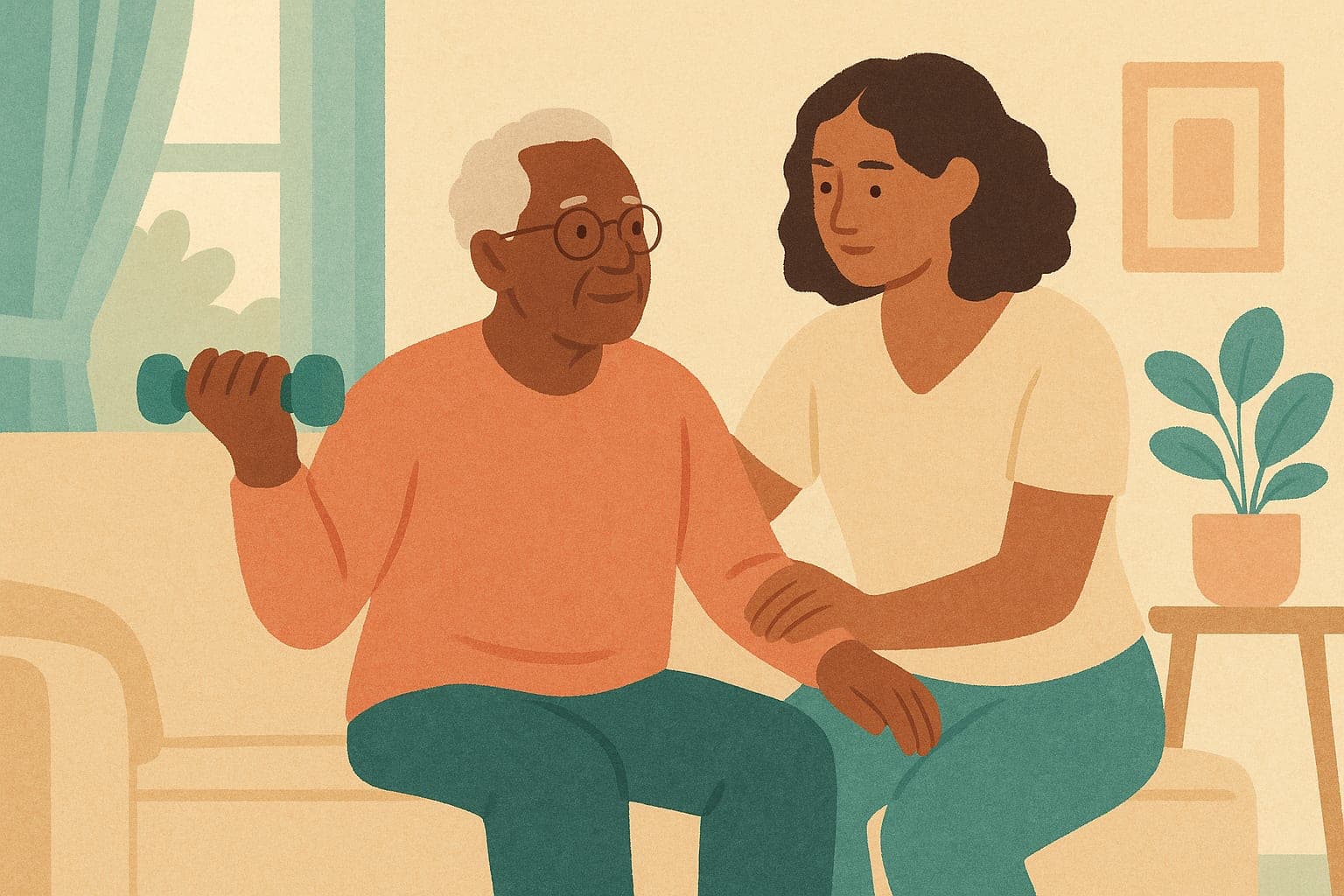
To help a loved one recover from a stroke at home, set up rehab therapy (physical, occupational, and speech), use the Medicare home health benefit, control blood pressure and take medicines to prevent another stroke, make the home safe, and call 911 immediately if you see FAST warning signs.
Key points
- Call 911 right away if you notice FAST signs: Face drooping, Arm weakness, Speech trouble, Time to call. Do not wait, and do not drive to the hospital.
- Medicare's home health benefit can cover physical, occupational, and speech therapy at home at no cost to you when your loved one is homebound and a doctor orders it.
- Preventing a second stroke is job one: keep blood pressure controlled, take every medicine as prescribed, and go to all follow-up appointments.
- Small changes at home, patience with communication, and caring for yourself as the caregiver all make recovery safer and steadier.
What should you expect after a stroke?
A stroke happens when blood flow to part of the brain is blocked or a blood vessel bursts. Brain cells are hurt, so the parts of the body those cells controlled may not work the way they used to. Every stroke is different, so recovery looks different for each person.
Your loved one may have weakness or numbness on one side of the body, trouble walking or keeping balance, changes in speech or understanding words, trouble swallowing, vision changes, or memory and thinking problems. Many people also feel sad, worried, frustrated, or quick to cry. This is very common after a stroke and is not a sign of weakness.
The fastest progress often comes in the first weeks and months, but the brain can keep improving for a long time. Recovery is usually a slow climb with good days and hard days. Small wins count. Your steady support matters more than you may realize.
- Physical changes: weakness on one side, poor balance, trouble walking, tiredness
- Communication changes: slurred speech, trouble finding words, trouble understanding
- Swallowing and eating changes that need care to avoid choking
- Thinking and mood changes: memory trouble, confusion, sadness, or frustration
What is the role of rehabilitation and Medicare home health?
Rehabilitation (rehab) is the guided practice that helps the brain and body relearn skills. Starting soon and practicing often gives the best chance to regain abilities. Three kinds of therapy are the heart of stroke rehab, and they often work as a team.
Physical therapy (PT) rebuilds strength, balance, and walking. Occupational therapy (OT) helps with daily tasks like dressing, bathing, cooking, and using safe equipment. Speech therapy (speech-language pathology) helps with talking, understanding words, thinking skills, and safe swallowing.
In Southern California, many families get this care through Medicare's home health benefit. Medicare can send a nurse and PT, OT, and speech therapists to the house. To qualify, a doctor must certify that your loved one needs skilled therapy or nursing, is homebound (leaving home takes real effort), and the care is ordered in a plan the doctor reviews. When you use a Medicare-certified home health agency, you pay nothing for covered visits.
Ask the hospital discharge planner to set up home health before your loved one leaves the hospital. If therapy is helping, ask the therapists whether more visits can be ordered so progress does not stop too soon.
- Physical therapy: strength, balance, safe walking, and fall prevention
- Occupational therapy: dressing, bathing, cooking, and helpful home equipment
- Speech therapy: speaking, understanding, memory, and safe swallowing
- Medicare home health: doctor-ordered, homebound, covered at no cost through a certified agency
How do you prevent another stroke?
Once a person has had a stroke, they are at higher risk of having another one. The good news: most of that risk can be lowered with steady, everyday care. This is the most important thing you can help with as a caregiver.
High blood pressure is the number one cause of stroke. Help your loved one check blood pressure at home, write down the numbers, and share them with the doctor. Care teams often aim for blood pressure under 130/80, but your doctor sets the right goal for your person.
Medicines only work if they are taken every day, exactly as ordered. These often include blood pressure pills, a blood thinner or aspirin, and a statin for cholesterol. Never stop or change a medicine without asking the doctor. Also help manage diabetes and cholesterol, serve heart-healthy meals with less salt, encourage gentle activity as the doctor allows, and support quitting smoking.
Keep every follow-up appointment. These visits let the doctor adjust medicines and catch problems early. If your loved one has an irregular heartbeat (atrial fibrillation), ask the doctor about it, because it raises stroke risk and often needs a blood thinner.
- Check and control blood pressure; keep a simple log to show the doctor
- Take every medicine as prescribed; never stop one without asking
- Manage diabetes and cholesterol; eat less salt and more vegetables
- Quit smoking, stay active as allowed, and go to all follow-up visits
How do you make the home safe and handle communication changes?
A safe home lowers the risk of falls, which are common after a stroke. Walk through each room and picture how your loved one moves. Ask the occupational therapist to visit and suggest changes for your specific home.
For communication, be patient. If your loved one has trouble with words (aphasia), it does not mean they cannot think clearly. Give them time, ask yes-or-no questions, use short sentences, and try pointing, writing, or pictures. Turn off the TV so it is easier to focus. Never talk about them as if they are not there.
If swallowing is a problem, follow the speech therapist's food and drink instructions closely to prevent choking and lung infections. Sit upright for meals and go slowly.
- Remove loose rugs and clutter; add grab bars in the bathroom and near stairs
- Improve lighting, add night-lights, and keep a clear path to the bathroom
- Put daily items within easy reach; use non-slip mats in the tub or shower
- Communicate slowly with short sentences, yes-or-no questions, and pictures or writing
How do you take care of yourself as the caregiver?
Caregiving is an act of love, and it is also hard work. If you burn out, you cannot help your loved one. Taking care of yourself is part of taking care of them, not a luxury.
Accept help when friends or family offer it, and give them specific tasks like picking up medicine or sitting with your loved one for an hour. Keep a simple binder or phone note with medicines, doctors, and appointments so nothing gets lost. Watch for your own signs of stress, such as trouble sleeping, feeling angry, or feeling hopeless, and talk to your own doctor if they build up.
In California, families may qualify for extra help. In-Home Supportive Services (IHSS) is a Medi-Cal program that can pay for personal care and help at home for people who are older, blind, or have a disability, and in many cases a family member can be the paid caregiver. Your county social services office can explain how to apply.
- Ask for help and hand out specific, small tasks
- Keep one place for medicines, doctors, and appointment dates
- Take breaks, sleep, and tend to your own health
- Ask your county about IHSS and local caregiver support and respite programs
What are the FAST warning signs that mean call 911?
Because your loved one is at higher risk of another stroke, learn the warning signs and act fast. A quick way to remember them is the word FAST. A new stroke is a medical emergency, and getting help in the first minutes and hours can save the brain and the person's life.
If you see any one of these signs, even if it seems to go away, call 911 right away. Do not wait to see if it gets better, and do not drive to the hospital yourself. An ambulance crew can start care on the way and take your loved one to the right hospital fast.
Note the time you first saw the symptoms and tell the 911 operator. Doctors need to know when it started to choose the best treatment.
- F — Face drooping: one side of the face droops or is numb; ask them to smile
- A — Arm weakness: one arm is weak or numb; ask them to raise both arms
- S — Speech difficulty: speech is slurred or hard to understand; ask them to repeat a sentence
- T — Time to call 911: if you see any of these signs, call 911 now and note the start time
- Other sudden signs to act on: numbness, confusion, trouble seeing, trouble walking, or a severe headache with no clear cause
Frequently asked questions
Does Medicare pay for stroke rehab at home?
Yes. If a doctor certifies that your loved one is homebound and needs skilled therapy or nursing, Medicare's home health benefit can cover physical, occupational, and speech therapy from a Medicare-certified agency, at no cost to you for covered visits. Ask the hospital discharge planner to set it up.
How soon should stroke rehabilitation start?
Rehab usually starts in the hospital and continues at home or in outpatient therapy. Starting soon and practicing often gives the best chance of recovery. Follow the plan your care team orders, and ask about more visits if therapy is still helping when the current visits run out.
What is the most important thing I can do to prevent another stroke?
Help control blood pressure and make sure every medicine is taken exactly as prescribed. Keep all follow-up appointments so the doctor can adjust care. Also support a low-salt diet, managing diabetes and cholesterol, gentle activity, and quitting smoking.
My loved one struggles to speak. Does that mean they cannot understand me?
Not necessarily. Trouble with words (aphasia) does not mean a person cannot think or understand. Be patient, use short sentences and yes-or-no questions, give them time, and try writing or pictures. A speech therapist can help you both communicate better.
When should I call 911 versus calling the doctor?
Call 911 immediately for any sudden FAST sign: face drooping, arm weakness, speech trouble, or any sudden numbness, confusion, vision loss, trouble walking, or severe headache. Do not drive to the hospital. For non-urgent questions about recovery or medicines, call the doctor's office.
Can I get paid to care for my family member in California?
You may be able to. California's In-Home Supportive Services (IHSS) program, part of Medi-Cal, can pay for in-home personal care for eligible older, blind, or disabled residents, and in many cases a family member can be the paid caregiver. Contact your county social services office to apply.
Need care at home? We will connect you.
Skilled nursing, therapy, personal care, and recovery help — right at home, from trusted local providers. Tell us what you need and we will take it from there. Free, no obligation.
Get home-health careSources
Related guides
This guide is educational and is not medical advice. In an emergency, call 911.