
Caregiver support
Caregiver Burnout: How to Spot It and Get Real Help in Southern California
Last reviewed July 28, 2026
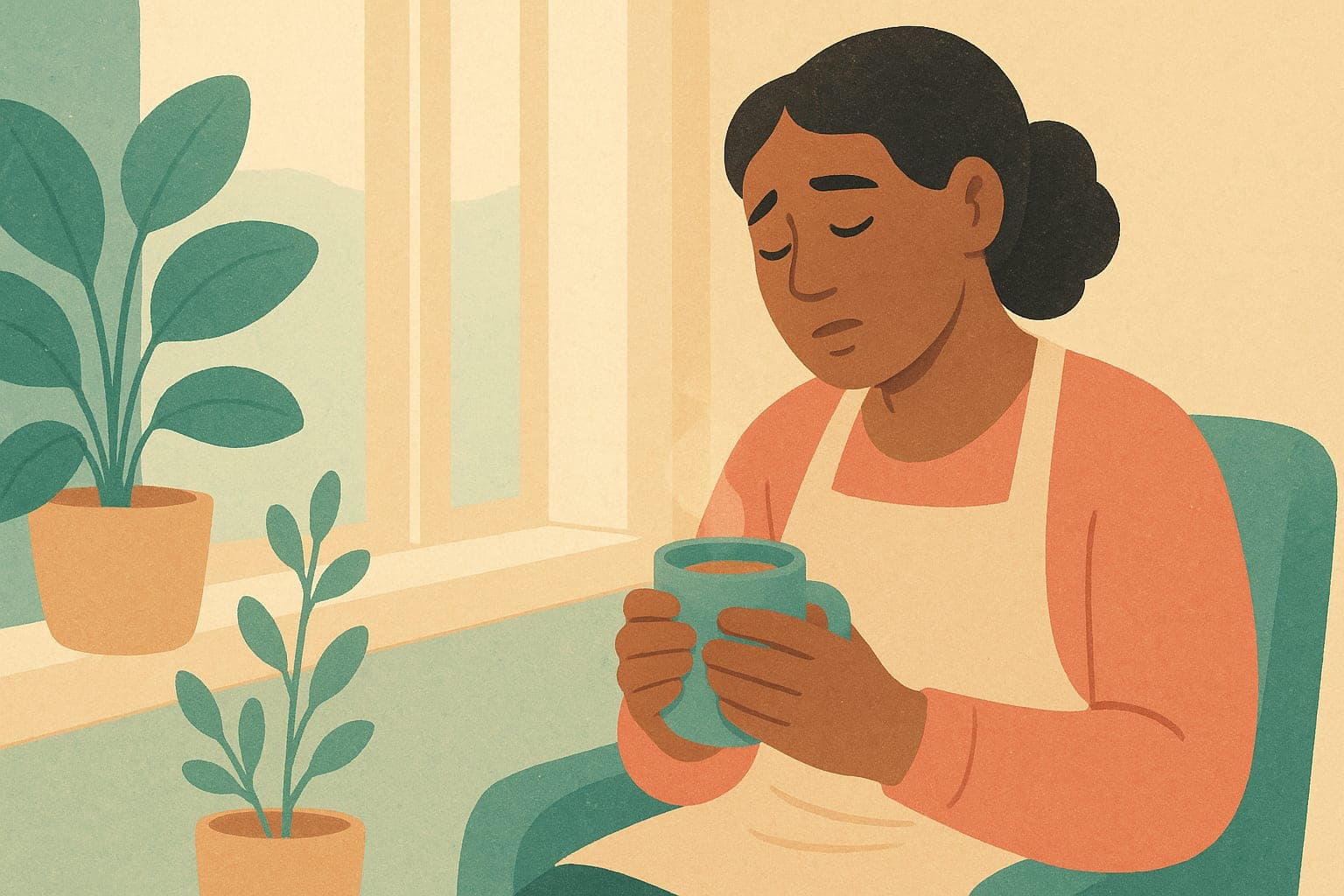
Caregiver burnout is deep physical and emotional exhaustion from caring for a loved one without enough rest or support. Watch for constant tiredness, irritability, sleep problems, and pulling away from others. You can get relief through respite care, IHSS-paid help, adult day programs, and support groups.
Key points
- Caregiver burnout is deep exhaustion from caring too long without enough help — it is common and not a personal failure.
- Watch for warning signs like unshakable tiredness, irritability, sleep problems, pulling away from others, declining health, and feeling hopeless.
- Real relief exists: respite care, IHSS-paid help, adult day programs (CBAS), sharing the load, and support groups.
- Start with one call — your county IHSS office, your Area Agency on Aging (1-800-677-1116), or the Alzheimer's 24/7 Helpline (800-272-3900) — and seek professional help if you feel hopeless or unable to cope.
What is caregiver burnout and why does it happen?
Caregiver burnout is a state of deep exhaustion. It affects your body, your emotions, and your mind. It builds up slowly when you care for a loved one for months or years without enough rest, help, or time for yourself.
It does not mean you love the person any less. It does not mean you are failing. Burnout is what happens to a caring person who has given too much for too long with too little support. It is very common. It can happen to anyone.
Burnout tends to grow when you: are on call day and night, feel you have no choice or control, put your own doctor visits and needs last, do not have others sharing the work, or feel alone. Many family caregivers in Southern California are also working jobs, raising children, or caring across language and cultural expectations that say family should handle everything alone. That added weight is real.
What are the warning signs of caregiver burnout?
Burnout often sneaks up on you. Your body and your mood usually send signals before you notice. Watch for these common warning signs in yourself:
If several of these sound like you, that is your signal to get more support. Noticing it is not weakness. It is the first smart step toward taking care of both of you.
- Deep tiredness that sleep does not fix — you wake up still exhausted
- Trouble sleeping, or sleeping too much
- Getting angry or irritable over small things
- Pulling away from friends, family, and activities you used to enjoy
- Feeling sad, hopeless, empty, or like nothing you do is enough
- Your own health slipping — headaches, getting sick often, new aches, changes in weight or appetite
- Trouble focusing, forgetting things, or making more mistakes
- Feeling resentful toward the person you care for, then feeling guilty about it
- Using more alcohol, food, or other things to cope
How is burnout different from ordinary caregiving stress?
Everyone who cares for a loved one has hard days. Stress is normal. Burnout is different — it is what happens when stress never lets up and your energy runs all the way down.
A simple way to tell them apart: with ordinary stress, rest still helps and you can still picture things getting better. With burnout, rest does not seem to refill you, and hope feels far away.
Think of it like a phone battery. Stress is a battery that drops during the day but charges back up when you plug in. Burnout is a battery that no longer holds a charge — no matter how you rest, it stays low. When that happens, the answer is not to try harder. The answer is more hands helping and real time off. That is not giving up. That is how you keep going.
What are practical ways to get relief?
You do not have to carry this alone, and you do not have to wait until you collapse. Here are real options many Southern California families use. Several are free or paid for by public programs.
Start with one call this week, not all of them. Even one new source of help can lift real weight off your shoulders.
- Respite care — short-term help, in your home or at a center, so you can rest, run errands, or just breathe. California's Family Caregiver Services program offers respite through local Area Agencies on Aging.
- IHSS (In-Home Supportive Services) — a Medi-Cal program that pays a caregiver to help an eligible aged, blind, or disabled person with daily tasks like bathing, dressing, meals, and cleaning. In many cases a family member or friend can be the paid provider. A county social worker visits to decide the hours.
- Adult day programs — a safe place your loved one can go during the day for meals, activities, and supervision while you work or rest. In California, Community-Based Adult Services (CBAS) is a Medi-Cal program that also offers nursing and therapy at the center.
- Share the load — make a short list of tasks (rides, groceries, sitting with mom for two hours) and let family, friends, neighbors, or your faith community pick items. People often want to help but do not know how.
- Support groups — talking with other caregivers who truly get it eases the loneliness. Many meet in person across Los Angeles, Orange, Riverside, San Bernardino, and San Diego counties, and many meet online in English and Spanish.
- Care for your own body — keep your own doctor appointments, move a little each day, and eat and sleep when you can. You are the most important part of your loved one's care plan.
Where can Southern California caregivers find support?
You do not need to figure this out by yourself. These trusted, no-cost starting points can connect you to local help in your county and language:
- Your county IHSS office — to apply for paid in-home help. Apply through your county social services department; the state IHSS page explains eligibility and the SOC 295 application.
- Your local Area Agency on Aging — your gateway to respite care, the Family Caregiver Support Program, adult day programs, meals, and more. Find yours through the California Department of Aging or the free Eldercare Locator at 1-800-677-1116.
- Alzheimer's Association 24/7 Helpline: 800-272-3900 — free, confidential help any time, day or night, in over 200 languages, for dementia caregivers who need advice, resources, or just to talk.
- California's Caregiver Resource Centers — regional centers offering counseling, respite, and support groups for families caring for adults with brain conditions; ask your Area Agency on Aging for the one near you.
- Your loved one's doctor or clinic — they can refer you to social workers, home health, and community programs, and check on your own health too.
When should you seek professional help?
Feeling worn down is common, but some signs mean it is time to reach out to a professional — your own doctor, a counselor, or a helpline — sooner rather than later.
Please talk to a professional if you feel hopeless most days, cannot sleep or eat, feel unable to keep going, are drinking or using substances to cope, or feel so angry that you worry about how you might act toward your loved one. These are signs you need and deserve support — not signs of failure.
If you ever have thoughts of harming yourself or someone else, get help right away. In the U.S. you can call or text 988 (the Suicide and Crisis Lifeline), free and available 24/7. If someone is in immediate danger, call 911.
Asking for help is one of the strongest, most loving things a caregiver can do. When you get support, you protect both yourself and the person who depends on you.
Frequently asked questions
Can I get paid to care for my parent or relative in California?
Often, yes. Through IHSS (In-Home Supportive Services), a Medi-Cal program, an eligible aged, blind, or disabled person can hire a provider to help with daily tasks — and in many cases a family member or friend can be that paid provider. A county social worker assesses the person and sets the approved hours. Contact your county IHSS office to apply.
What is the difference between caregiver stress and caregiver burnout?
Stress comes and goes, and rest helps you recover. Burnout is when stress never lets up and rest no longer recharges you — you feel exhausted, hopeless, and detached even after sleeping. Burnout is a signal to bring in more help and real time off, not to push harder.
What is respite care and how do I get it?
Respite care is short-term relief so you can rest, work, or handle other needs while your loved one is safely cared for — either at home or at a center. California's Family Caregiver Services program offers respite through local Area Agencies on Aging. Call the Eldercare Locator at 1-800-677-1116 to find yours.
What is an adult day program and who is it for?
An adult day program gives your loved one a safe place during the day for meals, activities, and supervision while you work or rest. In California, Community-Based Adult Services (CBAS) is a Medi-Cal program that also provides nursing and therapy at the center for eligible older adults and people with disabilities.
Is it normal to feel angry or resentful toward the person I care for?
Yes. Many loving caregivers feel anger, resentment, or guilt at times — it is a sign you are stretched too thin, not a sign of a bad heart. It is one of the clearest warning signs that you need more support. Reaching out for respite, help, or a support group can ease these feelings.
Where can I get help right now if I am overwhelmed?
For dementia caregiving, call the Alzheimer's Association 24/7 Helpline at 800-272-3900, free and available in many languages. For local respite and programs, call the Eldercare Locator at 1-800-677-1116. If you feel unable to cope or have thoughts of harm, call or text 988 anytime; call 911 in an emergency.
Need care at home? We will connect you.
Skilled nursing, therapy, personal care, and recovery help — right at home, from trusted local providers. Tell us what you need and we will take it from there. Free, no obligation.
Get home-health careSources
- California Dept. of Social Services — In-Home Supportive Services (IHSS)
- California Dept. of Aging — Family Caregiver Services (respite care & training)
- California Dept. of Aging — Community-Based Adult Services (CBAS / adult day programs)
- Alzheimer's Association — Caregiver Stress & 24/7 Helpline (800-272-3900)
- Cleveland Clinic — Caregiver Burnout: Symptoms & Prevention
Related guides
This guide is educational and is not medical advice. In an emergency, call 911.