
Home health
Preventing and Caring for Pressure Sores (Bedsores) at Home
Last reviewed July 28, 2026
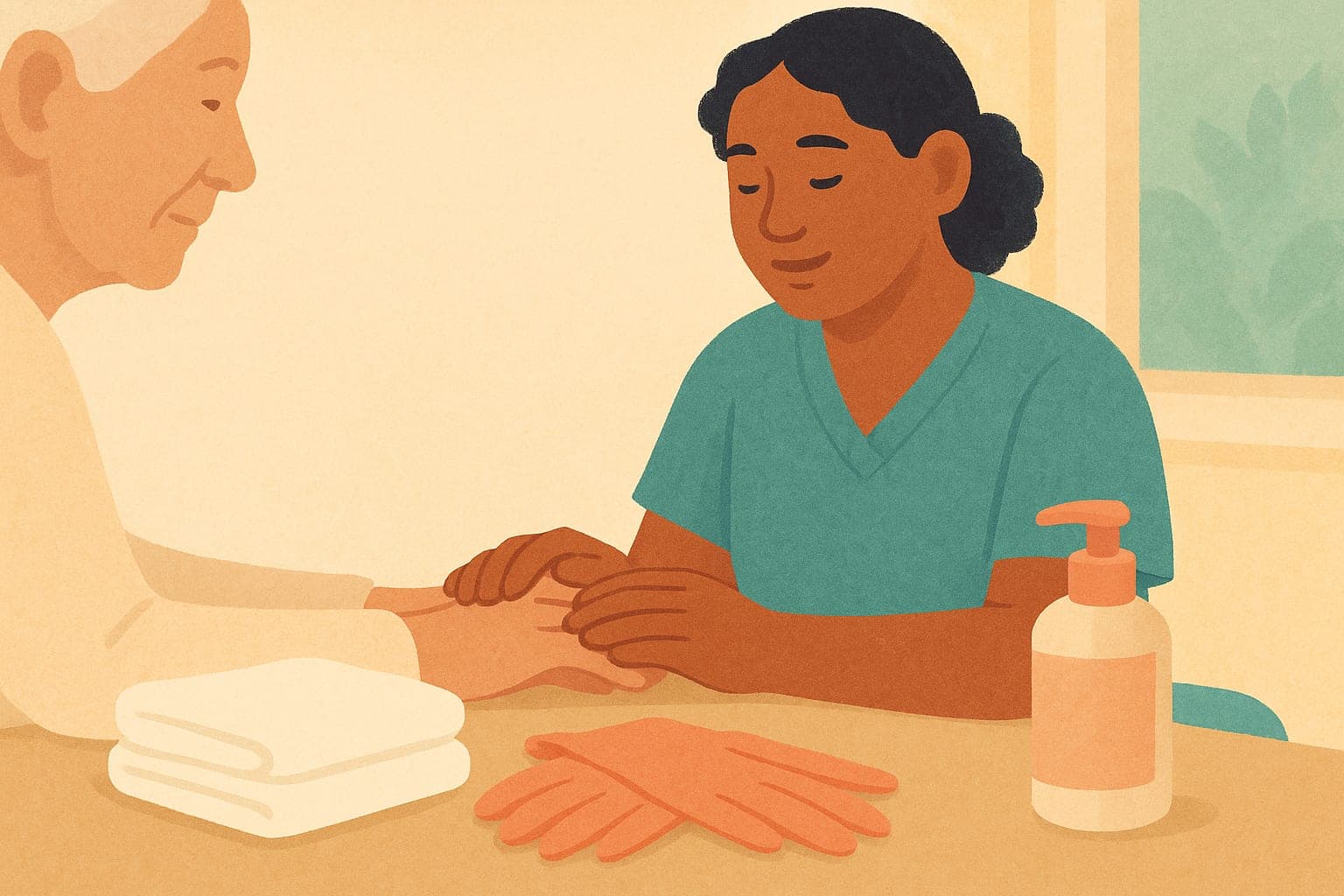
Pressure sores (bedsores) are skin injuries caused by staying in one position too long. You can prevent most of them at home by repositioning every 1 to 2 hours, checking the skin daily, keeping it clean and dry, and supporting good nutrition. Report any lasting redness or open skin to a doctor right away.
Key points
- Most bedsores are preventable: reposition every 1 to 2 hours in bed (every 15 to 20 minutes in a chair), check the skin daily, keep it clean and dry, and support good nutrition and hydration.
- Redness that does not fade when pressed is an early warning sign. Act on it right away, before the skin breaks open.
- Use foam, gel, or air cushions and mattresses for pressure relief, and never use donut-shaped cushions, which can make sores worse.
- Medicare home health covers skilled nursing wound care at no cost for those who qualify; call 911 for signs of spreading infection like fever, confusion, or a wound exposing muscle or bone.
What are pressure sores, and who is most at risk?
Pressure sores, also called bedsores or pressure ulcers, are areas of damaged skin caused by staying in one position for too long. Constant pressure cuts off blood flow to the skin, and the skin starts to break down. They form fastest over bony areas where there is little padding between bone and skin.
The most common spots are the tailbone and lower back, hips, heels, ankles, elbows, shoulders, the back of the head, and the ears. For someone who sits in a wheelchair most of the day, the tailbone and buttocks are the biggest concern.
Some people are much more likely to get them. Watch closely if your loved one:
- Spends most of the day in a bed or wheelchair, or cannot change position on their own
- Has trouble feeling pain or pressure (for example, after a stroke, or with diabetes or nerve damage)
- Has poor nutrition or is dehydrated
- Has loss of bladder or bowel control, which keeps the skin damp
- Has thin, fragile skin, or a health condition that slows healing, such as diabetes or poor circulation
- Is confused or has memory loss and does not shift position when uncomfortable
How can I prevent pressure sores at home?
Prevention is far easier than treatment, and most bedsores can be avoided. The goal is simple: take pressure off the skin, keep it healthy, and catch problems early. Four habits do most of the work.
1. Reposition on a schedule. If your loved one is in bed, help them change position at least every 1 to 2 hours. If they sit in a wheelchair or chair, shift their weight every 15 to 20 minutes, or help them stand or lean if they can. Use pillows to keep knees and ankles from pressing together, and place a pillow under the calves so the heels float off the bed. Do not drag someone across the sheets, because rubbing damages skin. Lift, or use a draw sheet.
2. Check the skin every day. Once a day, look over the whole body, especially the bony areas listed above. Press gently on any red spot. Healthy skin turns white and then pink again. If the redness stays and does not fade, that is an early warning sign. On darker skin, redness can be harder to see, so also feel for areas that are warmer, cooler, firmer, or more tender than the skin around them.
3. Keep skin clean and dry. Wash with mild soap and warm water, pat dry gently, and moisturize dry skin. Change wet or soiled clothing and bedding quickly, since moisture from sweat or incontinence breaks skin down fast. A barrier cream can protect skin in the diaper area. Avoid harsh scrubbing.
4. Support good nutrition and hydration. Skin needs protein, calories, and water to stay strong and to heal. Offer balanced meals with enough protein (such as eggs, beans, chicken, fish, or dairy) and encourage water throughout the day unless a doctor has limited fluids.
What cushions and mattresses actually help?
The right support surface spreads weight out so no single spot takes all the pressure. You do not need the most expensive product, but you do need the right kind.
For the bed, a foam, gel, or air mattress or overlay helps more than a standard mattress. For a wheelchair or regular chair, use a foam or gel seat cushion made for pressure relief.
One important warning: skip donut-shaped or ring cushions. They actually cut off blood flow around the edge and can cause a sore instead of preventing one. Sheepskin pads and pillows placed between the knees and under the heels are simple, low-cost helpers.
If your loved one qualifies for Medicare home health, ask the nurse or doctor whether a pressure-relieving mattress or cushion can be ordered as durable medical equipment.
What are the warning signs and stages of a pressure sore?
Pressure sores get worse in steps, or stages. Knowing them helps you act early, when healing is easiest. The National Pressure Injury Advisory Panel describes four stages plus a category that cannot be staged:
- Stage 1: The skin is not broken, but there is a red or discolored area that does not turn white when pressed and does not fade. The spot may feel warm, firm, or painful.
- Stage 2: The top layers of skin are broken. It looks like a shallow open sore, a scrape, or a blister filled with fluid.
- Stage 3: The sore goes deeper, through the skin into the fat below. It may look like a small crater. There can be a bad odor.
- Stage 4: The wound is deep and serious, reaching muscle, tendon, or even bone. This is a medical emergency and needs professional care.
- Unstageable: The bottom of the wound is covered by dead tissue (yellow, tan, brown, or black), so the true depth cannot be seen until it is cleaned out by a professional.
Why is Medicare home health skilled nursing so often used for wound care?
Once a sore breaks the skin (Stage 2 or worse), it usually needs more than a bandage. It needs professional cleaning, the right dressings, and regular checks to make sure it is healing and not getting infected. This is exactly the kind of skilled nursing care Medicare home health is designed to cover.
If your loved one qualifies, a Medicare-certified home health agency sends a nurse to the home to assess and treat the wound, teach you how to change dressings, provide wound supplies, and report progress to the doctor. For people who have trouble leaving home, this is often the most practical way to get expert wound care.
To qualify for Medicare home health, generally all of these must be true: a doctor has certified the need with a plan of care; the patient is homebound (leaving home takes a major effort or is not recommended, though short trips for medical care, worship, or special events are still allowed); the care needed is skilled and part-time or intermittent, not around-the-clock; and the care is provided by a Medicare-certified home health agency.
When you qualify, you pay nothing for covered home health visits, including skilled nursing wound care. There are no copays or deductibles for the covered visits. In Southern California, many Medicare-certified agencies serve Los Angeles, Orange, Riverside, San Bernardino, and San Diego counties, and many have staff who speak Spanish and other languages. Ask the discharge planner at the hospital, or your loved one's doctor, for a referral.
When does a wound need urgent medical attention?
Small red areas that fade can often be handled at home with repositioning and skin care. But some signs mean you should call the doctor or the home health nurse the same day, or seek emergency care.
Call the doctor or nurse promptly if you see redness that does not fade after repositioning, any break in the skin, a sore that is getting bigger or deeper or more painful, drainage or pus or a bad smell, or skin around the wound that is warm, swollen, or increasingly red.
Call 911 or go to the emergency room if there are signs the infection is spreading through the body, such as fever or chills, confusion or new drowsiness, a fast heartbeat, or a wound that exposes muscle or bone. Infected pressure sores can become life-threatening, so when in doubt, get help quickly. This article is for general education and is not a substitute for advice from your loved one's doctor or nurse, who can look at the specific wound and guide treatment.
Frequently asked questions
How often should I turn someone in bed to prevent bedsores?
At least every 1 to 2 hours for someone in bed, and shift weight every 15 to 20 minutes for someone in a wheelchair. Use pillows to keep bony areas from pressing together, and float the heels off the bed with a pillow under the calves. Never drag the person across the sheets, since rubbing damages the skin.
How can I tell the difference between normal redness and an early pressure sore?
Press gently on the red spot. Healthy skin turns white, then pink again when you let go. If the redness stays and does not fade, that is an early (Stage 1) pressure sore. On darker skin, look and feel for areas that are warmer, cooler, firmer, or more tender than the skin around them, since redness may be hard to see.
Does Medicare pay for wound care at home?
Yes. If your loved one qualifies for Medicare home health, skilled nursing wound care is covered, and you pay nothing for covered visits. To qualify, a doctor must certify the need and set up a plan of care, the person must be homebound, the care must be part-time or intermittent, and it must come from a Medicare-certified home health agency.
Are donut cushions good for preventing pressure sores?
No. Donut-shaped or ring cushions can cut off blood flow around the edge and cause a sore instead of preventing one. Use a foam or gel cushion made for pressure relief instead, and ask a home health nurse or doctor whether a pressure-relieving cushion or mattress can be ordered.
What foods help prevent and heal pressure sores?
Skin needs protein, calories, and water to stay strong and to heal. Offer protein-rich foods such as eggs, beans, chicken, fish, and dairy, along with a balanced diet and plenty of water throughout the day, unless a doctor has limited fluids. Good nutrition and hydration are a key part of both prevention and healing.
When is a pressure sore an emergency?
Call 911 or go to the emergency room if you see signs the infection is spreading, such as fever or chills, confusion or new drowsiness, a fast heartbeat, or a wound deep enough to expose muscle or bone. Call the doctor or home health nurse the same day for any open sore, drainage, bad smell, or spreading redness.
Need care at home? We will connect you.
Skilled nursing, therapy, personal care, and recovery help — right at home, from trusted local providers. Tell us what you need and we will take it from there. Free, no obligation.
Get home-health careSources
Related guides
This guide is educational and is not medical advice. In an emergency, call 911.