
Home safety
Helping an Older Adult Manage Diabetes at Home: A Caregiver's Guide
Last reviewed July 28, 2026
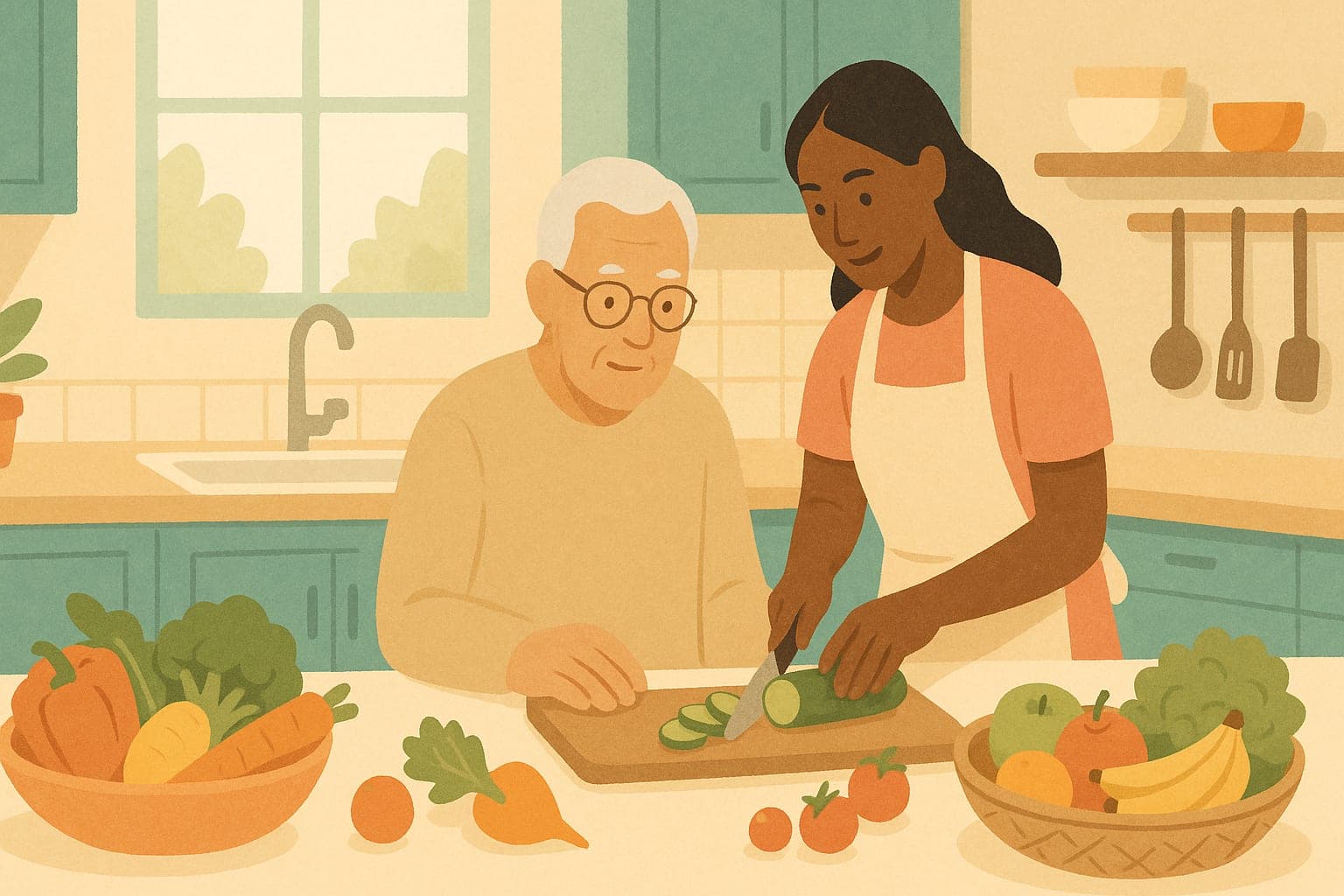
To help an older adult manage diabetes at home, keep a simple routine: give medicines and insulin safely, serve balanced meals, check the feet daily, watch for high and low blood sugar, and act fast on warning signs. A home health nurse can teach these skills. Call 911 for confusion, fainting, or seizures.
Key points
- Keep a simple daily routine: same medicine times, regular meals, blood sugar checks, and a written log to bring to the doctor.
- Learn the fast signs of low blood sugar and use the 15-15 rule; keep fast sugar in the kitchen, bedroom, and car.
- Check the feet every day and never let a foot sore go unwatched, small wounds can turn serious quickly.
- Call 911 for fainting, seizures, stroke signs, or a low that won't come back up; a home health nurse can teach these skills and Medicare may help pay.
What are the basics of blood sugar management for seniors?
Diabetes means the body has trouble keeping blood sugar (blood glucose) in a healthy range. For older adults, the goal is not "perfect" numbers. The goal is steady, safe numbers that avoid both dangerous highs and dangerous lows.
Older adults are more likely to have low blood sugar (hypoglycemia), which can cause falls, confusion, and hospital visits. Because of this, many doctors set gentler targets for seniors, especially those with several health problems. Your loved one's doctor sets the right numbers for them.
A common daily routine looks like this:
- Check blood sugar when the doctor says to (often before meals or at bedtime).
- Write down the numbers, the date, and the time so the care team can see patterns.
- Give medicines and insulin at the same times each day.
- Serve meals on a regular schedule; do not skip meals.
- Keep a fast sugar (like glucose tablets or juice) nearby at all times.
- Bring the log to every doctor visit.
How can I keep medications and insulin safe?
Medicine mistakes are one of the biggest risks at home. A little organization prevents most of them.
Insulin and some diabetes pills (like glipizide or glyburide, called sulfonylureas) can push blood sugar too low. Never change a dose on your own. If your loved one is having frequent lows, tell the doctor, because the plan may need to be simplified.
Safe medicine habits for caregivers:
- Use a weekly pill organizer and a written schedule.
- Give the right insulin (some people use two kinds) and roll, don't shake, cloudy insulin.
- Store insulin as directed; keep the one in use at room temperature and spares in the fridge, never in a hot car or freezer.
- Check the expiration date and throw away insulin that looks clumpy or discolored.
- Rotate injection spots (belly, upper arm, thigh) to protect the skin.
- Use a sharps container for needles, not the trash.
- Never skip a meal after giving a dose that lowers blood sugar.
What should an older adult with diabetes eat, and how do I care for their feet?
Healthy eating does not mean a special or expensive diet. It means balanced, regular meals. A simple guide is the plate method: fill half the plate with non-starchy vegetables, one quarter with lean protein, and one quarter with whole grains or starchy foods, plus water to drink.
In Southern California, easy, affordable choices include beans, nopales, tomatoes, leafy greens, avocado, eggs, chicken, fish, brown rice, and fresh fruit for dessert. Limit sugary drinks like soda, sweetened coffee, and juice, which raise blood sugar fast. Watch portion sizes on tortillas, rice, and bread.
Foot care is just as important as food. High blood sugar can damage nerves and blood vessels, so a small cut can turn into a serious wound without the person feeling it. Check the feet every single day.
Daily foot care steps:
- Look at the top, bottom, and between the toes for cuts, redness, blisters, or swelling. Use a mirror or ask for help if bending is hard.
- Wash feet in warm (not hot) water, dry gently, and dry between the toes.
- Put lotion on the tops and bottoms, but not between the toes.
- Trim toenails straight across.
- Never go barefoot; wear well-fitting shoes and clean, seamless socks.
- Call the doctor about any sore, blister, or red area that does not start healing.
How do I recognize high and low blood sugar, and what do I do?
Knowing the warning signs and acting quickly can prevent an emergency. Low blood sugar (below 70 mg/dL) comes on fast and is the more urgent danger.
Signs of LOW blood sugar (hypoglycemia): shaking, sweating, fast heartbeat, hunger, confusion, irritability, dizziness, or trouble speaking.
If the person is awake and can swallow, use the 15-15 rule: give 15 grams of fast sugar (4 glucose tablets, 4 ounces of regular juice or soda, or 1 tablespoon of sugar or honey). Wait 15 minutes and recheck. If still below 70, repeat. Once it is back up, give a small snack or meal.
Signs of HIGH blood sugar (hyperglycemia): very thirsty, urinating often, tired, blurry vision, dry mouth. High sugar builds up more slowly. Give water, follow the doctor's plan, and call the care team if numbers stay high or the person feels sick.
A few safety reminders:
- Keep fast sugar in the kitchen, the bedroom, and the car.
- Do NOT give food or drink to someone who is too drowsy to swallow safely, choking is a real risk.
- If the person has a glucagon kit and passes out from low sugar, use it and call 911.
How can a home health nurse teach diabetes self-care?
A home health nurse comes to the house and teaches the person and the family how to manage diabetes safely, step by step, in the setting where care actually happens. This is called diabetes self-management training or education.
A home health nurse or diabetes educator can help with the everyday skills below.
Medicare Part B covers outpatient diabetes self-management training when a doctor orders it, usually up to 10 hours in the first year and 2 hours of follow-up each year after. Ask your loved one's doctor for a referral, and ask whether home health services are covered for their situation.
- Show how to check blood sugar and read a glucose meter or continuous glucose monitor.
- Teach safe insulin injection and how to store medicines.
- Help set up a pill organizer and a simple daily routine.
- Teach how to spot and treat highs and lows.
- Do foot checks and teach daily foot care.
- Review meals and answer questions in plain language, in the family's own words.
- Coordinate with the doctor when the plan needs to change.
When should I call the doctor or 911?
Most days can be handled at home with a good routine. But some signs need fast help. Trust your instincts, if something seems very wrong, get help.
Call 911 right away if the person shows any of the emergency signs below.
Call the doctor (not 911) the same day if: blood sugar stays very high or very low for no clear reason, a foot sore or wound appears, the person is vomiting or cannot keep fluids down, or they seem sick with a fever. When in doubt, call the care team, that is what they are there for.
- Passes out, has a seizure, or cannot be woken up.
- Is too confused or drowsy to swallow safely.
- Has low blood sugar that does not come back up after two rounds of the 15-15 rule.
- Shows signs of a stroke, use FAST: Face drooping, Arm weakness, Speech trouble, Time to call 911. People with diabetes have a higher stroke risk.
- Has chest pain, trouble breathing, or signs of a heart attack.
Frequently asked questions
What is a safe blood sugar range for an older adult?
There is no single number for everyone. Many seniors aim for roughly 80 to 130 mg/dL before meals and under 180 mg/dL after eating, but older adults with several health conditions are often given gentler targets to avoid dangerous lows. Only the person's doctor can set the right range for them.
What should I do first if my loved one's blood sugar is too low?
If they are awake and can swallow, use the 15-15 rule: give 15 grams of fast sugar (like 4 glucose tablets or 4 ounces of juice), wait 15 minutes, and recheck. Repeat if still below 70 mg/dL. If they pass out or cannot swallow, do not give food, use a glucagon kit if available, and call 911.
How often should I check an older adult's feet?
Check the feet every single day. Look at the tops, bottoms, and between the toes for cuts, blisters, redness, or swelling. Because diabetes can dull feeling in the feet, a small injury can go unnoticed and become serious. Call the doctor about any sore that is not healing.
Does Medicare pay for diabetes education at home?
Medicare Part B covers outpatient diabetes self-management training when a doctor orders it, generally up to 10 hours the first year and 2 hours of follow-up each year after. Coverage and setting depend on the person's situation, so ask the doctor for a referral and confirm what applies to your loved one.
Can changing what my loved one eats really help?
Yes. Regular, balanced meals help keep blood sugar steady and can reduce medicine side effects. A simple plate of half vegetables, a quarter lean protein, and a quarter whole grains, plus water instead of sugary drinks, makes a real difference. A dietitian or home health nurse can tailor a plan.
Is low or high blood sugar more dangerous for seniors?
Low blood sugar (hypoglycemia) is usually the more urgent danger because it comes on fast and can cause falls, confusion, fainting, and seizures. High blood sugar builds up more slowly but still needs attention. Learn the signs of both, and keep fast sugar within reach at all times.
Need care at home? We will connect you.
Skilled nursing, therapy, personal care, and recovery help — right at home, from trusted local providers. Tell us what you need and we will take it from there. Free, no obligation.
Get home-health careSources
Related guides
This guide is educational and is not medical advice. In an emergency, call 911.