
Dementia care
Sundowning and Nighttime Dementia Care: A Gentle Guide for Families
Last reviewed July 29, 2026
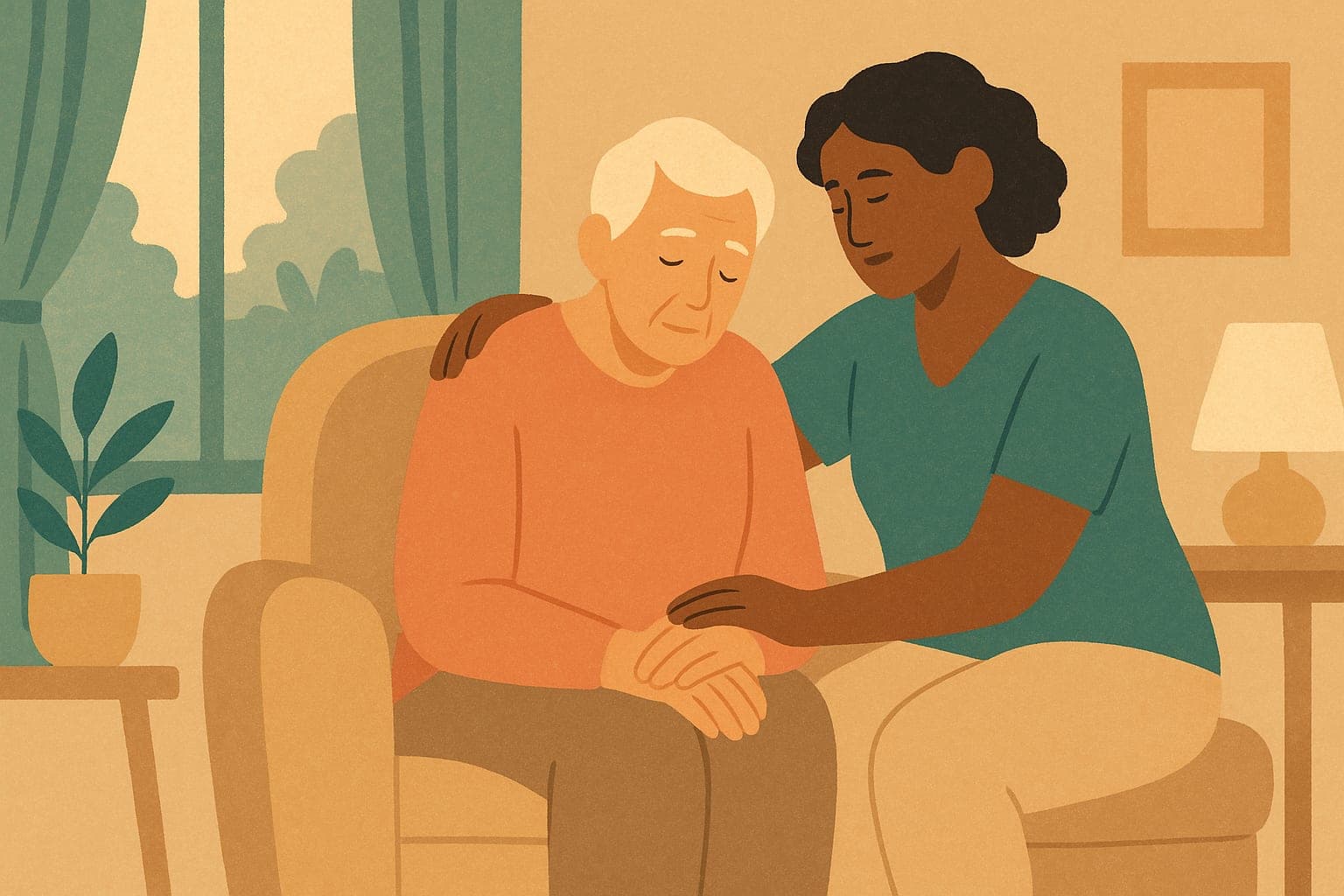
Sundowning is a pattern of confusion, restlessness, or agitation that shows up in the late afternoon and evening for many people with dementia. It is not a disease itself. You can ease it with steady daily routines, daytime light and activity, a calm and softly lit evening, and by ruling out pain, hunger, or infection.
Key points
- Sundowning is late-day confusion or agitation common in dementia, not a separate illness and not something the person is doing on purpose.
- Prevention beats reaction: morning sunlight, daytime activity, a predictable routine, and limited late-day caffeine and naps do the most good.
- When agitation starts, stay calm, lower noise and clutter, reassure rather than argue, and gently redirect to a favorite snack, object, or activity.
- A sudden change in behavior can signal pain, a urinary tract infection, or a medication side effect — worth a call to the doctor, not just more coaxing.
- Sleep medications carry real risks for people with dementia and should be a last resort, tried only after non-drug approaches, and only with a doctor.
- Your own rest matters — line up respite help before you are running on empty, so the nights are survivable for both of you.
What is sundowning, exactly?
Sundowning is the name caregivers and clinicians give to a familiar pattern: a person with dementia who was calm during the day becomes more confused, restless, anxious, or agitated as the afternoon fades into evening. You might see pacing, repeated questions, wanting to "go home" even while at home, resistance to care, tears, or trouble settling for the night. The Alzheimer's Association describes it as increased confusion that can run from dusk through the night.
It helps to know what sundowning is not. It is not a separate disease, and it is not your loved one being difficult or manipulative. It is a real change tied to how dementia affects the brain, the body clock, and the ability to make sense of a tiring day. Naming it can take some of the sting out of a hard evening — this is a known pattern, and there are gentle, practical ways to soften it.
Sundowning can come and go. Some people have a rough stretch for weeks or months and then settle; others have harder evenings when they are overtired, unwell, or in an unfamiliar place. Tracking when it tends to hit and what seems to set it off is one of the most useful things you can do.
Why does it happen in the evening?
No single cause explains sundowning, but several things tend to stack up as the day winds down. Dementia can disrupt the internal body clock (circadian rhythm), so the signals that normally say "day" and "night" get scrambled — the person may feel wide awake at 9 p.m. and foggy at 9 a.m. On top of that, a full day of activity leaves many people mentally and physically worn out by late afternoon, and a tired brain has a harder time coping.
The environment plays a big part, too. As the sun drops, rooms fill with shadows and dim corners that can look confusing or even frightening, and low light makes hallucinations or misreadings of ordinary objects more likely. In Southern California, long summer evenings and bright low-angle sun through west windows can add glare and disorientation right at the hard hour, while the winter dark comes early and fast. A little attention to light makes a real difference.
- Body clock changes from dementia, so day and night signals get mixed up
- End-of-day exhaustion after too much activity or stimulation
- Low light and shadows that confuse or frighten as the sun sets
- Unmet needs the person cannot name — hunger, thirst, needing the bathroom, or pain
- Picking up on a caregiver's own stress and fatigue in the evening rush
- Too much late-day caffeine, alcohol, or long afternoon naps that shift the sleep schedule
How can I calm agitation once it has already started?
In the moment, your calm is the most powerful tool you have. Approach gently, keep your voice soft and unhurried, and give the person your full, unrushed attention. The National Institute on Aging suggests listening calmly to their concerns and frustrations and reassuring them that everything is okay. Arguing or correcting — "You ARE home, Mom" — usually raises the tension. It is kinder and more effective to acknowledge the feeling first: "I can see you're worried. I'm right here with you."
Then quiet the environment. Turn down the TV or turn it off, lower background noise, reduce clutter, and thin out how many people are in the room. Turn on enough lamps to erase the scary shadows. Once things feel calmer, try a gentle redirect — a favorite snack, a warm drink, a photo album, folding towels together, or a familiar show or piece of music. A simple, purposeful task can give restless hands something to do.
If your loved one needs to pace or move, and it is safe, let them — walking it off with supervision is far better than physically holding them back, which almost always escalates fear. Keep the path clear and stay nearby. And check the basics every time: Are they hungry, thirsty, too hot or cold, needing the bathroom, or in pain? Sundowning is often the only way a person can signal an unmet need they can no longer put into words.
What daytime habits actually reduce sundowning?
The best evenings are built earlier in the day. A predictable routine for waking, meals, bathing, and bedtime gives a person with dementia fewer decisions to make and a steadier sense of time. The NIA and Alzheimer's Association both point to daytime light and gentle activity as central: get outside or sit by a sunny window each morning, and aim for some physical activity every day — a walk around the block or the yard is plenty. In Southern California, an early-morning or late-afternoon walk before the heat, or a shady patio in summer, works well.
Balance is the trick: enough activity to encourage real tiredness by bedtime, but not so much that the person is frazzled by late afternoon. Front-load the busier tasks — appointments, bathing, outings — into the morning and early afternoon, and keep the evening calm and quiet. Discourage long or late naps, since a two-hour nap at 4 p.m. steals from nighttime sleep and worsens the day-night mix-up.
- Keep a steady daily rhythm for waking, meals, bathing, and bed
- Get morning sunlight and some daily movement, adjusted for the heat
- Schedule demanding activities for the morning, not the evening
- Limit caffeine and alcohol, especially in the afternoon and evening
- Keep naps short and early rather than long and late
- Turn on lamps before dusk so the home is well lit as the sun drops
- Wind down with soothing music, dim-but-not-dark lighting, and quiet
How do I help them sleep through the night — safely?
A calm, consistent bedtime routine signals the body that the day is ending. Keep the same order of events each night, keep the bedroom comfortable and not too warm, and use a nightlight or soft hallway light so a middle-of-the-night trip to the bathroom does not turn into a frightened, disoriented episode. Make sure basic needs are met before bed — a bathroom visit, a light snack if hunger wakes them, comfortable clothing.
Nighttime is also when safety matters most. If your loved one wanders or gets up confused, take a walk through the home with fall prevention in mind: clear walking paths, remove throw rugs and cords, add lighting to stairs and bathrooms, and consider door alarms or a bed sensor so you hear them get up. Keep car keys and anything hazardous out of reach, since nighttime confusion can lead to unsafe attempts to leave or drive.
Be patient with yourself here — some broken sleep is part of dementia and may not fully resolve. The goal is to make the nights safer and a little easier, not to force perfect sleep. If wandering, getting outside, or nighttime falls are a real risk, that is worth raising with the doctor and may be a sign more help at home is needed.
When should I call the doctor, and what about sleep medications?
A sudden or sharp change in behavior deserves a medical look, not just more soothing. In older adults, a urinary tract infection, pain, constipation, dehydration, a new illness, or a medication side effect can all show up as agitation or confusion — and the person may not be able to tell you what hurts. The NIA notes that if sundowning keeps being a problem, a medical exam can help identify causes like pain, a sleep disorder, another illness, or medication effects. Bring a simple log of when the behavior happens and what seems to trigger it.
Be cautious about sleep medications. The NIA is clear that some drugs — sleep aids, anti-anxiety medicines, anticonvulsants, and antipsychotics — call for extra caution in people with dementia, that sleep aids may help short-term but carry a risk of dependence and should not be used long term, and that medicines for behavior should be used only after non-drug strategies have been tried. Never start, stop, or change a dose on your own. Talk with the doctor about the whole picture, including whether an existing medication could be making evenings worse.
This guide is educational and is not medical advice. Your loved one's doctor knows their history and can weigh options safely. And if there is ever an immediate danger — a serious fall, chest pain, thoughts of harm, or a situation you cannot keep safe — call 911.
How do I protect my own rest as the caregiver?
Sundowning is exhausting precisely because it hits at the end of your day, when your own reserves are lowest. The people in the room can feel your tension, and a frazzled caregiver often makes for a more agitated evening — so caring for yourself is not selfish here, it is part of the care plan. Lower your own expectations for the evening, keep dinner simple, and protect a little quiet for yourself where you can.
You do not have to carry every night alone. Trading off with a family member, hiring an evening caregiver a few nights a week, or using respite care can give you the sleep that makes the hard nights survivable. In California, programs like In-Home Supportive Services (IHSS) and community respite options may help cover in-home help for those who qualify, and adult day programs can give both of you a break during the day. Ask your loved one's doctor or your local Area Agency on Aging what is available near you.
If you notice yourself feeling constantly drained, short-tempered, hopeless, or unwell, take it seriously — that is caregiver burnout, and it is a signal to bring in more support before you hit a wall. Getting help early keeps you healthy enough to keep going.
Frequently asked questions
Is sundowning a sign the dementia is getting worse?
Not necessarily. Sundowning is common across the middle stages of dementia and often relates to tiredness, the body clock, and the environment rather than a sudden decline. That said, a new or rapid change in behavior is worth a call to the doctor to rule out pain, infection, or a medication issue.
Does melatonin help with sundowning?
Some families ask about melatonin for sleep, but the evidence in dementia is mixed and it is still a supplement that interacts with other medicines. Do not start it on your own — ask the doctor whether it is appropriate, and try non-drug steps like morning light, daytime activity, and a calm bedtime routine first.
Should I correct my loved one when they are confused in the evening?
Usually no. Arguing or repeatedly correcting tends to increase distress. Acknowledge the feeling behind what they are saying, reassure them, and gently redirect to a comforting activity. Meeting the emotion is far more effective than winning the argument about the facts.
My mom keeps trying to leave the house at night. What can I do?
Nighttime wandering is common and a real safety concern. Keep exits secured with alarms or locks she cannot easily operate, remove car keys, add nightlights to reduce fear, and keep walking paths clear. Reassure her calmly rather than blocking her physically, and tell the doctor, since persistent wandering may mean more help at home is needed.
How long does the sundowning phase usually last?
It varies a lot from person to person. For some it lasts weeks or months and eases; for others it comes and goes with how tired or unwell they are. There is no fixed timeline, but the steady daytime and evening habits in this guide can reduce how often and how intensely it happens.
Need care at home? We will connect you.
Skilled nursing, therapy, personal care, and recovery help — right at home, from trusted local providers. Tell us what you need and we will take it from there. Free, no obligation.
Get home-health careSources
Related guides
This guide is educational and is not medical advice. In an emergency, call 911.