
Home safety
What to Do Right After an Older Adult Falls
Last reviewed July 29, 2026
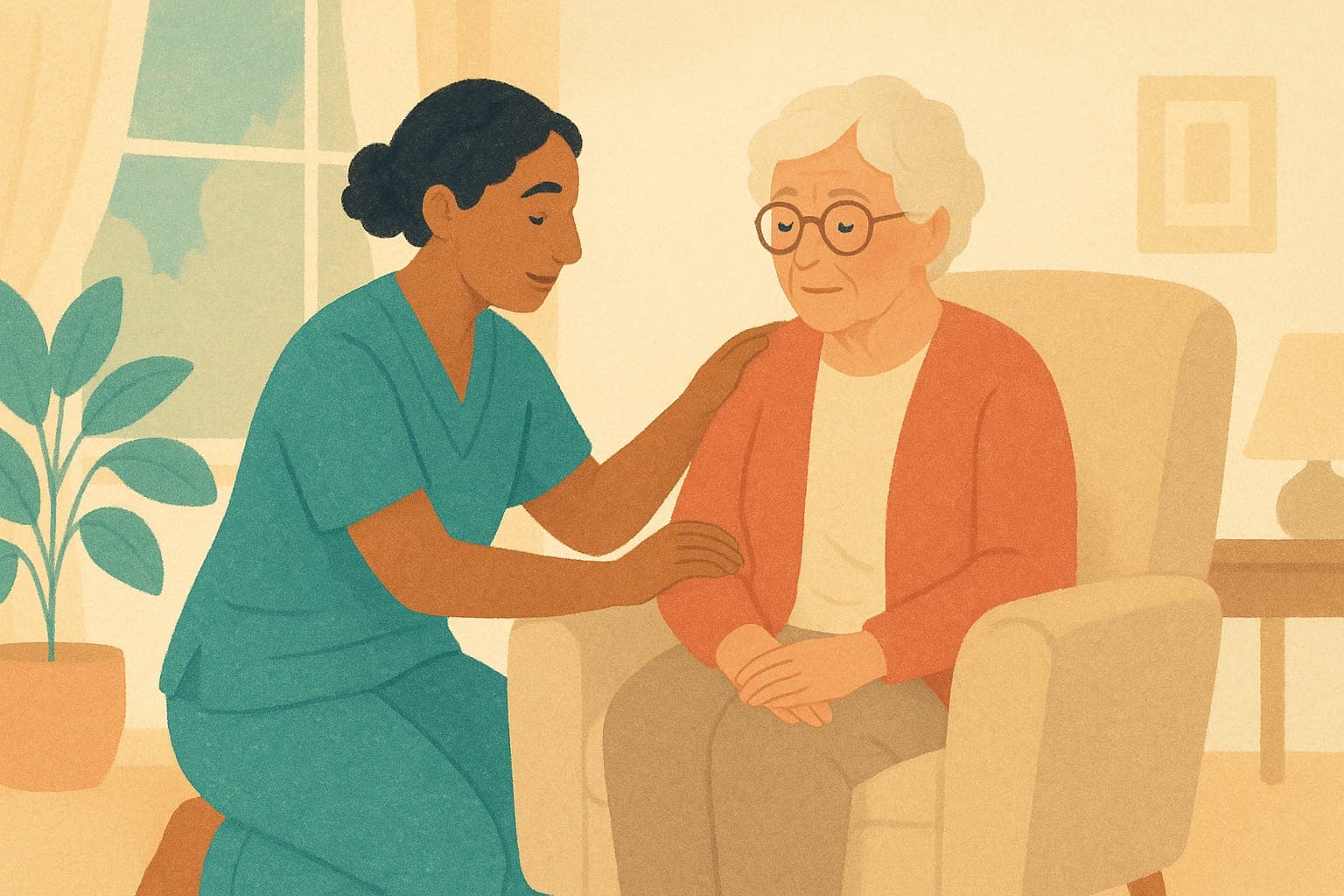
The most important thing to do after a loved one falls is to stay calm and not rush to lift them. Take a breath, kneel down beside them, and check for injury before anything else: Are they awake and responsive? Are they in pain, bleeding, or unable to move an arm or leg? Did they hit their head? If they are unconscious, bleeding heavily, in severe pain, unable to get up, showing signs of a broken bone (a hip or leg that hurts badly, looks shorter, or turns outward), or if they hit their head while taking a blood thinner, call 911 and do not move them. If they seem uninjured and are able to help themselves, guide them to get up slowly using a sturdy chair rather than pulling them up by the arms. Afterward, watch closely for a day or two, tell their doctor about the fall even if they seem fine, and take steps to prevent the next one. Here is what to do at each of those moments, so you are not deciding alone in a stressful minute.
Key points
- Do not rush to lift someone right away. Check for injury first. Moving a person who has a broken hip or a head injury can make things much worse.
- Call 911 if they are unconscious, in severe pain, bleeding heavily, cannot get up, may have broken a bone, or hit their head while taking a blood thinner.
- If there is no sign of injury and they can help, guide them up slowly using a sturdy chair. Never lift a full-grown adult by yourself if it strains your back.
- A head injury can show up hours later. Watch for a worsening headache, drowsiness, confusion, repeated vomiting, or slurred speech, and get help right away if any appear.
- Tell the doctor about every fall, even a small one. A fall is a medical warning sign, and a doctor can find and fix the cause before the next one happens.
- Most falls have a fixable cause. Medication review, a vision check, balance exercises, and a few home changes dramatically lower the risk of falling again.
What should I do in the very first moments after my parent falls?
Your instinct will be to help them up immediately. Resist it for just a moment. The single most helpful thing you can do first is stay calm and check for injury, because lifting someone too quickly can turn a hard landing into a serious injury.
Get down to their level, speak gently, and keep them still while you look them over. Reassure them that you are there and that you are going to take a minute to make sure they are okay before either of you moves. That calm minute protects them and gives you time to make a good decision.
As you kneel beside them, quickly check the following:
- Are they awake and responding to you? Do they know where they are and what happened?
- Are they breathing normally?
- Is there any bleeding, especially from the head?
- Did they hit their head? Ask, and look for bumps or cuts.
- Are they in pain? Ask them to tell you where it hurts before they try to move.
- Can they move their arms and legs? Does one leg look shorter, or turn outward at the foot or hip?
- Are they on a blood thinner (such as warfarin, Eliquis, or Xarelto)? Keep this in mind if they hit their head.
When do I need to call 911?
When in doubt, call. Emergency dispatchers would far rather answer a call that turns out to be minor than have you wait too long. Call 911 right away, and do not try to move the person, if you notice any of these:
- They are unconscious, hard to wake, or not breathing normally.
- They are bleeding heavily or have a deep cut.
- They are in severe pain, or the pain is in the hip, pelvis, back, or a limb they cannot move.
- A leg or arm looks bent, twisted, or shorter than the other, or a leg is turned outward. These can be signs of a broken bone.
- They cannot get up at all, or you cannot help them up safely.
- They hit their head, especially if they take a blood thinner or the headache is getting worse.
- You see signs of a stroke: a drooping face, weakness on one side, slurred speech, or sudden confusion. Note the time and call immediately.
- They have chest pain, trouble breathing, or a seizure.
How do I help them get up safely, or should I not move them at all?
If you suspect any injury, if they are in pain, or if they cannot help themselves, do not move them. Keep them warm with a blanket or pillow, stay with them, and call for help. Moving someone with a broken hip or a spine injury can cause lasting harm.
If they seem uninjured, are not in pain, and feel able to get up, guide them, do not haul them up by the arms. Pulling an adult up by the arms can dislocate a shoulder and can throw both of you off balance. Protect your own back, too: never lift a full-grown adult on your own if it means straining or catching them mid-fall. Instead, coach them through getting up under their own power with a sturdy chair for support:
- Let them rest on the floor for a minute until they feel steady and calm.
- Help them roll onto their side, then push up onto their hands and knees.
- Have them crawl to a strong, stable chair (not one with wheels).
- Ask them to place both hands flat on the seat of the chair.
- Have them bring their stronger leg forward so the foot is flat on the floor, keeping the other knee down.
- On a count of three, have them push up through their hands and their front foot while you steady the chair and support (not pull) them.
- Once they are up, help them turn and sit down in the chair. Let them sit and catch their breath before standing again.
What if they are uninjured but simply cannot get up?
Sometimes there is no injury at all, but your loved one does not have the strength to get off the floor, and you cannot safely lift them alone. That is common, and there is a good option that does not mean a trip to the hospital.
In much of Southern California, you can call your local fire department's non-emergency number and ask for a lift-assist. A crew will come and help your loved one off the floor. Save that non-emergency number in your phone right next to 911 so you are not searching for it in the moment. Reserve 911 itself for injuries and emergencies.
While you wait, keep them warm and comfortable on the floor with a pillow under the head and a blanket over them, and stay close so they are not frightened or alone.
What should I watch for in the hours and days after a fall?
A person can seem fine right after a fall and still have a problem that surfaces later. Plan to check on them more often than usual for the next day or two, and know the warning signs that mean you should call the doctor or 911.
Watch for signs of a head injury, which can appear hours after the fall: a headache that gets worse, unusual drowsiness or trouble waking, confusion, repeated vomiting, slurred speech, weakness, or one pupil looking larger than the other. If any of these show up, treat it as an emergency. This is even more urgent if they take a blood thinner, because bleeding in the brain can build slowly.
Also watch for a hidden fracture. If your loved one is suddenly reluctant to put weight on a leg, is guarding a hip or wrist, or has pain and bruising that keeps growing, they may have a break that was not obvious at first. Have it checked.
One more risk worth knowing is a long lie. If an older adult is on the floor for a long time before being found, especially if they live alone, they can develop dehydration, pressure sores, a dangerous drop in body temperature, or muscle breakdown. If you find someone who has been down for a while, get medical help even if they insist they are okay.
Why did the fall happen, and how do I prevent the next one?
A fall is rarely just clumsiness. According to the CDC, about one in four older adults falls each year, and most falls come from a mix of causes that can be found and fixed. Falling once roughly doubles the chance of falling again, so the days after a fall are the best time to act.
Work with their doctor to look at the common, fixable causes:
- Medications: some drugs, and certain combinations, cause dizziness, drowsiness, or a drop in blood pressure. Ask the doctor or pharmacist to review the full list, including over-the-counter and sleep aids.
- Blood pressure that drops on standing: if they feel lightheaded when they stand, teach them to rise slowly (sit up, pause, then stand) and mention it to the doctor.
- Vision: out-of-date glasses and untreated cataracts make hazards hard to see. Schedule an eye exam.
- Strength and balance: weak legs and poor balance are leading causes. Programs like tai chi and simple strength exercises are proven to reduce falls; ask about a physical therapy referral.
- Bone health: keeping bones strong (through diet, weight-bearing activity, and, if the doctor advises, vitamin D and calcium) means a fall is less likely to cause a fracture.
- Footwear and feet: sturdy, non-slip shoes beat socks, slippers, or bare feet. Have foot pain checked.
- The home: loose rugs, poor lighting, clutter, and missing grab bars cause many falls. Removing these hazards is one of the highest-value things you can do, and it is covered in depth in our home safety and home modification guides.
Should I tell the doctor even if my parent seems fine?
Yes, always. Report every fall, even a stumble with no injury. Many older adults hide falls because they fear losing their independence, but a fall is a medical event and an early warning sign, and doctors have a real playbook for it.
The CDC's STEADI program (Stopping Elderly Accidents, Deaths and Injuries) gives clinicians a standard way to screen for fall risk, check the specific things that made your loved one fall, and put a prevention plan in place. You can ask the doctor directly for a falls risk assessment.
To make the visit useful, bring a few things: a short description of what happened and where, a complete list of medications and supplements, any new or worsening symptoms since the fall (pain, dizziness, bruising), and a note of any earlier falls or near-falls. That picture helps the doctor find the cause and stop the next fall before it happens.
Frequently asked questions
My parent fell but says they are fine and wants to get up. Is it okay to help them?
Only after you have checked for injury. Ask where it hurts and whether they hit their head, and make sure they can move all four limbs without severe pain before either of you moves. If everything checks out and they feel able, guide them up slowly using a sturdy chair rather than pulling them by the arms. If there is any pain, confusion, or trouble moving, keep them still and call for help.
My parent hit their head but seems totally normal. Do we still need to see a doctor?
If they take a blood thinner, get them evaluated even if they seem fine, because bleeding in the brain can build slowly and quietly. For anyone, watch closely for the next 24 to 48 hours and seek emergency care right away if a headache worsens or you notice drowsiness, confusion, repeated vomiting, slurred speech, or one pupil looking larger than the other. When you are unsure, call the doctor's advice line or 911.
Can I call the fire department to help lift my parent without going to the hospital?
Often, yes. Many Southern California fire departments offer a lift-assist for people who are uninjured but cannot get up on their own. Call the department's non-emergency number, not 911, unless there is an injury or emergency. If there is any sign of injury, call 911 instead and do not move the person yourself.
How long should I keep an eye on someone after a fall?
Plan to check on them more often than usual for at least 24 to 48 hours. Head injuries and hidden fractures can take hours or even a day to show up. Watch for worsening pain, new bruising, reluctance to bear weight, headache, drowsiness, or confusion, and get medical help if any appear.
My parent falls a lot. Does that mean it is time for a nursing home?
Not necessarily. Repeated falls are a signal to find the cause, not automatically a reason to move. Most falls come from fixable factors such as medications, vision, weak balance, or home hazards. Ask the doctor for a falls risk assessment and a physical therapy referral first. If falls continue despite a solid plan, that is a good moment to talk together about more support at home or a different care setting.
Should I try to catch my parent when they start to fall?
It is natural to reach out, but throwing yourself under a falling adult often injures both of you. If you can, guide them toward a soft landing such as a chair, a bed, or slow their descent to the floor while protecting their head, rather than trying to fully stop the fall. Protecting your own back matters, because a caregiver who is injured cannot help anyone.
Need care at home? We will connect you.
Skilled nursing, therapy, personal care, and recovery help — right at home, from trusted local providers. Tell us what you need and we will take it from there. Free, no obligation.
Get home-health careSources
Related guides
This guide is educational and is not medical advice. In an emergency, call 911.