
Veterans
VA Respite Care: How Family Caregivers Get a Break
Last reviewed August 3, 2026
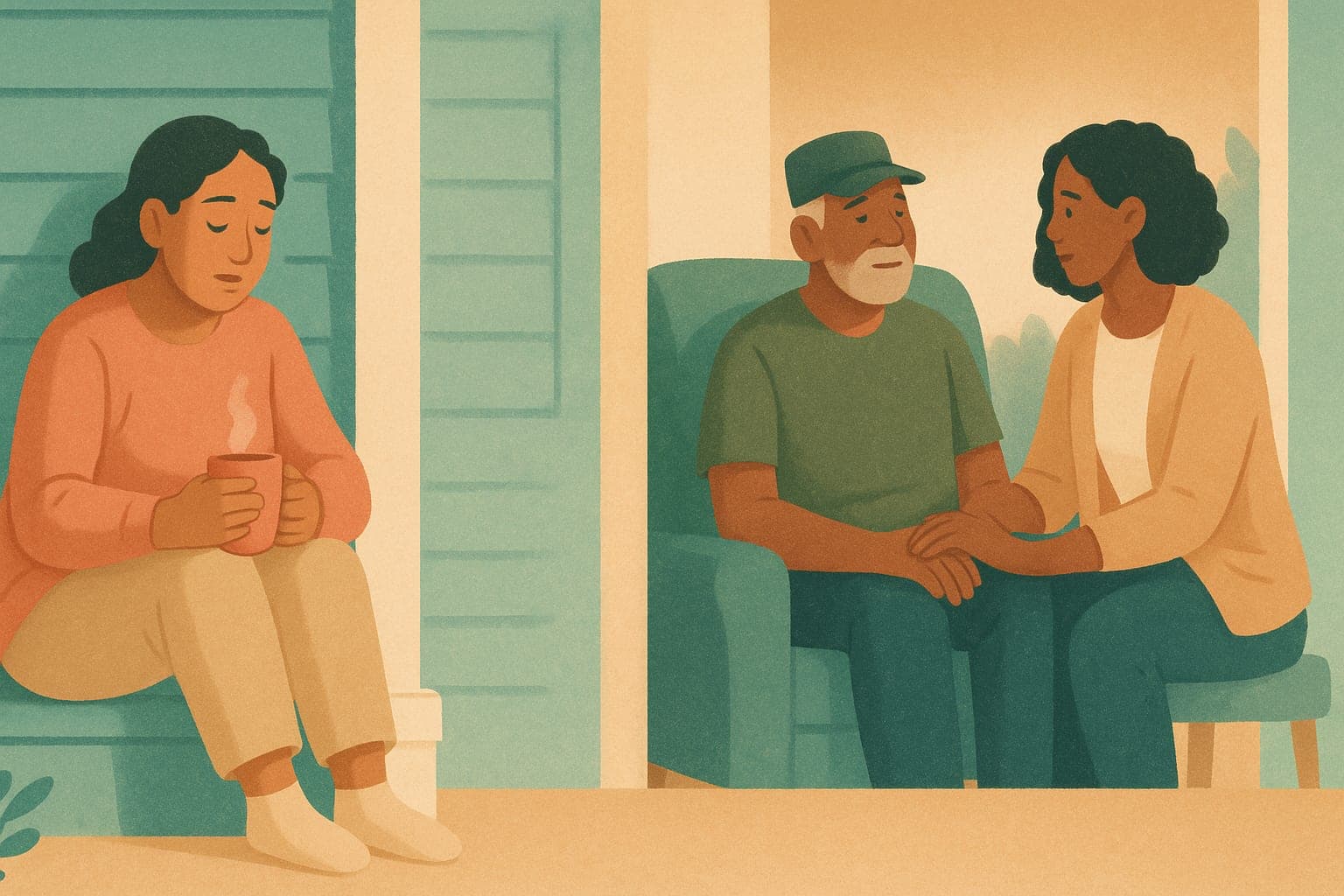
VA respite care pays for someone else to care for a veteran for a short time so the family caregiver can rest, run errands, or travel. VA describes respite in the home, through an adult day health care program, or as a short nursing home stay. Enrolled veterans may qualify if VA decides they need the service and it is available near them. Ask your VA social worker or Caregiver Support Coordinator.
Key points
- VA respite care pays for short-term care of the veteran so the family caregiver can rest, run errands, go to their own medical appointments, or travel.
- VA describes respite in the veteran's home, through an adult day health care program, or as a short stay in a VA Community Living Center or community nursing home.
- VA states all enrolled veterans are eligible if they meet the clinical criteria and the service is available — VA staff make that call, so ask rather than assume. Nothing on this page is a guarantee of benefits.
- There is no copay for the first 21 days of extended care in a 12-month period; under rates effective January 1, 2026, the maximums after that are up to $97 per day inpatient and up to $15 per day outpatient, with your actual amount set from VA Form 10-10EC.
- Nursing home respite is capped at a maximum of 30 days per calendar year; PCAFC separately lists at least 30 days of respite per year for Primary Family Caregivers. VA publishes no national day limit for in-home or adult day respite.
- You do not need PCAFC approval to request respite — go through your VA social worker or Caregiver Support Coordinator now.
- Accredited VSOs and California County Veterans Service Officers help free of charge; never pay a percentage of a veteran's benefits.
What do most veteran families miss?
These are the easy-to-miss angles — the early-eligibility rules and quiet ways veteran families leave help on the table. Each one is explained in full below.
- The 21-day no-copay window is written as a 12-month period, not a calendar year. Ask your social worker exactly when yours started and when it resets, then schedule your longest break inside a fresh window.
- Nursing home respite is capped at 30 days per calendar year — a calendar-year clock, which is different from the copay clock. Families who use respite in December and again in January may be able to stack days across one winter; ask whether your facility applies it that way.
- Every published copay is a maximum ('up to $97', 'up to $15'), and the real number comes from VA Form 10-10EC. Families who skip the 10-10EC sometimes get billed at a higher tier than they owe. Fill it out with the social worker, not alone.
- VA states copays are based on service-connected disability status and financial information. Ask the enrollment or eligibility clerk to check the veteran's copay status before you decline respite over cost.
- You do not have to be in PCAFC to get respite. Many families spend months waiting on a PCAFC decision while clinical respite sat available through the geriatrics and extended care team.
- If PCAFC is approved, ask whether its 'at least 30 days per year' respite is separate from clinical respite ordered by the care team. VA does not publish an answer, and assuming it's one pool can leave days unused.
- Homemaker and Home Health Aide hours can be used to deliver respite at home — VA says so explicitly — and are often easier to arrange than a nursing home bed. Ask for it by that name if 'respite' comes back unavailable.
- Adult Day Health Care doubles as respite several days a week and falls under the outpatient extended care rate (up to $15 per day, effective January 1, 2026) rather than the inpatient rate — far cheaper than overnight respite for the same number of caregiver hours off.
- Veteran-Directed Care gives the veteran a managed budget and VA notes they may hire their own family member or neighbor — a way to pay a second relative to cover the primary caregiver's days off. Ask about community care eligibility, which VA lists as a requirement for this one.
- Set respite up before you need it. The clinical assessment and the 10-10EC take time; families who wait for a crisis find nothing can be arranged same-week.
- Ask for the Caregiver Self-Assessment. VA offers one alongside adult day health care to help a caregiver identify their own needs, and a documented assessment strengthens the clinical picture.
- Secondary Family Caregivers under PCAFC — up to two can be appointed — get education, training, counseling and travel benefits. Naming a backup relative costs nothing and creates a second trained person who can cover you.
- Outside VA, the federal Lifespan Respite Care Program funds state respite systems through the Administration for Community Living, and the ARCH National Respite Network is its technical assistance partner. Grants have gone to 39 states and DC, so check whether yours is active — most VA families never look.
- Free help exists: VA states VSO representatives always provide services on benefit claims free of charge, and California County Veterans Service Officers charge nothing. Accredited attorneys and agents may charge only after VA decides the initial claim.
What is VA respite care, and who is it really for?
VA describes respite care as "a program that pays for care for a short time when family caregivers need a break, need to run errands, or need to go out of town for a few days." The care goes to the veteran — but the purpose of the benefit is you, the caregiver.
This is not a reward for reaching your breaking point. VA's respite page says the program is for veterans "who are isolated, or their caregiver is experiencing burden," alongside veterans who need help with activities of daily living such as bathing, dressing, or fixing meals. VA also states that respite "can be helpful to Veterans of all ages, and their caregiver" — not only older veterans.
A short break is a real part of a care plan. Rested caregivers make fewer mistakes with medications, notice changes sooner, and are often able to keep a loved one at home longer. Asking for respite is part of a care plan, not a failure of one.
- Respite is short-term, planned care — not a permanent placement
- It is meant for the caregiver's rest, errands, appointments, travel, or recovery from your own illness or surgery
- VA names caregiver burden and veteran isolation among the situations respite is meant for
- VA states respite can help veterans of all ages, not only seniors
Where can respite care happen — at home, at a day program, or in a nursing home?
VA describes respite in two overlapping ways, and it helps to know both. VA's Geriatrics and Extended Care page groups it as Home Respite Care — which "pays for a person to come to a Veteran's home or for a Veteran to go to an adult day health care program" — and Nursing Home Respite Care. VA's Caregiver Support Program page lists three formal settings: In-Home Respite, Adult Day Health Respite, and Nursing Home Respite. Same benefit, described two ways.
In-home respite means a paid aide comes to the veteran's home and provides care while you step away. Adult day health respite means the veteran attends an adult day health care program — VA describes it as a program veterans go to during the day "for social activities, peer support, companionship, and recreation," with nursing, therapy, and social work available — while you work, rest, or handle other responsibilities. Nursing home respite means the veteran stays for a short time in a VA Community Living Center or a contracted community nursing home. VA notes that some Community Living Centers provide respite care, so ask whether yours does.
Which settings actually exist depends on your VA facility and your area. VA is clear that availability is part of eligibility, so ask what exists near you rather than assuming. VA's Caregiver Support Program also notes that respite doesn't have to be formal — asking a friend or relative to sit with your loved one, or to take over the cooking and laundry for an afternoon, is respite too. Use the formal benefit for the hours you truly cannot cover.
- In-home respite — a paid aide comes to the veteran's home
- Adult day health respite — the veteran attends a day program in the community or at a VA site
- Nursing home respite — a short stay at a VA Community Living Center or a community nursing home (ask whether your CLC offers it)
- Informal respite — friends, relatives, or neighbors covering care or household tasks
Who qualifies for VA respite care?
VA's respite page states that "All enrolled Veterans are eligible for Respite Care IF they meet the clinical criteria for the service and it is available." VA's long-term care page puts the same test three ways: you are signed up for VA health care, VA concludes you need the service for your ongoing treatment and personal care, and the service or a space in the care setting is available near you.
That means the first gate is VA health care enrollment. VA states you may be eligible if you "served in the active military, naval, or air service and didn't receive a dishonorable discharge." VA has also expanded eligibility for veterans exposed to toxins and other hazards. Enrollment is done with VA Form 10-10EZ. If your veteran is not enrolled, start there — nothing else in this guide can happen first.
The second gate is clinical need, which VA staff assess. Nobody on a website can tell you whether a specific veteran qualifies. A VA social worker or the veteran's care team makes that determination, and availability genuinely varies from one VA medical center to another.
One nuance worth knowing: VA's respite page itself does not list community care eligibility as a requirement. But several closely related programs do. VA states that Homemaker and Home Health Aide Care, Adult Day Health Care, and Veteran-Directed Care are available to enrolled veterans "if they are eligible for community care and meet the clinical criteria for the service and it is available." If respite is going to be delivered by a non-VA provider in your community, ask your social worker whether community care eligibility applies in your case.
SoCal Home Health is an independent educational resource. We are not affiliated with, endorsed by, or speaking for the U.S. Department of Veterans Affairs. Nothing here is a promise of benefits. Always confirm eligibility, current rules, and current amounts directly with VA, and get free help from an accredited Veterans Service Organization if you need it.
- The veteran must be enrolled in VA health care (apply with VA Form 10-10EZ)
- VA must conclude the veteran needs the service — the clinical criteria
- The service, or a space in the care setting, must be available near you
- If a community provider will deliver the care, ask whether community care eligibility applies
- Service-connected disability status and financial information affect what you pay, not whether you can ask
How many days of respite care can we get?
VA states that "Nursing Home Respite Care services are available for a maximum of 30 days per calendar year." That is the clearest published limit, and it is a ceiling — not a promise that every veteran will be authorized 30 days.
For in-home respite and adult day health respite, VA does not publish a single national day limit on its respite page. We could not find one on any VA page. In practice the amount is set locally, based on the clinical assessment, the veteran's care plan, and what the facility has available. Ask your social worker to tell you, in writing, how many hours or days have been authorized and over what period.
Separately, veterans approved for the Program of Comprehensive Assistance for Family Caregivers (PCAFC) get "at least 30 days of respite care per year" as a listed benefit for the Primary Family Caregiver. If your family is in PCAFC, ask specifically how that benefit interacts with the clinical respite ordered through geriatrics and extended care — families often assume it is one pool when it may not be. VA does not publish an answer to that question, so ask your Caregiver Support Coordinator directly.
- Nursing home respite: maximum 30 days per calendar year (VA, Geriatrics and Extended Care)
- In-home and adult day respite: no national day limit published — the amount is set locally through the care plan, so ask for the exact authorization
- PCAFC Primary Family Caregivers: at least 30 days of respite care per year listed as a program benefit
- Always ask when the clock resets — calendar year and 12-month periods are not the same thing
Will we have to pay a copay for VA respite care?
Often, no — at least not at first. VA states that you won't need to pay a copay for geriatric care or extended care for the first 21 days of care in a 12-month period. That covers a great deal of ordinary respite use. Starting on day 22, copays may apply.
When copays do apply, the published maximums effective January 1, 2026 are: up to $97 per day for inpatient extended care, which includes overnight respite and Community Living Center stays; up to $15 per day for outpatient extended care, which includes adult day health care and daily (non-overnight) respite; and up to $5 per day for domiciliary care for veterans experiencing homelessness. Note the words "up to." These are ceilings, not flat charges. These daily maximums are the same as they were in 2025 — VA did not raise them.
What you actually owe depends on the level of care and on the financial information the veteran provides on VA Form 10-10EC. VA's respite page states that "a copay for Respite Care may be charged based on your VA service-connected disability status and financial information," and directs you to complete that form with your VA social worker to learn your amount. Many veterans pay less than the maximum, and some pay nothing at all. Complete the 10-10EC with the social worker rather than guessing.
A note on the form's name, because it trips families up: VA's forms page titles 10-10EC the "Application for Extended Care Services," while VA's geriatrics pages call it the "Application for Extended Care Benefits." It is the same form. Ask for it by number.
One timing note: VA health care copay rates change on January 1, while VA pension-based benefits such as Aid and Attendance change on December 1 with the annual cost-of-living adjustment. If you are reading an older article, the figures may be stale. Confirm the current amount with VA before you plan around it.
- First 21 days of extended care in a 12-month period: no copay (rates effective January 1, 2026)
- Overnight respite / Community Living Center: up to $97 per day (effective January 1, 2026)
- Adult day health care and daily respite: up to $15 per day (effective January 1, 2026)
- Domiciliary care for veterans experiencing homelessness: up to $5 per day (effective January 1, 2026)
- Your actual amount is set from VA Form 10-10EC — ask what your household's number is before you commit
How do we actually request respite care, step by step?
There is no online respite application. Respite is arranged through people — a VA social worker, the veteran's care team, or the Caregiver Support Coordinator at your VA medical center. VA's instruction is direct: contact your VA social worker or case manager, who can help locate VA respite care services, assist with making arrangements, and complete the required application.
Be specific when you call. "I need help" gets a referral list. "I am the full-time caregiver, I have not had a night off in seven months, and I need in-home respite hours on Tuesdays and Thursdays" gets a plan. Say what you need, how often, and in which setting.
You never have to pay anyone to make this request, and you never have to pay anyone to file a VA claim. VA states that the services an accredited Veterans Service Organization representative provides on your VA benefit claim are always free. In California, County Veterans Service Officers help veterans and families access federal and state benefits at no cost.
Southern California families can reach their local caregiver support team through their VA medical center. At VA Greater Los Angeles, for example, the caregiver support number listed is 310-478-3711, ext. 43599. VA also publishes a caregiver support team directory where you select your state to get your local team's contact information. Nationally, the VA Caregiver Support Line is 855-260-3274, Monday through Friday, 8:00 a.m. to 8:00 p.m. ET. The VA Benefits Hotline is 800-827-1000, Monday through Friday, 8:00 a.m. to 9:00 p.m. ET. If a veteran is in crisis, dial 988 and press 1 — available 24/7.
- Confirm the veteran is enrolled in VA health care; if not, apply with VA Form 10-10EZ
- Call your VA medical center and ask for the social worker or Caregiver Support Coordinator
- Say plainly that you are the family caregiver and you are requesting respite care — name the setting and the schedule you need
- Ask for a clinical assessment and, if offered, a caregiver self-assessment
- Complete VA Form 10-10EC with the social worker so your copay is calculated correctly
- Get the authorization in writing: how many hours or days, which provider, over what period, and when it renews
- Ask who to call if the aide does not show up, and ask for a backup plan for emergencies
- If you need help with any VA claim along the way, use a free accredited VSO or your County Veterans Service Office
How does this relate to the VA caregiver programs (PCAFC and PGCSS)?
VA runs two caregiver programs, and neither is the same thing as clinical respite care. The Program of General Caregiver Support Services (PGCSS) is the broader one. VA states you may take part if you care for a veteran who is enrolled in VA health care and you provide personal care services — and VA is explicit that "You don't need to be a relative or live with the Veteran to be considered a general caregiver." PGCSS provides peer support mentoring, skills training, coaching, telephone support, online programs, and referrals to available resources. VA's PGCSS page does not list respite as a PGCSS benefit, so ask about respite through your care team rather than assuming PGCSS covers it.
The Program of Comprehensive Assistance for Family Caregivers (PCAFC) is narrower and more generous. VA lists its requirements as: the veteran has a VA disability rating (individual or combined) of 70% or higher, was discharged from the U.S. military or has a date of medical discharge, needs at least six months of continuous in-person personal care services, and is enrolled in VA health care. The caregiver must be at least 18 and be the veteran's spouse or family member, or live full time with the veteran (or be willing to). A veteran may appoint one Primary Family Caregiver and up to two Secondary Family Caregivers. VA lists Primary Family Caregiver benefits including caregiver education and training, mental health counseling, travel benefits, a monthly stipend, CHAMPVA access, legal and financial planning assistance, and "at least 30 days of respite care per year." You apply with VA Form 10-10CG.
Here is the point families miss: you do not have to be in PCAFC to get respite. Respite care through geriatrics and extended care is available to enrolled veterans who meet the clinical criteria where the service is available, full stop. Apply for PCAFC if the veteran may qualify — a free accredited VSO or County Veterans Service Officer can help you with that application — but do not wait on that decision to ask for respite now.
What if I feel guilty about using respite care?
Almost every caregiver feels it. Guilt shows up as a set of thoughts: he'll think I'm abandoning him; a stranger won't do it right; I promised I'd never put her anywhere; my family will judge me. Those thoughts are common, and they are not a verdict on your love or your duty.
Try reframing it in practical terms. Respite is scheduled maintenance on the only caregiver your loved one has. Care at home ends when the caregiver's body or mind gives out — so protecting yourself is protecting them. A veteran who spent years being told to push through discomfort may resist the idea too; framing it as "the VA arranged coverage so I can go to my own doctor" often lands better than "I need a break from you."
Start small and build trust. Try a few hours of in-home respite while you stay in the house, then a half day, then a full day, then a weekend. Introduce the aide before the first solo shift. Try adult day health care two mornings a week before you ever consider an overnight stay. Many veterans end up liking the day program — VA describes it as a place for social activities, peer support, companionship, and recreation, and that social contact is part of the point.
Finally, use the phone number. The VA Caregiver Support Line at 855-260-3274 (Monday through Friday, 8:00 a.m. to 8:00 p.m. ET) exists for exactly this conversation, and PGCSS peer support mentoring connects you with other caregivers who have already felt what you're feeling.
What if VA respite isn't enough, or isn't available near us?
Availability genuinely varies by location, and VA says so plainly — availability is written into the eligibility test itself. If your facility can't offer what you need, ask about the adjacent programs rather than accepting a flat no. VA states that Homemaker or Home Health Aide services "can be used as a part of an alternative to nursing home care, and to get Respite Care at home for Veterans and their family caregiver." These aides help with eating, dressing, grooming, bathing, using the bathroom, moving from place to place, and grocery shopping. VA also states that "Adult Day Health Care can provide respite care for a family caregiver."
Veteran-Directed Care is worth asking about specifically. VA describes it as giving the veteran a budget managed by the veteran or their representative, and with a counselor's help "Veterans hire their own workers to meet their daily needs" — which VA notes might include their own family member or neighbor. For a household where one adult child does everything, paying a second relative to cover two days a week can function as sustainable respite. Note that VA lists community care eligibility as a requirement for this program.
Outside VA, the federal Lifespan Respite Care Program funds state respite systems through the Administration for Community Living, and ACL funds the ARCH National Respite Network and Resource Center as its technical assistance partner. Be aware that these are competitive state grants — ACL reports awards to eligible agencies in 39 states and the District of Columbia since 2009, so a program may or may not be active where you live. California families can also look at community-based adult services and county aging programs.
Finally, get free expert help. VA states that VA-recognized Veterans Service Organizations and their representatives "always provide their services on benefit claims free-of-charge," and California County Veterans Service Officers do this work at no cost as well. VA-accredited attorneys and claims agents may charge for representation only after VA has issued an initial decision on the claim, with a signed fee agreement and the appointment form on file. VA also warns to beware of unaccredited individuals who prepare or present VA benefit claims. If someone offers to "get you respite" or "maximize your VA benefits" for a percentage of the veteran's benefits, that is a warning sign — walk away and call an accredited VSO instead.
- Homemaker and Home Health Aide services — VA states these can be used to get respite care at home
- Adult Day Health Care — VA states it can provide respite care for a family caregiver
- Veteran-Directed Care — a managed budget that VA notes may allow hiring a family member or neighbor
- Lifespan Respite Care Program (ACL) and the ARCH National Respite Network — not active in every state, so check yours
- Accredited VSOs and California County Veterans Service Officers — free help, never a percentage of benefits
Frequently asked questions
Do I have to be the veteran's spouse or child to get respite care?
No. Respite care is a service for the veteran, so the benefit follows the veteran's enrollment and clinical need — not your relationship to them. VA's general caregiver program (PGCSS) also states you don't need to be a relative or live with the veteran to be considered a general caregiver. The stricter relationship rules apply to PCAFC, the comprehensive caregiver program with the monthly stipend, which requires the caregiver to be the veteran's spouse or family member, or to live full time with the veteran (or be willing to).
Is VA respite care free?
Often yes at first. VA states there is no copay for geriatric or extended care for the first 21 days of care in a 12-month period. After that, copays may apply — under rates effective January 1, 2026, up to $97 per day for inpatient extended care such as overnight respite or a Community Living Center stay, and up to $15 per day for outpatient extended care such as adult day health care or daily respite. Those are maximums, not flat charges. VA states your actual copay is based on service-connected disability status and financial information, determined by completing VA Form 10-10EC with your social worker. Confirm your household's number with VA.
Can we use respite care for a vacation or a family wedding out of state?
That is one of the uses VA names. VA describes respite as paying for care for a short time when family caregivers need a break, need to run errands, or need to go out of town for a few days. For an overnight or multi-day trip you would typically be asking about nursing home respite at a VA Community Living Center or contracted community nursing home, which VA caps at a maximum of 30 days per calendar year. Ask early — arrangements are not same-day.
Do we have to be approved for the PCAFC caregiver program before we can get respite?
No. VA states that all enrolled veterans are eligible for respite care if they meet the clinical criteria for the service and it is available — PCAFC approval is not required. PCAFC separately lists at least 30 days of respite care per year among its Primary Family Caregiver benefits. If the veteran might qualify for PCAFC (VA lists a VA disability rating of 70% or higher among its requirements), apply with VA Form 10-10CG — a free accredited VSO can help — but request respite now rather than waiting on that decision.
What if our VA says respite isn't available in our area?
Ask what is available instead, and ask in writing. Availability is written into VA's own eligibility test, so a no in one setting is not a no everywhere. Adjacent programs that can accomplish the same thing include Homemaker and Home Health Aide services — which VA states can be used to get respite care at home — Adult Day Health Care, which VA states can provide respite care for a family caregiver, and Veteran-Directed Care, where the veteran manages a budget and VA notes may hire their own family member or neighbor. Outside VA, the federal Lifespan Respite Care Program funds state respite systems, though not every state has an active program.
Should we pay someone to help us get respite care approved?
No. Requesting respite care is a clinical request made through your VA social worker or Caregiver Support Coordinator — there is nothing to buy. For VA benefit claims generally, VA states that VA-recognized Veterans Service Organizations and their representatives always provide their services on benefit claims free of charge, and California County Veterans Service Officers help at no cost. VA-accredited attorneys and claims agents may charge only after VA has issued an initial decision on the claim, with a signed fee agreement on file. VA also warns about unaccredited individuals who prepare or present claims. Anyone asking for a share of the veteran's benefits is a red flag.
Who do we call first?
Call your VA medical center and ask for the social worker or the Caregiver Support Coordinator — that's the person who arranges respite. VA publishes a caregiver support team directory where you select your state to find your local team. Nationally, the VA Caregiver Support Line is 855-260-3274, Monday through Friday, 8:00 a.m. to 8:00 p.m. ET. The VA Benefits Hotline is 800-827-1000, Monday through Friday, 8:00 a.m. to 9:00 p.m. ET. In Southern California, VA Greater Los Angeles lists caregiver support at 310-478-3711, ext. 43599. If a veteran is in crisis, dial 988 and press 1, available 24/7.
Need care at home? We will connect you.
Skilled nursing, therapy, personal care, and recovery help — right at home, from trusted local providers. Tell us what you need and we will take it from there. Free, no obligation.
Get home-health careSources
- VA Geriatrics and Extended Care — Respite Care
- VA Caregiver Support Program — Respite Care
- VA Geriatrics — Home and Community Based Services
- VA Geriatrics — Adult Day Health Care
- VA Geriatrics — VA Community Living Centers
- VA Geriatrics — Homemaker and Home Health Aide Care
- VA Geriatrics — Veteran-Directed Care
- Current VA health care copay rates (extended care rates effective January 1, 2026)
- Past rates: 2025 VA health care copay rates
- VA nursing homes, assisted living, and home health care (long-term care eligibility)
- VA health care eligibility
- VA Family Caregiver Assistance Program (PCAFC)
- The Program of General Caregiver Support Services (PGCSS)
- VA caregiver support teams — find yours by state
- VA Greater Los Angeles health care — Caregiver support
- Benefits for family members and caregivers
- Helpful VA phone numbers
- About VA Form 10-10EC (Application for Extended Care Services)
- Get help from a VA accredited representative or VSO
- VA accredited representative FAQs
- VBA — Accredited Representatives (VSOs), including fee rules
- 38 CFR 14.636 — Payment of fees for representation by agents and attorneys
- ACL — Lifespan Respite Care Program
- CalVet — VA claims help and County Veterans Service Officers (free)
Related guides
- VA Caregiver Support: The PCAFC Stipend and Free PGCSS Help, Explained
- VA Homemaker and Home Health Aide (H/HHA) Care: How a Veteran Gets an Aide at Home
- Veteran-Directed Care (VDC): A VA Budget the Veteran Controls — and Family Can Be Hired
- VA Home Based Primary Care (HBPC): A Doctor's Team That Comes to the House
- VA Health Care for Older Veterans: Who Qualifies and How to Enroll
- VA Community Care: How the VA Pays a Home Health Agency to Come to Your Home
- VA Aid and Attendance: Extra Monthly Money for Veterans and Spouses Who Need Help at Home
- Respite Care: How Family Caregivers Get a Much-Needed Break
- Caregiver Burnout: How to Spot It and Get Real Help in Southern California
- CBAS: California's Adult Day Health Care Program Explained
- Caring for Someone With Dementia at Home: A Southern California Caregiver's Guide
- How California Families Pay for Home Care
This guide is educational and is not medical advice. In an emergency, call 911.